The lazy consensus in foreign policy circles is a comforting security blanket. It goes like this: the United States broke the global order by spending twenty years chasing ghosts in the Middle East, draining its treasure, fracturing its alliances, and destroying its moral authority. According to this narrative, Vladimir Putin is merely a clever opportunist picking over the rotting bones of American hegemony, sweeping into the vacuums left by a superpower exhausted by counterinsurgency.
It is a neat story. It is also entirely backwards.
I have spent years watching geopolitical analysts nod sagely at conferences while repeating this tired script. They want you to believe that if Washington had just stayed home after September 11, history would have taken a peaceful, cooperative turn. They treat foreign policy like a zero-sum ledger where American missteps automatically generate Russian strength.
That is not how authoritarian power works. Putin did not need American intervention to justify his ambitions. He used American introspection as a smoke screen while building a different kind of machine entirely.
Let us clear away the fog. The core premise of the mainstream critique is that American overextension created a vacuum. Physics teaches us that nature abhors a vacuum. Geopolitics teaches us something far harsher: authoritarian regimes do not wait for vacuums to open; they manufacture instability to justify their own survival. Blaming the War on Terror for Moscow's aggression mistakes the symptom for the disease.
The Myth of the Exhausted Superpower
The conventional view assumes that military expenditures in Iraq and Afghanistan hollowed out American capability, leaving the cupboard bare for European defense. This is economic illiteracy masquerading as strategic insight. The United States routinely absorbs trillions in defense spending without breaking a sweat. The constraint on American action in Eastern Europe has never been a lack of resources or depleted munitions stockpiles.
The constraint has always been political will, wrapped in self-doubt.
When analysts claim that two decades of counterinsurgency rendered Washington incapable of deterring Moscow, they ignore how states actually adapt. An army fighting decentralized insurgents in arid mountains does not forget how to project conventional power unless its political leadership chooses to forget. Conflating tactical fatigue in the Greater Middle East with a permanent loss of strategic capacity is an elementary mistake.
Imagine a scenario where the United States never entered Iraq or Afghanistan. Does the Kremlin suddenly abandon its revanchist dream of restoring the Soviet perimeter? Does the Black Sea fleet turn into a yacht club? Of course not. Russian strategic culture is rooted in a deep, paranoid fixation on buffer states and warm-water ports. Geography dictates their moves, not American tactical blunders in the Hindu Kush.
Why Putin Actually Exploited American Weakness
Putin did not exploit American military fatigue. He exploited American moral paralysis.
There is a vast difference between being militarily stretched and being culturally hesitant. For years, Western elites internalized the belief that any projection of power was inherently illegitimate because of past mistakes. This self-flagellation created an opening. When a superpower signals that it is chronically guilty about its own footprint, predatory actors stop fearing its red lines.
Moscow watched the West agonize over every intervention, weaponizing the memory of past conflicts to paralyze future responses. Every time an op-ed appeared declaring that American interventionism was dead, the Kremlin took notes. They did not see a wounded giant; they saw a paper tiger paralyzed by its own intellectuals.
To understand why this matters, we have to look at how power is exercised today. It is not about boots on the ground or endless occupation. It is about speed, narrative control, and the willingness to accept economic pain for territorial gain. Putin understood that Western democracies were optimized for comfort, not protracted economic friction. He banked on the fact that European capitals would prefer cheap natural gas over Ukrainian sovereignty.
For a long time, he was right.
The Real Cost of Looking Inward
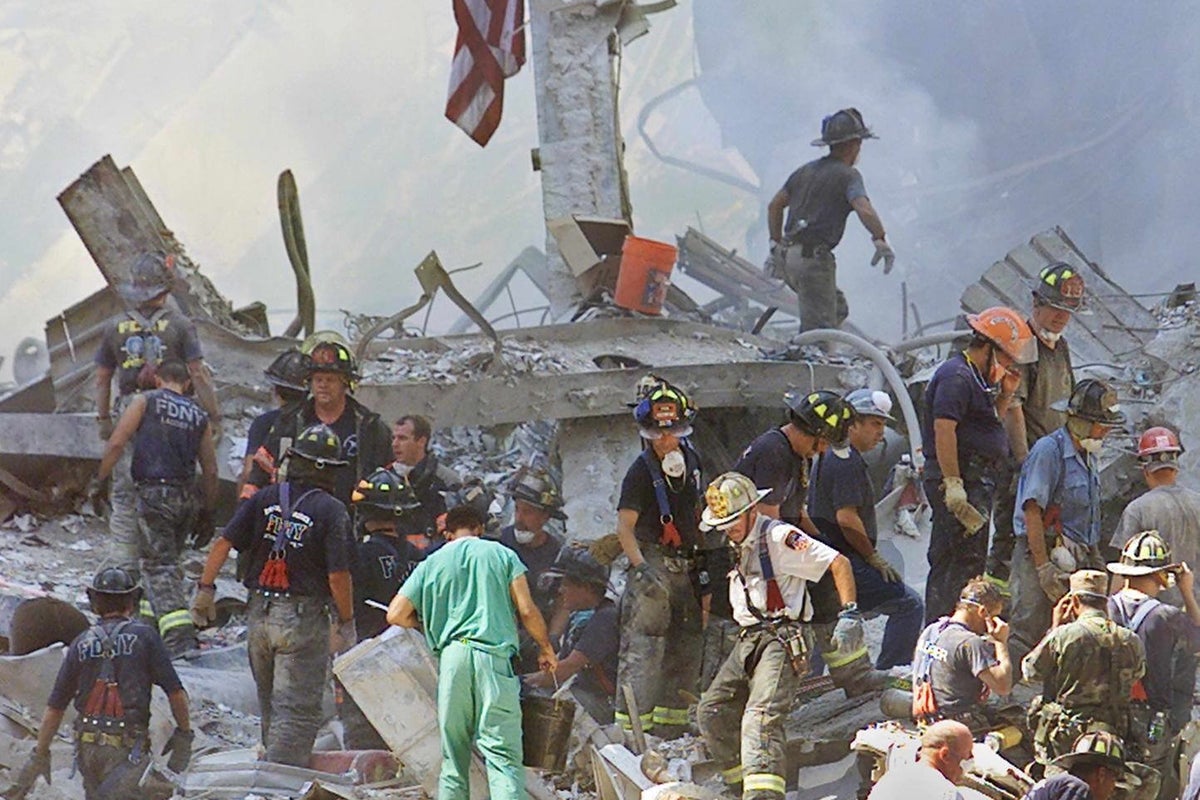
The tragedy of the post-9/11 era is not that the United States fought wars. The tragedy is that it lost confidence in the utility of power altogether. By treating every foreign engagement as a moral failing, the foreign policy establishment invited the exact aggression they claimed to fear.
When you tell an autocrat that your previous actions were illegitimate mistakes, you are not signaling wisdom. You are signaling vulnerability. You are telling them that you lack the stomach to defend the international rules-based order when the bill comes due.
This brings us to the uncomfortable truth that modern analysts refuse to touch: deterrence does not fail because you fought too many wars; deterrence fails because you stop believing that your values are worth enforcing.
The downside of this contrarian stance is clear. Admitting that American power is necessary for global stability means accepting that the alternative to an imperfect hegemon is a chaotic free-for-all governed by regional strongmen. It means acknowledging that pacifism in the face of autocracy is not moral superiority; it is complicity.
Stop looking at the Middle East as the root cause of European security failures. Stop pretending that Russian aggression is a reaction to American overreach. Moscow acts because it can, because it calculates that the cost of resistance is lower than the cost of submission.
Change the framework. Stop apologizing for past interventions while ignoring present threats. The world does not reward nations that spend their time doing penance for history. It crushes them.
The next time someone tells you that the ghost of the War on Terror is driving tanks across the Ukrainian steppe, ask them to look at a map, read a Russian military doctrine, and realize who is actually driving the machine.