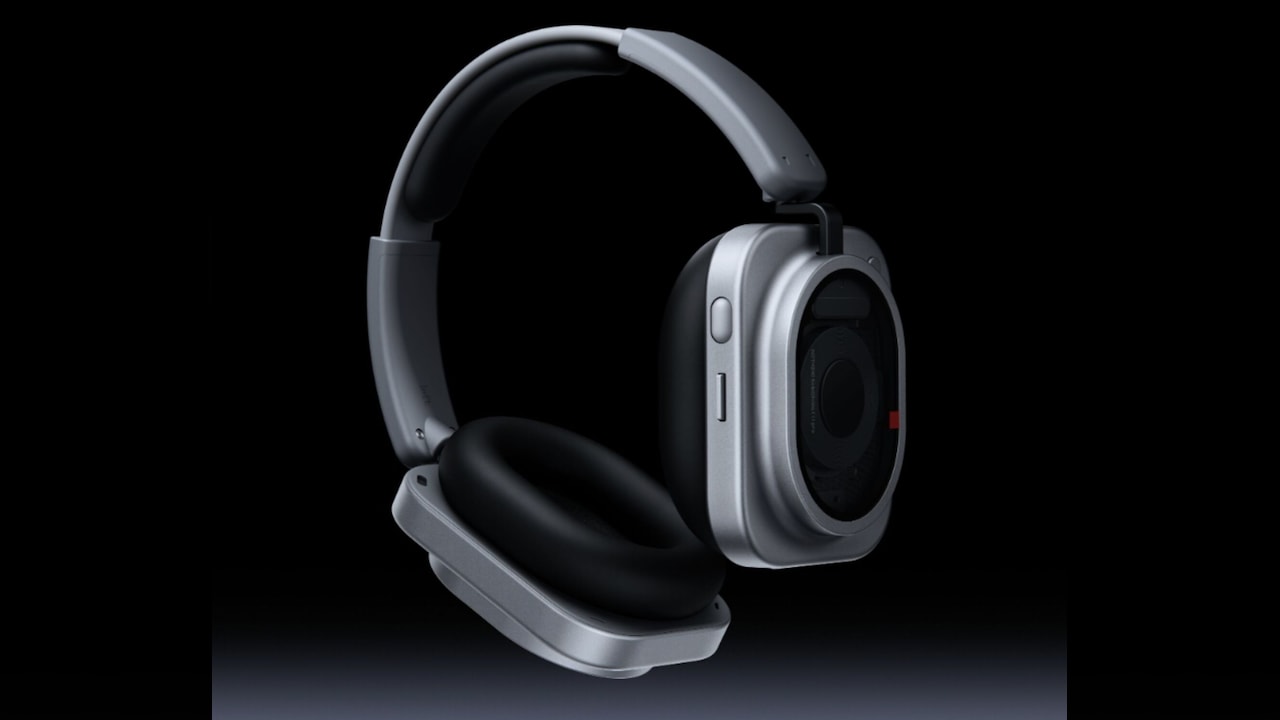
The audio press is losing its collective mind over a transparent plastic headband. Reviewers who should know better are hyperventilating about industrial design, custom acoustic drivers, and active noise cancellation thresholds that exist purely on marketing spec sheets. They look at a four hundred dollar price tag, stroke their chins, and declare that mainstream audio has finally matured.
They are wrong. They are falling for the oldest trick in consumer hardware: mistaking expensive styling for functional superiority.
I have spent the last fifteen years tearing down consumer electronics, measuring acoustic response curves in professional anechoic chambers, and watching legacy brands and upstarts alike slap premium price tags on mediocre transducers. When a company known for quirky LED glyphs on the back of mid-range smartphones decides to enter the premium over-ear category at four hundred dollars, the industry treats it like an artistic renaissance.
Let us look past the transparent earcups and the minimalist branding. Let us examine what you are actually paying for when you buy Nothing or any of its luxury-aspiring peers trying to climb out of the commoditized valley. You are paying for a design exercise subsidized by your own acoustic compromise.
The Design Tax You Are Paying Every Day
Look at the discourse surrounding modern headphones. Every single review obsesses over silhouettes, clamp force aesthetics, and whether the matte finish shows fingerprint smudges. This is a massive tell. When a product review spends eighty percent of its word count discussing how the device looks resting around your neck at a specialty coffee shop, you can safely assume the sound quality is an afterthought.
Acoustic engineering is a brutal, uncompromising physics problem. Sound is air molecules vibrating against your eardrum. It does not care about minimalist branding. It does not reward CNC-machined aluminum hinges with better transient response. In fact, heavy aesthetic ornamentation often introduces structural rattles and acoustic resonance chambers that distort the very music you are trying to enjoy.
When brands target the four hundred dollar bracket, they cross a psychological Rubicon. Below three hundred dollars, consumers buy tools. Above three hundred dollars, consumers buy lifestyle statements. The engineering team stops asking, "How do we extract maximum detail from a complex orchestral recording?" and starts asking, "Does this plastic mold feel expensive enough to justify a mortgage payment on a phone accessory?"
The lazy consensus is that better industrial design correlates with better listening experiences. History proves the exact opposite. Some of the most revealing, flat-response monitoring headphones on earth look like ugly black plastic industrial equipment from 1985 because every single penny of the bill of materials went into the voice coil, the magnet structure, and the acoustic chamber tuning.
When you buy a transparent headphone, you are paying a design tax. You are funding the molding tooling for a gimmick that you will stop noticing the second you put the cups over your ears.
Active Noise Cancellation is a Crutch for Bad Sealing
We need to talk about the active noise cancellation arms race, because it is rotting consumer expectations from the inside out.
The mainstream narrative goes like this: more microphones, heavier digital signal processing, and more aggressive inverse sound waves mean a better listening environment. If an algorithm can scrub away the roar of an airplane cabin, it must be state-of-the-art engineering.
This is a lazy workaround for poor passive isolation.
True acoustic isolation is about geometry, clamping pressure, and ear pad density. A well-designed closed-back headphone with dense memory foam and a secure clamp can attenuate high frequencies naturally without draining a battery or phase-shifting your music. But passive isolation is hard to market. It does not have a toggle switch in a companion mobile app. You cannot put a flashy toggle on a spec sheet that says "good ear pad foam."
So manufacturers lean heavily on digital noise cancellation. They use outward-facing microphones to pick up ambient noise, invert the phase, and pump it back into your ear alongside your music. Sounds clever, right? Except every time you engage heavy ANC algorithms, you introduce latency, phase distortion, and a subtle pressure sensation against your eardrum that causes listening fatigue within an hour.
Worse, heavy ANC processing creates a digital noise floor. That faint, high-pitched hiss you hear in silence when your noise cancellation is turned on? That is white noise generated by the cancellation circuitry itself. You are paying four hundred dollars to introduce artificial noise into your signal chain just so you can block out the hum of a refrigerator.
If your headphone requires a computer chip to make a quiet room sound quiet, your mechanical design has failed.
The Frequency Response Shell Game
Let us dismantle the sound signature of these lifestyle flagships.
If you measure the frequency response of modern consumer headphones priced between three hundred and five hundred dollars, you almost always find the same lazy tuning profile: a thunderous sub-bass boost around sixty hertz, a deep recession in the lower midrange to hide muddiness, and a sharp, artificial spike in the upper treble to simulate "clarity" and "air."
This is known in the industry as the V-shaped signature, or a bastardized adaptation of the Harman target designed specifically to pander to people who grew up listening to compressed audio on phone speakerphones.
When you play a densely layered track—say, a complex jazz fusion recording with upright bass, a real drum kit, and dual acoustic guitars—these headphones collapse entirely. The massive bass shelf bleeds straight into the midrange, turning kick drums into bloated thuds and burying vocal intonations. Then, when the treble spike hits a sharp cymbal crash, it induces ear fatigue so fast you will instinctively reach for the volume rocker.
Reviewers call this "exciting" or "engaging." That is industry code for "inaccurate."
Real high-fidelity sound is neutral, revealing, and frequently unforgiving. It tells you the truth about the master recording. If a mixing engineer made a mistake in the studio, a great headphone exposes it. Lifestyle headphones do the opposite: they apply a digital Instagram filter to every single genre of music you throw at them, smoothing out the dynamic range until a death metal track and a chamber pop ballad sound like they were processed through the exact same compression algorithm.
If you are dropping four hundred dollars on audio gear, you should not be paying for a manufacturer to second-guess the recording artist's mix balance.
The Planned Obsolescence of Smart Audio
There is another dirty secret about four hundred dollar lifestyle cans that nobody in the mainstream tech press wants to touch: they are disposable computers disguised as audio gear.
Ten years ago, a good pair of wired headphones could easily last two decades. You replaced a cable when it frayed, maybe swapped out the ear pads every five years, and the actual transducers kept performing. They were pure analog instruments.
Today's premium wireless offerings are packed with Bluetooth system-on-chip modules, touch-sensitive capacitive control panels, proprietary lithium-ion batteries glued directly into the chassis, and companion app software that requires constant firmware updates.
What happens three years from now when the manufacturer stops supporting the mobile app? What happens when the proprietary lithium battery degrades to fifty percent capacity and refuses to hold a commute's worth of charge? Can you easily pop open the earcup with a standard screwdriver and swap the cell?
Of course not. They are glued shut with industrial adhesive to maintain that seamless, minimalist aesthetic the reviewers praise.
You are buying a device with an expiration date tied directly to a corporate server's lifecycle and a chemical battery's inevitable decay. Treating a disposable electronic gadget as a long-term investment is financial illiteracy.
What You Should Do Instead
Stop looking at Kickstarter-style hype cycles and lifestyle branding exercises.
If you want genuine acoustic performance at that price point, look at brands that have spent forty years building studio monitors and reference gear rather than lifestyle accessories. Buy wired planar magnetics or studio-grade dynamic cans from manufacturers whose marketing budgets consist of a black-and-white spec sheet on a PDF. Pair them with a dedicated portable DAC-amplifier if you need mobile drive power. You will get transient response, soundstage width, and timbre accuracy that make transparent plastic toys sound like children's walkie-talkies.
The next time a tech blog tells you that a new four hundred dollar headphone with quirky styling is a game-changer, check your pockets and check your priorities.
True high fidelity does not need to glow, it does not need a companion app with customizable EQ sliders to fix its broken tuning, and it certainly does not need a transparent shell to prove it has nothing to hide.
Unplug the marketing. Listen to the transducers.