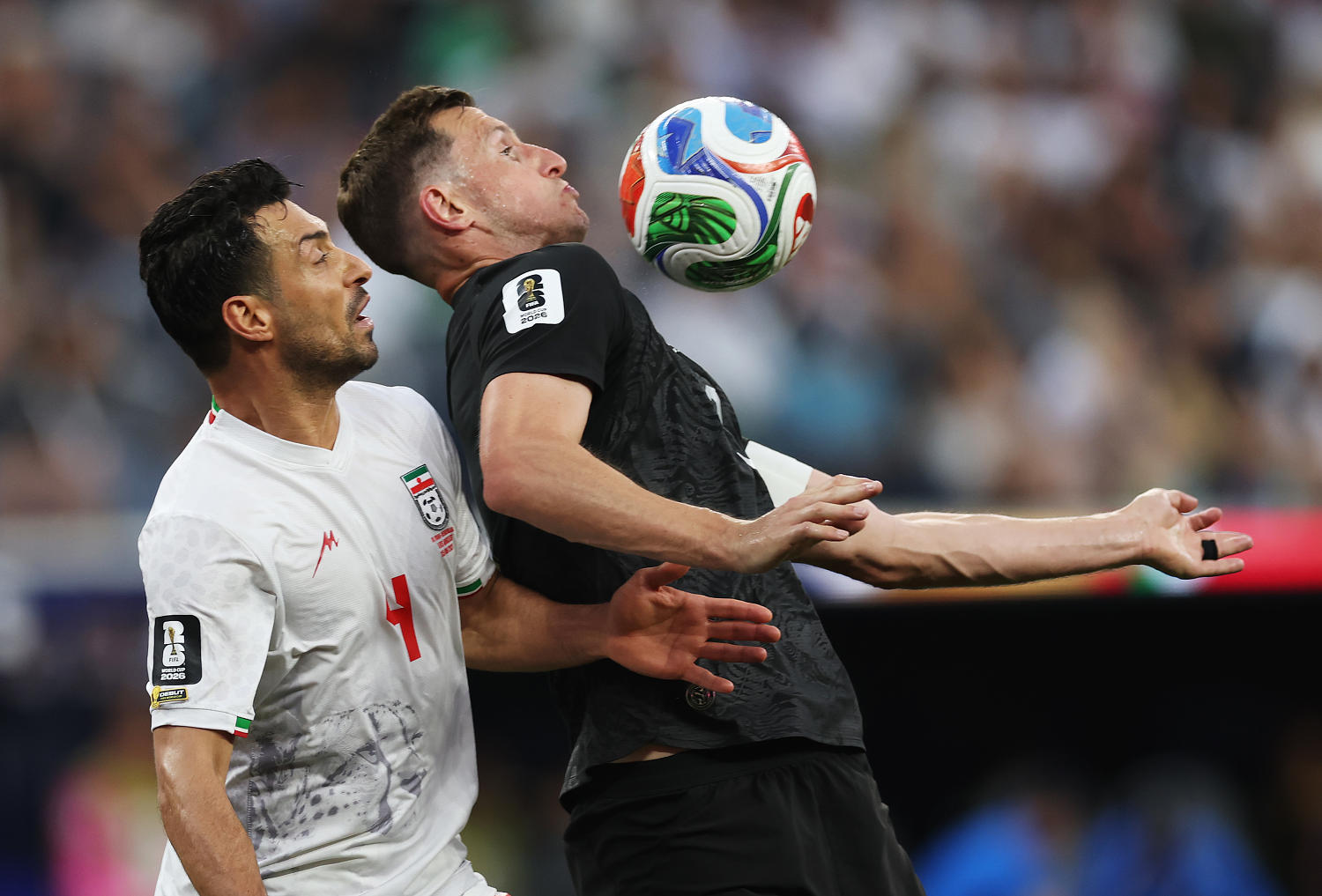
Monday at the World Cup delivered four straight draws. The collective groan from mainstream sports desks could be heard across the globe. "Tightly contested," they called it, using the standard media euphemism for a snoozefest. The pundits are already trotting out the usual lazy narratives: the game is too defensive, teams are playing not to lose, and FIFA needs to change the rules to force more goals.
They are completely wrong.
The obsession with the scoreboard is ruining sports journalism. A 0-0 or 1-1 draw is not a failure of entertainment; it is often a masterclass in tactical chess. When you asset-strip a soccer match down to its raw statistical output, you miss the entire point of the sport. Monday did not produce four boring games. It produced four distinct clinics in high-press frustration, low-block execution, and positional warfare.
If you need a 4-3 scoreline to enjoy a match, you do not actually like soccer. You like chaos. And chaos is the enemy of elite coaching.
The Myth of the "Negative" Low Block
The loudest complaint after a scoreless draw is that the underdog team "parked the bus." This is treated as a moral failing. We are told that anti-football is killing the spectacle.
Let us dismantle that premise entirely. Standing in a disciplined low block for 90 minutes against world-class attackers is one of the most mentally exhausting, physically demanding feats in professional sports. It requires flawless spatial awareness and constant communication. One step out of sync, one second of lazy tracking, and an elite winger exploits the half-space to kill your tournament.
Mainstream analysts love to laud an NFL defense that holds an opponent to a field goal in the red zone. They call it "grit" and "championship pedigree." But when a soccer defense denies a hyper-efficient attack any central penetration for two hours? Suddenly it is an affront to the beautiful game.
I have spent decades analyzing tactical frameworks from the touchline. When a manager organizes a back-five to perfectly constrict the passing lanes of a heavy favorite, that is beautiful football. It is the tactical equivalent of a fighter slipping every punch in a twelve-round bout. The failure belongs entirely to the favorite, who lacked the creative sequencing to break the lock. Do not blame the defense for doing its job flawlessly; blame the attack for its predictability.
Why Expected Goals (xG) is Making Fans Dumber
The rise of public analytics has given casual fans just enough data to be dangerously wrong. After Monday's draws, the timeline was flooded with charts showing low Expected Goals (xG) metrics as definitive proof of a bad day of football.
This is a fundamental misunderstanding of what xG actually measures.
Expected goals evaluates the quality of a shot based on historical data. What it completely ignores is the tension of the denial. It fails to capture the micro-battles that prevent the shot from happening in the first place.
- The center-back who perfectly times a recovery slide to turn a dangerous 2-on-1 into a harmless corner.
- The defensive midfielder whose shadow-checking forces a playmaker to pass backward instead of unlocking the defensive line.
- The structural press that forces a turnover 40 yards from goal before an attack can even materialize.
None of this shows up on an xG map. An xG map looks at a 0-0 draw and sees a desert. A scout looks at that same match and sees a masterclass in transitional frustration. When Marcelo Bielsa or Pep Guardiola analyzes a scoreless match, they are not looking at the shot count. They are looking at structural distances, pressing triggers, and numerical superiorities.
The data is a supplement, not a substitute. When you rely solely on the box score or an xG graphic to judge a World Cup match, you are trying to review a movie by looking at the budget spreadsheet.
The High-Stakes Psychology the Media Ignores
A World Cup group stage match is not a random Tuesday night fixture in October. The margins are razor-thin. A single point can be the difference between moving to the knockout rounds or flying home to face national disgrace.
The media demands that teams play with reckless abandon for the sake of television ratings. That is a luxury for people who do not have their careers on the line.
Imagine a scenario where an underdog nation opens up its shape to chase a win in the 70th minute, gets caught on the counter, loses 1-0, and exits the tournament. The very same journalists who complained about the draw would write columns lambasting the manager for "tactical naivety."
A draw is a highly valuable, strategic currency in tournament football. Managing a game to secure that point when you are outmatched is elite game management. It requires immense psychological discipline to resist the urge to chase the crowd's approval and stick to a rigid, defensive blueprint.
Stop Asking How to Fix the Draw
Go to any major sports forum or read the "People Also Ask" sections on search engines during a tournament, and you will see variations of the same flawed questions:
- How can FIFA eliminate draws?
- Should soccer introduce a countdown clock or wider goals?
- Why don't they just play extra time in the group stage?
These questions are built on a broken foundation. They assume the draw is a bug that needs to be patched. It isn't. It is a feature.
The existence of the draw is exactly what makes a late-game winner so euphoric. If every game ended in a guaranteed victory via a penalty shootout or golden goal, the regular-time goals would lose their premium value. The scarcity of goals is precisely why soccer generates an unmatched level of fan hysteria when the ball finally hits the back of the net.
If you artificially inflate the scoreline by changing the dimensions of the pitch or penalizing defensive structures, you dilute the product. You turn a high-stakes tactical chess match into a high-scoring, low-consequence exhibition game.
The Actionable Guide to Watching a 0-0 Match
If you found Monday's games boring, the problem is your eyes, not the pitch. You are looking at the wrong things. Next time a match is locked at zero, change your perspective:
- Stop watching the ball. This is the biggest mistake casual viewers make. Stop following the ball around like a kitten with a laser pointer. Watch the weak-side winger. Watch how the back four shifts horizontally when the ball moves across the midfield. Look for the gaps that aren't being opened.
- Identify the pressing trigger. Every team has a cue that signals when to attack the ball-carrier. Is it a heavy touch? Is it a pass backward? Figure out what the defensive unit is waiting for, and you will see the trap being sprung before it happens.
- Appreciate the dark arts. Watch the subtle shirt tugs, the tactical fouls that break up counter-attacks before they start, and the deliberate slowing down of restarts. It may not be clean, but it is winning football.
There is a distinct, brutal beauty in a perfectly executed stalemate. It is time the sports desks grew up and learned how to appreciate it.
If you want constant, mindless scoring without any tactical friction, go watch basketball. Leave the football to people who understand the value of zero.