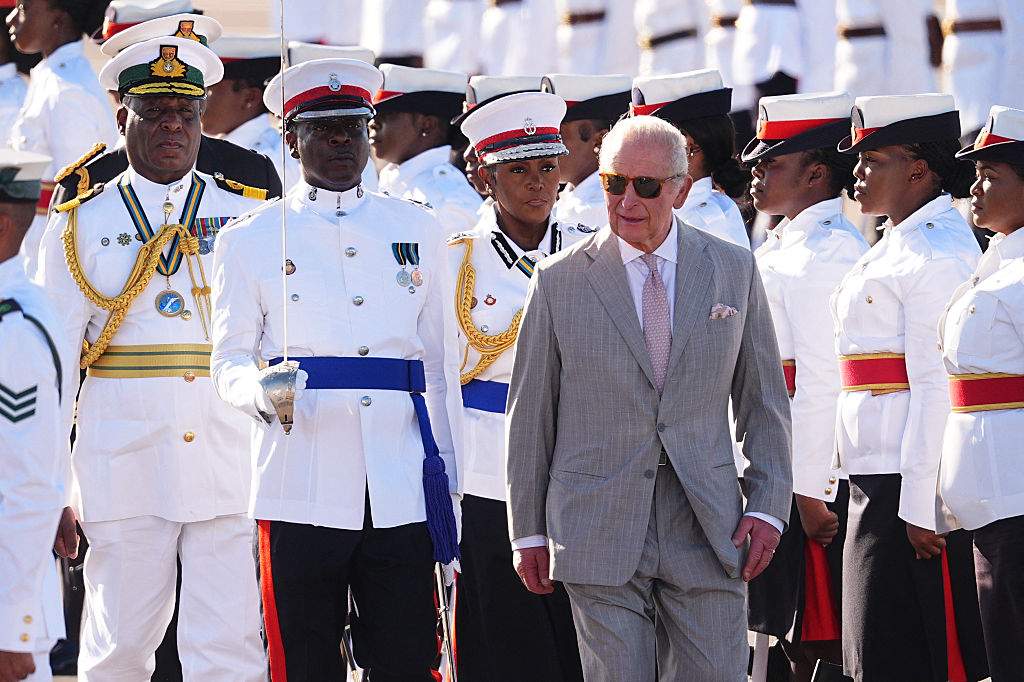
An apology from Buckingham Palace will not build a single hospital in Bridgetown. It will not erase a cent of sovereign debt in Kingston. Yet every time a British royal steps off a plane in the Caribbean, the political theatre begins on cue.
The lazy consensus is predictable. Legacy media outlets run the exact same script: King Charles III lands in a Commonwealth realm, local activists hold up signs demanding contrition and cash, and commentators debate whether the monarch will finally utter the magic words of remorse. It makes for dramatic evening news. It also completely misses the geopolitical and financial reality on the ground.
By obsessing over symbolic royal apologies, Caribbean leaders and Western journalists are focusing on the wrong target, using the wrong legal mechanism, and letting the actual architects of modern economic stagnation off the hook. If the goal is genuine reparative justice and economic liberation for the Caribbean, begging the Crown for an apology is a strategic dead end.
The Constitutional Trap Nobody Talks About
To understand why demanding an apology from King Charles is a tactical blunder, you have to understand how the British constitution actually works. Most coverage treats the King as an absolute ruler who simply refuses to say "I'm sorry" out of personal stubbornness or aristocratic pride. That is constitutionally illiterate.
King Charles III is a ceremonial head of state bound by the doctrine of ministerial advice. He does not set foreign policy. He cannot unilaterally commit the British treasury to multi-billion-pound payouts. More importantly, he cannot issue a formal state apology for historical crimes without the explicit instruction and approval of the elected British Prime Minister and Cabinet in Downing Street.
When Charles expressed "personal sorrow" at the Commonwealth Heads of Government Meeting in Kigali in 2022, or acknowledged the "painful aspects" of history during his trip to Kenya, he was walking right up to the razor's edge of what his constitutional role permits. Anything further—a formal apology admitting state liability—is a political act that rests squarely with 10 Downing Street.
Directing public anger at the monarch lets elected British politicians hide behind the Palace gates. Prime Ministers from both the Conservative and Labour parties have consistently rejected reparations, with Keir Starmer famously stating ahead of the 2024 Commonwealth summit that the UK would not be paying reparations and was focused on "looking forward." When activists focus their fire on Charles, Downing Street gets a free pass while the royal family absorbs the bad press.
Why Legal Liability Terrifies London
There is a specific, ruthless reason why Downing Street blocks a formal royal apology, and it has nothing to do with protecting royal feelings. In international law, a formal state apology is not just good manners. It is an admission of legal liability.
Under the United Nations Basic Principles and Guidelines on the Right to a Remedy and Reparation, formal apologies and acknowledgments of responsibility are recognized forms of satisfaction. Once a state officially apologizes for an internationally wrongful act—or a crime against humanity—it opens the floodgates for binding litigation in international courts.
If King Charles, acting as head of state, issues a full, unreserved apology for the transatlantic slave trade, lawyers for the CARICOM Reparations Commission will immediately use that statement as foundational evidence to demand trillions of dollars in restitution. The British government knows this. Their legal advisors at the Foreign, Commonwealth and Development Office have spent decades ensuring that every royal speech uses carefully calibrated words like "sorrow," "regret," and "acknowledgment"—words that carry zero legal weight in The Hague.
Demanding an apology from Charles without first dismantling this legal firewall is like asking a defendant to sign a confession before the trial starts. It will never happen, and pretending it might is a waste of political capital.
The CARICOM Plan vs. The Media Circus
If you actually read the CARICOM Ten-Point Plan for Reparatory Justice, drafted by leading historians and economists like Sir Hilary Beckles, you will notice something striking. While a full formal apology is point number one, the real meat of the document is a comprehensive development framework. It calls for:
- Indigenous peoples' development programs
- Cultural institutions and museums
- Public health crisis interventions (specifically targeting high rates of hypertension and type 2 diabetes linked to generational trauma and dietary shifts)
- Illiteracy eradication
- Psychological rehabilitation
- Technology transfer
- Debt cancellation
Look at that list. Those are concrete, structural demands aimed at governments, central banks, and international financial institutions. Yet when the cameras roll during a royal tour, all that nuance vanishes. The media reduces a complex, multi-decade economic blueprint into a simplistic soundbite: Will Charles say sorry?
I have watched political movements across the globe burn through decades of momentum because they prioritized symbolic victories over structural leverage. When a movement settles for optics, the people in power are always happy to oblige eventually—because words are free. Once the apology is given, the cameras leave, the news cycle moves on, and the structural inequality remains completely intact.
Follow the Corporate Money, Not the Crown
The focus on the royal family also obscures where a massive portion of the actual wealth from slavery went—and where it still sits today.
While the British monarchy certainly profited from the Royal African Company and the trade of enslaved people, the transatlantic slave trade was fundamentally a capitalist enterprise driven by private merchants, banks, insurance firms, and industrialists. When Britain passed the Slavery Abolition Act of 1833, it famously borrowed £20 million—roughly 40 percent of the nation's annual budget—to compensate the slave owners, not the enslaved. The British taxpayer did not finish paying off that debt until 2015.
Where did that £20 million go? Through the Legacies of British Slavery database at University College London, historians have traced those payouts directly into the foundations of modern British banking, insurance, railways, and elite institutions. Companies that exist right now—firms like Lloyd's of London, Barclays, and Greene King—have documented historical ties to the slave economy.
Yet while protesters picket royal motorcades, those corporate entities quietly issue small, PR-friendly grants to diversity initiatives and escape the kind of existential scrutiny aimed at Buckingham Palace. You cannot garnish the wages of a constitutional monarch, and you cannot seize crown jewels that are held in trust for the nation. You can apply regulatory, legal, and economic pressure to multinational corporations that still operate in the Caribbean and globally.
The Uncomfortable Truth About Local Governance
Here is the part that gets politicians in the region defensive, and why almost no mainstream outlet will touch it: focusing on British reparations is a convenient distraction for domestic failures.
Across several Caribbean nations, citizens deal with staggering violent crime rates, crumbling infrastructure, endemic political corruption, and brain drain. When local economies stall under the weight of bad policy and mismanagement, blaming London—and specifically the British monarch—is an easy, emotionally resonant release valve.
Let us imagine a scenario where the UK tomorrow morning wired $50 billion directly into the central banks of CARICOM nations as a lump-sum reparations payment. Without radical anti-corruption reforms, transparent procurement laws, and insulated sovereign wealth frameworks, how much of that money would actually reach the descendants of enslaved people in rural Jamaica or inner-city Port of Spain?
History gives us a bleak answer. Massive infusions of foreign cash into weak institutional environments rarely produce broad-based prosperity. Instead, they inflate asset prices, entrench political dynasties, and vanish into bloated consulting contracts.
By keeping the public locked in a perpetual debate over whether King Charles will apologize, local elites avoid answering hard questions about why their own economies remain overly dependent on low-wage tourism and vulnerable to external shocks.
What Real Reparative Leverage Looks Like
If Caribbean leaders want actual results rather than viral clips of awkward royal handshakes, they need to abandon the royal tour media circus and switch to hard-nosed economic statecraft.
First, weaponize republicanism quietly and methodically. Barbados removed Queen Elizabeth II as head of state in 2021 without waiting for permission or an apology from London. Jamaica, Belize, and the Bahamas have all signaled intentions to follow suit. Becoming a republic is not a favor Britain grants; it is a sovereign constitutional step nations take on their own terms. Stop treating the British monarch like an estranged parent whose validation is required to move on. Cut the constitutional cord, replace the Privy Council in London with the Caribbean Court of Justice as the final court of appeal, and establish true legal sovereignty.
Second, shift from reparations to climate finance and debt restructuring. The Caribbean is on the front lines of climate change, despite contributing less than one percent of global greenhouse gas emissions. Every major hurricane wipes out years of GDP growth, forcing these nations to borrow more money at predatory interest rates just to rebuild basic roads and power grids. This is the modern continuation of colonial extraction—what Prime Minister Mia Mottley of Barbados has brilliantly targeted through the Bridgetown Initiative. Framing historical justice around modern climate vulnerability and International Monetary Fund reform forces Western powers to the negotiating table with actual checkbooks, bypassing the legal dead-end of 19th-century slavery litigation.
Third, target the private sector. Instead of waiting for Downing Street to blink, use domestic regulatory power and international coalitions to demand direct capital investment, zero-interest development loans, and educational endowments from the legacy financial institutions that built their balance sheets on Caribbean plantations.
The Downside of Dropping the Apology Demand
There is a real cost to abandoning the demand for a formal royal apology, and it would be dishonest to ignore it. History matters. Psychological validation matters. For millions of people whose ancestors were brutalized, stripped of their names, and treated as chattel under the British flag, hearing the head of that institution unequivocally state that the Crown committed a crime against humanity carries profound moral weight.
Walking away from the demand for contrition feels, to many, like letting Britain rewrite its own history as a benevolent empire that heroically abolished slavery while glossing over the centuries it spent perfecting the trade. That moral frustration is entirely valid.
Furthermore, a strictly technocratic approach focused on climate finance and IMF reform lacks the visceral, rallying power of a moral crusade. It is much harder to mobilize a crowd around "special drawing rights at the World Bank" than it is around "make the King say sorry."
Stop Confusing Theatre With Power
Every royal tour of the Caribbean follows the exact same arc. The advance team arrives, the itinerary is sanitized, the protests make the front page, the monarch delivers a carefully watered-down speech expressing "deepest sorrow," and the plane takes off for London. Nothing changes. The debt remains. The climate vulnerability worsens. The structural power dynamic stays frozen in amber.
King Charles cannot give the Caribbean what it actually needs, and the British government will never let him say what activists want to hear. Continuing to stage protests outside royal receptions is playing a rigged game on Britain's home turf.
Take down the protest signs, finalize the transition to full constitutional republics, and take the fight directly to the global financial institutions where the money actually lives.


