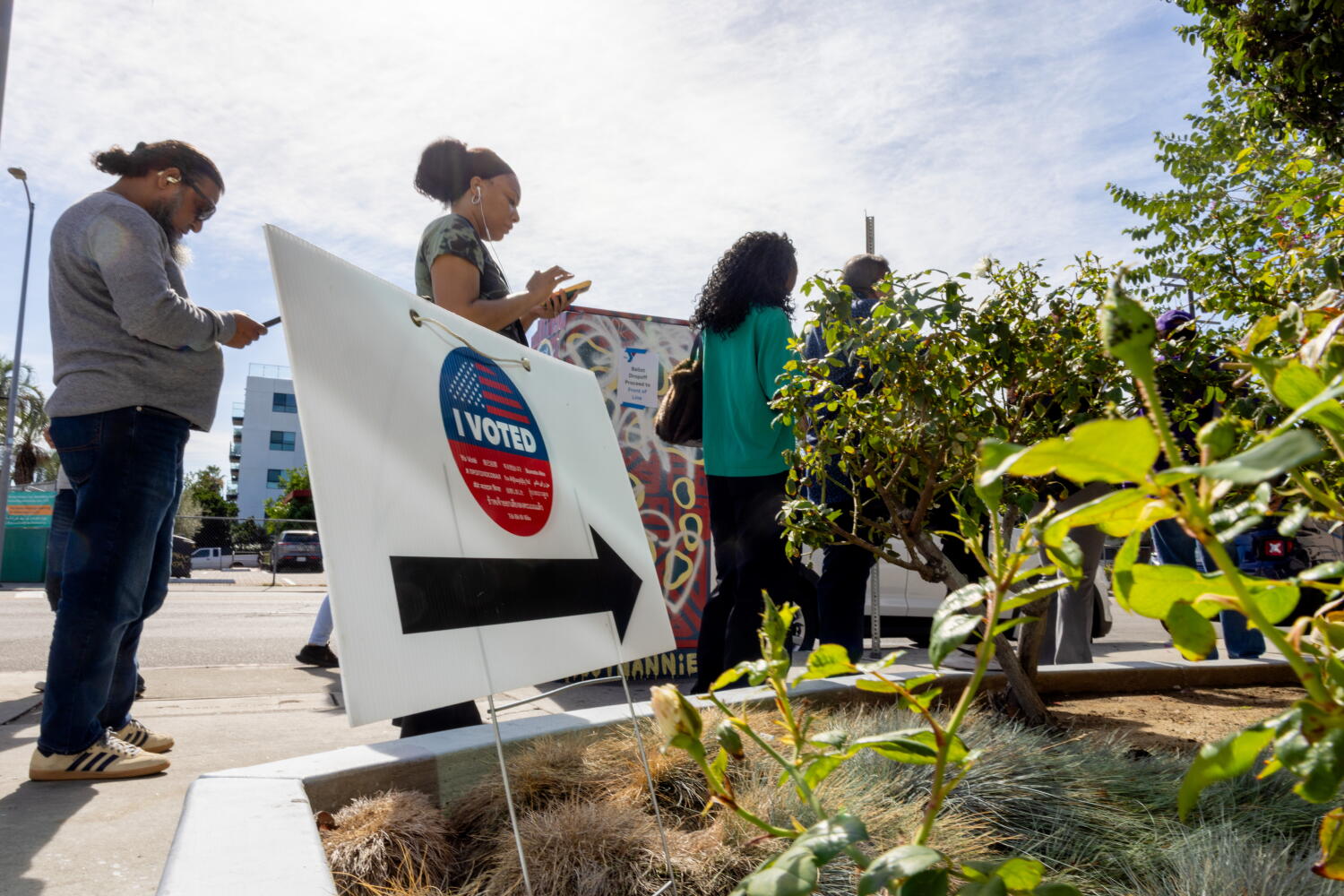
Every two years, political media publishes the exact same paternalistic survival guide for Election Day stragglers. Grab your valid ID. Find your polling place. Stay in line because legally they cannot turn you away once the clock strikes closing time.
It is comforting advice. It is also completely detached from how modern elections actually function, how campaigns allocate capital, and why showing up at 6:55 PM on Election Day is the single worst way to participate in a democracy.
The political industrial complex loves the last-minute voter. Cable news producers need dramatic B-roll of rain-soaked lines wrapping around elementary school gymnasiums to fill dead air before precinct returns drop. Civic non-profits use eleventh-hour mobilization to justify bloated Q4 fundraising budgets. Meanwhile, the actual voter—the person rushing through evening traffic to cast a ballot in the final hours of the 2026 midterms—gets treated like a hero for doing the bare minimum at the worst possible time.
If you are scrambling in the final hours of voting, you did not beat the system. You let the system beat you.
The Myth of the Last-Minute Civic Hero
Standard "procrastinator's guides" treat Election Day procrastination like a harmless quirk, akin to buying holiday gifts on December 24. They reassure you that a ballot cast at 7:59 PM carries the exact same mathematical weight as a ballot cast three weeks earlier.
Mathematically, that is true. Strategically, it is nonsense.
I have spent years watching field directors burn through millions of dollars in the final seventy-two hours of midterm cycles. When you delay voting until the final hours of Election Day, you remain an "unbanked" target on every campaign's voter file. Campaigns pull daily—sometimes hourly—absentee and early-vote rosters from county clerks. The moment your ballot is accepted, your name is scrubbed from the Get Out The Vote (GOTV) universe. The text messages stop. The canvassing knocks cease. The digital ad spend targeting your IP address evaporates.
By waiting until the final hours, you voluntarily keep yourself in the crosshairs of the most desperate, manipulative, and unverified messaging of the entire cycle. In the closing hours of a tight race, opposition research dumps happen too late for fact-checkers to debunk. Push polls masquerade as voter alerts. Rumors about polling location changes or machine failures spread across local social media feeds faster than election boards can issue press releases.
You are not exercising thoughtful deliberation by waiting until the end. You are exposing your decision-making process to maximum noise and minimum verification.
What Happens Inside the Precinct When the Clock Runs Down
To understand why eleventh-hour voting is a trap, you have to understand precinct mechanics. Election administration in the United States is decentralized, underfunded, and heavily reliant on temporary poll workers—many of whom are retirees working fourteen-to-sixteen-hour shifts for minimal stipends.
By 6:00 PM on Election Day, fatigue sets in across the entire operational chain.
The Provisional Ballot Trap
When you show up at the last minute and discover an issue—your registration was purged due to inactivity, your address change never synced between the DMV and the county board, or you walked into the wrong precinct because boundaries shifted after redistricting—you do not have time to fix it.
At 10:00 AM, you have nine hours to drive to the county clerk's office, get a Same-Day Registration issue resolved, or travel across town to your assigned precinct. At 7:30 PM, your only option is a provisional ballot.
Political science research from institutions like the MIT Election Data and Science Lab consistently shows that provisional ballots are rejected at significantly higher rates than standard ballots. Worse, provisional ballots are not counted on election night. They sit in quarantine for days or weeks while election boards verify eligibility. If your race isn't razor-thin, your provisional ballot might never even be opened before networks project a winner. You stood in line for an hour just to hand a poll worker a piece of paper that gets triaged into administrative purgatory.
Machine Bottlenecks and Human Error
High-volume precincts experience predictable stress fractures late in the day. Optical scanners jam from humidity or folded paper. Electronic poll books lose cellular connectivity when thousands of devices ping the same local cell towers during the evening commute. When a machine goes down at 7:15 PM, lines freeze. While federal and state laws uniformly protect your right to vote if you are in line before polls close, the law cannot protect your schedule. Thousands of last-minute voters quietly abandon the line every cycle when a 15-minute wait turns into a 90-minute ordeal because they have kids to pick up, dinner to make, or a second shift to work.
Dismantling the "Procrastinator's Guide" Checklist
Let us look at the standard questions people frantically search in the final hours of an election—and strip away the sugarcoating.
"Can I still register to vote on Election Day?"
In roughly two dozen states and Washington, D.C., yes—Same-Day Registration (SDR) exists. In the rest of the country, asking this question on Election Day means your race is already over. Even in SDR states, showing up in the final hours to register is a logistical gamble. You need specific proof of residency—a current utility bill, a bank statement, a government check—that matches your physical address. If you show up at 7:45 PM with just an out-of-state driver's license and a lease agreement saved on a dead phone battery, poll workers cannot legally process you.
"What if I never mailed my absentee ballot?"
This is the single biggest point of failure in modern elections. Voters request a mail-in ballot, leave it sitting on their kitchen counter for three weeks, and then panic on Election Day.
If you try to drop it in a blue USPS mailbox on Election Day, you are throwing your vote away in almost every state. Postmarks rarely save a ballot that arrives days late unless specific state statutes allow a grace period—and those grace periods have been aggressively litigated and narrowed across multiple states leading into 2026.
Even walking into a polling place with an unvoted mail ballot creates friction. Poll workers must void your mail ballot in the system before issuing an in-person ballot. If the precinct is slammed at 6:45 PM and a temporary worker skips a step in the voiding protocol, the system flags you as attempting to vote twice. Your in-person ballot gets rejected or shunted to provisional status. Your only clean move with an unvoted mail ballot on Election Day is finding an official, staffed county drop box before the exact minute polls close—not a post office, not a polling place unless you are prepared to surrender the envelope and wait out the administrative override.
"What if I don't know who is on the down-ballot races?"
The conventional advice tells procrastinators to quickly pull up a non-partisan voter guide on their phone while standing in line.
That is terrible advice. Local judges, school board members, municipal bond measures, and state constitutional amendments govern your property taxes, your local policing, and your neighborhood zoning far more directly than whoever wins a U.S. House seat. Trying to speed-read judicial retention evaluations or dense, deliberately confusing ballot measure language in three minutes on a smartphone screen guarantees you will either skip the bottom half of the ballot ("undervoting") or fall for whatever marketing buzzword sounds nicest in the moment.
The Honest Downside of Early Voting
To be completely transparent, abandoning the last-minute rush and voting early carries one legitimate risk that civic boosters rarely admit: buyer's remorse.
If you cast your ballot three weeks before Election Day, you lock in your choices before the final debates, before late-breaking investigative journalism drops, and before a candidate potentially implodes in the final stretch. In rare instances, candidates have suspended campaigns or faced major scandals after hundreds of thousands of early ballots were already cast. Once your ballot hits the scanner or gets verified by the county clerk, you cannot take it back. There are no do-overs in American elections.
You have to weigh that risk honestly. Is the tiny statistical probability of a genuine, mind-changing October surprise worth sacrificing your time, risking administrative disenfranchisement, and enduring the chaos of closing-hour precinct bottlenecks? Almost never. Most voters have their minds made up on major partisan races months in advance; delaying only sabotages their ability to research local, non-partisan races properly.
A Tactical Playbook When You Are Actually Out of Time
If you are reading this with ninety minutes left on the clock and you still have not voted, forget the gentle encouragement. Execute a strict triage protocol so your trip isn't wasted.
- Verify your exact precinct on the state's official portal—not a third-party app. Third-party civic apps frequently cache outdated district maps. Go directly to your Secretary of State or County Board of Elections website. Screenshot the confirmation page with your precinct number and polling address before you leave the house.
- Audit your ID against your state's strict tier list. Do not assume a college ID, a concealed carry permit, or a digital ID on your phone works. Check whether your state requires a government-issued photo ID with an expiration date that has not passed. Bring two forms of identification if there is any ambiguity.
- Prepare a paper cheat sheet. Several states prohibit using cell phones inside the voting booth to prevent ballot selfies and voter intimidation. Write your choices for every single race—especially local judges and ballot propositions—on a physical piece of paper. Poll workers cannot confiscate handwritten notes.
- Ignore the projection noise while in line. Networks and social media pundits will start calling East Coast races while Central, Mountain, and Pacific time zones are still open. A Senate call in another state has zero bearing on your local city council race, your county sheriff, or your state legislative district, which are routinely decided by a few dozen votes.
- Know the exact definition of "in line." If you arrive at 7:59 PM for an 8:00 PM closing time, find the designated poll worker who steps out to mark the end of the line. Make eye contact. Confirm verbally that you are behind the cutoff marker. If anyone attempts to lock the doors while you are standing in the queue, do not argue with them—call the non-partisan Election Protection hotline (866-OUR-VOTE) immediately while remaining physically in place.
Break the Habit Before the Next Cycle
Democracy does not reward brinkmanship. Treating Election Day like a college term paper due at midnight hands immense power to bureaucratic friction, last-minute disinformation, and administrative errors.
Get through tonight using the triage rules above if you must. Then, open your calendar right now, set a recurring reminder for the first Monday of early voting in 2028, and refuse to ever be part of the 7:00 PM desperation crowd again.