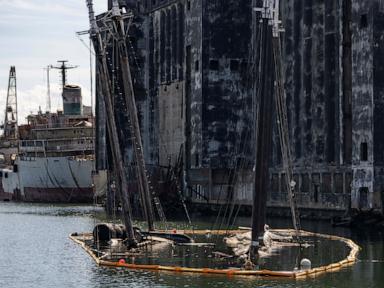
Romanticizing maritime junk sitting in a toxic trench is peak urban hipster theater. Every few years, an outlet publishes a breathless eulogy about the historic schooners rotting in the Gowanus Canal—vessels that supposedly graced state quarters or hosted Jacques Cousteau before meeting a watery, anaerobic grave in Brooklyn. Conservationists clutch their pearls. Historians weep over forgotten ribs of oak and pine.
They have it completely backwards. Read more on a connected issue: this related article.
Those rotting hulls are not tragic victims of industrial neglect or municipal apathy. They are biohazards wrapped in romantic nostalgia, serving as toxic monuments to a century of environmental abuse. Stop treating a Superfund site like a maritime museum.
The Myth of the Historic Floating Artifact Additional journalism by Travel + Leisure explores comparable perspectives on this issue.
Let us strip away the sentimentality. The narrative peddled by preservationists suggests that these stagnant waterways are underwater Time Capsules holding the pristine spirit of America's golden age of sail. This is historical revisionism at its finest.
Most of these vessels were not abandoned because of sudden, heroic misfortune. They were dumped. When a wooden barge or scow reached the end of its economic viability in the mid-twentieth century, towing it out to sea and sinking it legally became too expensive or heavily regulated. The path of least resistance was driving it into the mud of a tidal ditch, stripping whatever copper fittings remained, and walking away.
Calling a discarded coal barge a historic artifact because it is old is like calling a rusted 1974 Ford Pinto sitting in a swamp a classic car. Age does not automatically confer historical significance. It often just confers decay.
The Ecological Reality Check
The Gowanus Canal is one of the most contaminated bodies of water in the United States. We are talking about coal tar, heavy metals, PCBs, and raw sewage overflows mixed into a rich, black mayonnaise known locally as Gowanus dredge.
Wooden shipwrecks sitting in this chemical stew do not preserve themselves. They absorb the toxins, trap sediment, and create structural anchors for chemical pooling. Every tidal cycle flushes contaminants through their rotting timbers. When conservation groups lobby to protect or study these sunken hulks under the guise of heritage preservation, they are actively fighting against environmental remediation.
You cannot clean up a Superfund site while simultaneously leaving behind hundreds of tons of creosote-soaked timber and iron fastenings just because someone once took a black-and-white photograph near it in 1912. The Environmental Protection Agency is spending upwards of half a billion dollars to dredge the canal, cap the toxic bottom, and restore some semblance of ecological function. Every wooden rib left sticking out of the mud is an obstacle to a clean basin.
The Cousteau Fallacy and Quarter Myths
Let us address the specific folklore attached to these vessels. Local lore loves to link every rotting transom to marine royalty or national symbols.
Cousteau sailed the world aboard sophisticated research vessels equipped with state-of-the-art diving gear and underwater labs. The idea that his legendary career hinged on a rusted-out scow rusting away next to a concrete batch plant in Brooklyn is absurd. Yet, local guides spin these yarns because tourists buy tickets for kayak tours of a toxic wasteland if you slap a shiny historical narrative on it.
The state quarter connection is similarly flimsy. Maine-themed designs celebrate a rich shipbuilding heritage, true. But celebrating the heritage of shipbuilding does not mean preserving the abandoned trash heaps of bankrupt operators in New York boroughs. Maine built magnificent clipper ships that rounded Cape Horn. They did not design them to die ignominious deaths choking on municipal effluent in a Brooklyn ditch.
What Real Preservation Looks Like
If we genuinely care about maritime history, we need to stop worshipping the ghosts and fund proper documentation, digital archiving, and physical recovery where feasible—followed by immediate disposal.
Real preservation means housing builders' half-models in climate-controlled museums. It means saving original logbooks, architectural blueprints, and tool collections. Leaving a wooden hull to disintegrate in an anaerobic sewer is not preservation; it is slow-motion littering.
Imagine a scenario where a historic preservation board successfully blocks an environmental dredging project because a nineteenth-century coal scow is declared a historic landmark. The irony would be staggering: destroying the future health of a community to honor a floating garbage can from the Gilded Age.
The Uncomfortable Truth About Urban Waterways
Cities evolve. Industrial zones become residential neighborhoods, and polluted canals eventually have to shed their industrial past to become public amenities. That transition requires ruthless prioritization.
The romantic obsession with urban decay blinds us to the practical necessity of renewal. We want the edgy aesthetic of industrial ruins without paying the price for the ecological damage they caused. You cannot have clean water, waterfront parks, and thriving local ecosystems while simultaneously weeping over every rotting timber dragged into the mud by nineteenth-century opportunists.
Let the dredges do their work. Pull the rotting planks from the muck, test them for contaminants, and haul them to a landfill where they belong. Stop mourning the ships. Start demanding clean water.