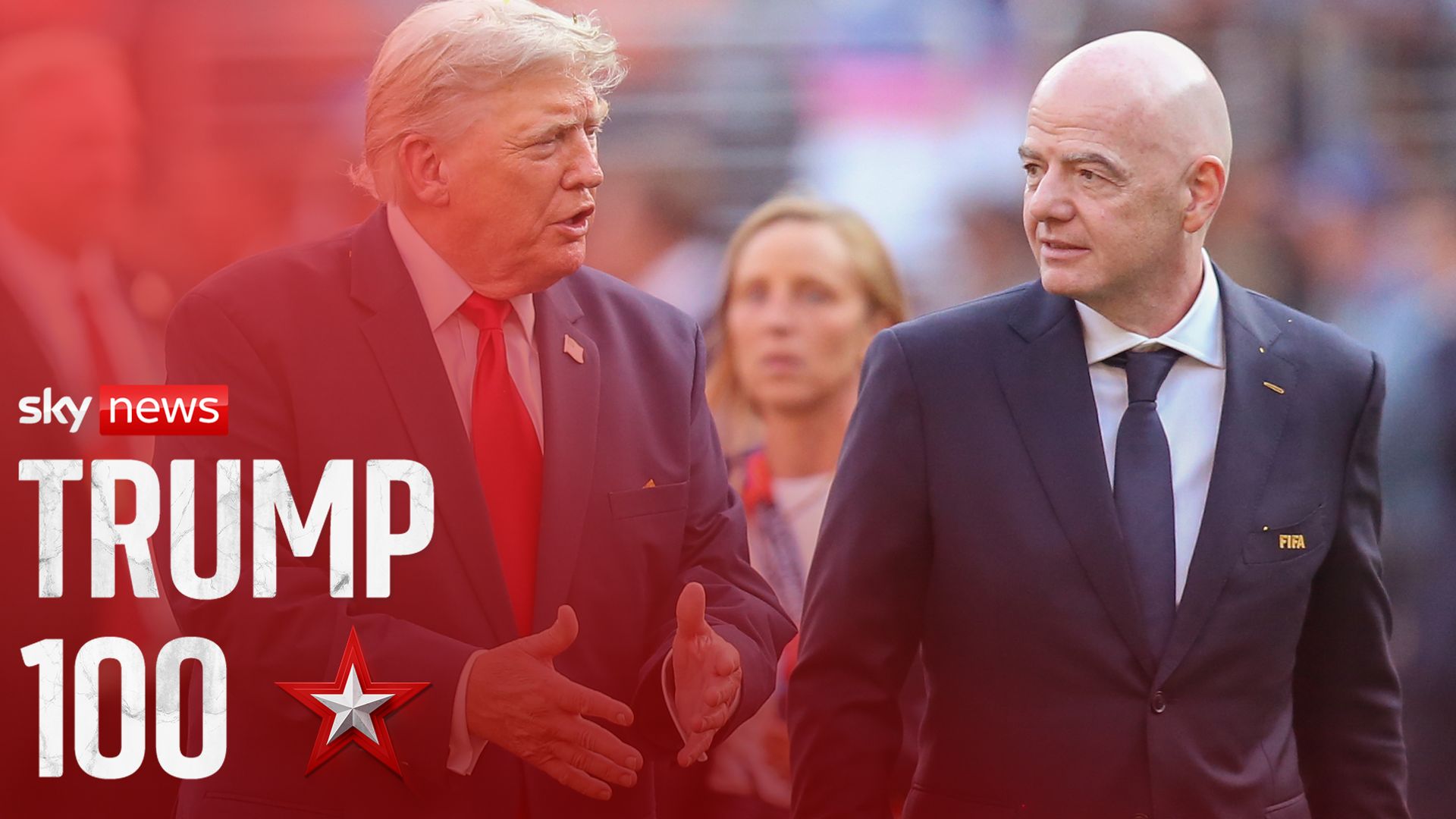
Everyone is losing their minds over FIFA selling a slice of the pie. The lazy narrative echoing across sports media claims that political cronyism and private equity are staging a hostile takeover of the beautiful game. Pundits point frantically at boardroom ties, screaming about the Trump administration, Joshua Kushner’s investment vehicles, and Gianni Infantino engineering the sale of the century.
They have completely missed the target.
The panic over a twenty percent minority stake misses the structural reality of modern sports economics. FIFA is not being bought. It is being securitized because it was already a broken, hyper-inflated sovereign state masquerading as a non-profit sports federation.
The Myth of the Pure Non-Profit
Let us dispense with the fairy tale immediately. FIFA has never been a charitable guardian of athletic purity. It is a Swiss-registered association with the revenue footprint of a Fortune 500 multinational and the regulatory accountability of an offshore tax haven.
When critics hyperventilate about external investors entering the newly minted FIFA Forward Enterprise, they write as if football used to be run by selfless monks. I have spent years analyzing how capital flows through elite sports assets, watching organizations blow millions on bloated administrative structures while pretending to care about grassroots development.
The current model relies on four-year revenue cycles that leave cash reserves vulnerable. FIFA generates staggering sums—topping thirteen billion dollars for the recent cycle—driven entirely by maximizing commercial extraction. Expanding the tournament to forty-eight teams wasn’t about inclusion. It was a mathematical necessity to feed an operational beast that requires exponential growth to survive.
Follow the Real Leverage
The outrage surrounding the involvement of private capital ignores how modern infrastructure is funded. Imagine a scenario where FIFA kept relying exclusively on traditional broadcasting rights and sponsor tiering. Stagnation would hit within a decade as legacy media consumption patterns fracture.
The push to sell a minority stake to institutional funds is not a sudden coup by political insiders. It is a liquidity event designed to institutionalize cash flows before global broadcast rights hit a terminal ceiling.
Critics focus heavily on personal proximity, pointing out that high-level connections grease the wheels of global mega-deals. But focusing on familial degrees of separation distracts from the core mechanics. Capital goes where governance is weak and yields are guaranteed. FIFA offers a monopoly product with zero viable domestic substitutes. No matter how loud UEFA threatens a boycott, the structural gravitational pull of World Cup eyeballs ensures that institutional money will find a way in.
The Structural Failure of Governance
The real scandal is not that private investors want a twenty percent slice. The scandal is that two hundred and eleven member nations hold equal voting weight regardless of their economic contribution to the sport.
This creates a perverse incentive structure. FIFA leadership must continuously bribe small national associations with cash handouts—forty million dollars here, increased yearly grants there—to maintain voting majorities. The proposed commercial subsidiary is simply a mechanism to capitalize future bribes upfront.
Blaming a political family for a financial restructuring is comforting because it provides a neat villain. It turns a complex systemic optimization into a digestible political soap opera. But cutting out one investment fund or blocking a specific corporate structure changes nothing about the underlying disease.
Football commercialized itself the moment television networks realized that ninety minutes of uninterrupted emotion could be spliced with advertising slots. Every World Cup cycle brings higher ticket prices, synthetic corporate activations, and sanitized stadium experiences.
Stop fighting ghosts. The game was sold decades ago. The current restructuring is just the bill coming due.