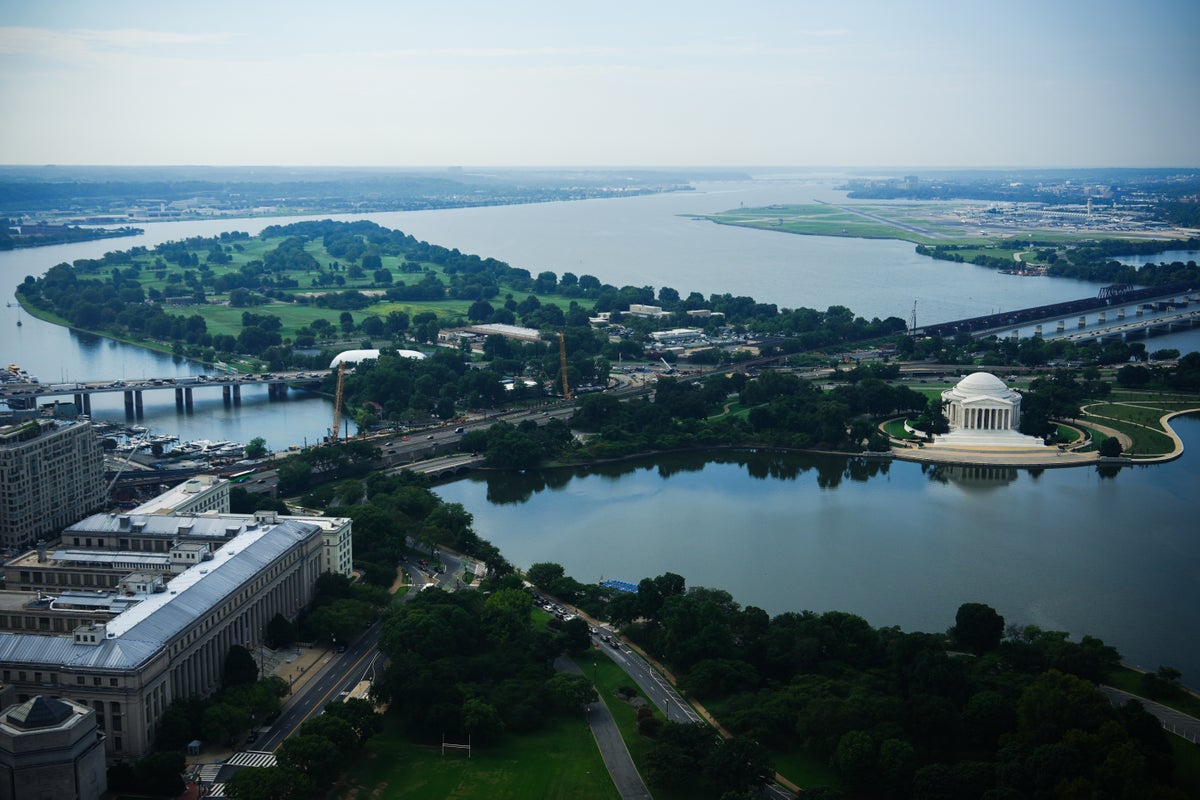
The hand-wringing over the presidential makeover of East Potomac Golf Links misses the mark entirely. Critics hyperventilate about the loss of cheap, grungy municipal golf, framing a high-end redesign as an assault on the working class. They tell you that a century-old hackers' paradise on Hains Point is being stolen from the public.
They are wrong. The lazy consensus in modern urban planning dictates that if something is cheap, crumbly, and accessible, it must be morally pure. That is sentimental garbage. If you liked this article, you should look at: this related article.
I have watched cities pump millions into neglected municipal assets only to watch them rot back into weed-choked embarrassment because we confuse affordability with structural neglect. Let us clear away the romantic fog. East Potomac right now is a tired, poorly drained relic. It offers subpar turf, sluggish maintenance, and layout compromises that belong in the 1920s. Pretending that a facility failing to punch above its weight class is some sacred egalitarian sanctuary is a comforting delusion for people who hate progress.
The Myth of Municipal Egalitarianism
Let us look at the mechanics of public golf. The standard argument runs like this: a championship-caliber renovation means skyrocketing greens fees, pricing out the everyday worker who just wants to whack a Top-Flite around after a Tuesday shift. For another angle on this development, see the latest update from NBC Sports.
Except that premise collapses under basic scrutiny. The recent agreement between the administration and the National Links Trust ensures that municipal management stays tied to public access. A championship-caliber layout designed by a heavy hitter like Fazio Design does not automatically spell private exclusivity. Look at Bethpage Black. It hosts major professional championships while remaining a public municipal facility where golfers sleep in cars for a tee time.
World-class conditioning and high-end architecture are not exclusive to private country clubs with extortionate initiation fees. When executed with a mandate for public access, elite design elevates everyone. It replaces a glorified cow pasture with an architectural marvel that generates civic pride, boosts local tourism revenue, and provides juniors with a facility worthy of actual development rather than a weed patch.
The Cost of Low Expectations
We have a chronic cultural disease in American infrastructure: low expectations for public spaces. We accept potholes on our highways, stained concrete in our transit hubs, and bumpy, burnt-out greens on our public golf courses because we are told we should be grateful to have anything at all.
This is the tyranny of the baseline. Critics argue that the everyday hacker doesn't need championship length or pristine, bentgrass fairways. Why not? Why should public land be legally mandated to remain mediocre?
Imagine a scenario where a municipal course sits in the shadow of national monuments, framed by the Potomac River, yet looks like an afterthought from 1954. Oh wait, you do not have to imagine it; you can just look at Hains Point right now. Pumping investment, top-tier design talent, and serious capital into public real estate is the only way to drag municipal golf out of the twentieth-century dark ages.
Dismantling the Displacement Panic
The loudest objection centers on displacement—the fear that local leagues, youth clinics, and weekend warriors will be permanently evicted for high-rolling tourists. But elite golf course architecture is scalable. Modern redesigns incorporate mixed infrastructure: an 18-hole championship layout flanked by shorter executive loops, expansive short-game areas, and state-of-the-art practice facilities that actually handle high-volume public traffic better than an antiquated 36-hole sprawl of turf mistakes.
A multi-tiered routing model satisfies two masters. It gives the region a venue capable of hosting major tour events while maintaining high-throughput capacity for the local community. The real threat to accessibility has never been elite architecture; it is municipal insolvency and systemic under-funding that leaves courses vulnerable to closure or commercial sell-off. Upgrading the asset secures its survival on public balance sheets for another hundred years.
Stop defending obsolescence. Stop pretending that turf conditions resembling a municipal softball outfield equate to a democratic win. When elite design meets public land, the public wins—if we have the stomach to demand excellence instead of settling for cheap scraps.
--- Trump to renovate 'dangerous' DC public golf course
This video provides an on-the-ground look at the conflicting viewpoints surrounding the major renovations planned for the historic D.C. public golf course.
http://googleusercontent.com/youtube_content/1