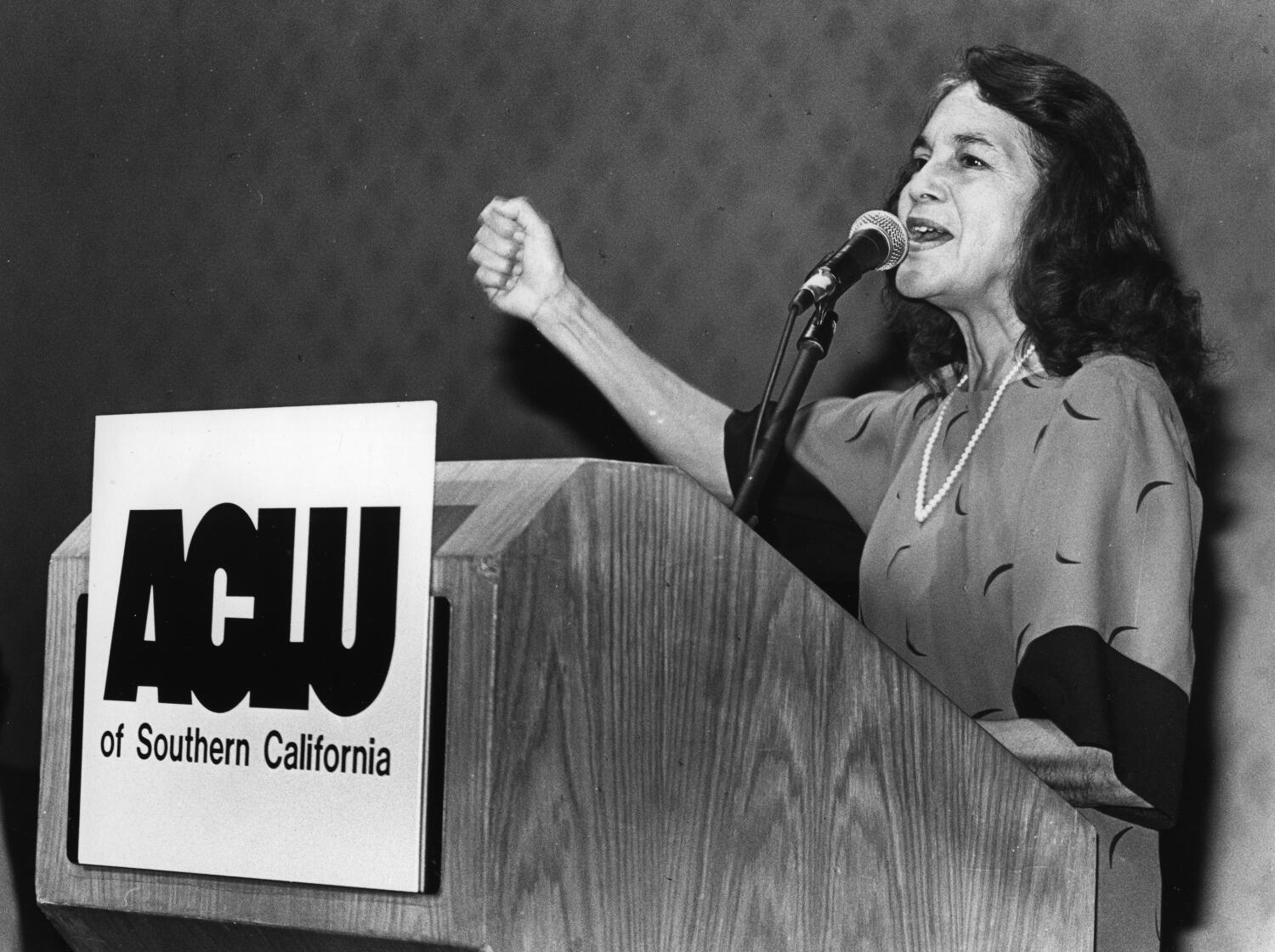
Saying Dolores Huerta "wasn't perfect, but she was always dedicated to the cause" is the most condescending compliment in American political writing.
That exact framing—recently floated in mainstream letters to the editor—is the signature move of polite liberal revisionism. It takes a ruthless, uncompromising labor tactician, sands off every sharp edge that actually made her effective, and mounts her on a wall as a secular saint. You get the warm glow of celebrating a civil rights icon without having to reckon with the brutal, unglamorous mechanics of how power is actually won. Don't forget to check out our recent post on this related article.
If you want to understand why modern labor movements stall out in endless awareness campaigns and Twitter threads, look at how we talk about Huerta. We praise her "dedication." We excuse her "imperfections." We completely miss the point that those so-called imperfections were the exact engine of her success.
The Myth of the Polite Organizer
Mainstream history loves a martyr and tolerates a prophet, provided both are safely dead or retired into ceremonial roles. When commentators write that Huerta "wasn't perfect," they are usually gesturing vaguely at two things: her fractious personal life—eleven children across multiple relationships, frequently left with relatives while she worked—and her fierce ideological clashes inside the United Farm Workers (UFW) during the 1970s and 1980s. To read more about the context of this, Al Jazeera provides an informative summary.
Here is the lazy consensus: Huerta succeeded despite her abrasive methods, her uncompromising demands, and her refusal to play nice with moderate allies.
That is completely backward.
In organizing, likability is a liability. I have spent two decades watching well-funded advocacy groups burn through millions of dollars trying to win seats at tables where they have zero actual weight. They hire PR firms. They polish their messaging. They beg for bipartisan consensus. And they get crushed every single time by opponents who understand that power concedes nothing without a structural threat to its bottom line.
Huerta understood this in her bones. When she co-founded the National Farm Workers Association with Cesar Chavez in 1962, agricultural growers in California operated as a feudal cartel. They owned the local sheriffs, the judges, the state legislators, and the press. You do not defeat a cartel by asking politely or being a balanced, well-rounded work-life role model.
You defeat a cartel by making their business model impossible to execute.
What "Dedication" Actually Looks Like Under Fire
When casual observers talk about Huerta's dedication, they picture marches, picket signs, and the Sí, se puede slogan. They rarely look at the cold, hard operational reality of the 1965–1970 Delano grape strike and boycott.
A boycott is not a viral hashtag. It is logistical warfare.
Huerta ran the New York City boycott operation, the single most critical theater in the entire campaign. New York was the largest terminal market for California table grapes in the country. If grapes moved in New York, the growers survived. If grapes rotted on the docks in New York, the growers bled cash.
To shut down New York, Huerta did not rely on moral appeals to grocery shoppers. She built an aggressive, disciplined machine that targeted supermarket chains, dockworkers, municipal officials, and rival unions. She turned up at shareholder meetings. She pressured union bosses to honor picket lines. When store managers refused to pull grapes, she organized relentless, disruptive pickets outside their doors until the cost of stocking the fruit exceeded the profit of selling it.
Consider the mechanics of what she accomplished:
- Supply Chain Chokepoints: Instead of trying to organize scattered, transient workers across millions of acres of California farmland—a logistical nightmare growers could easily break with replacement labor—she attacked the concentrated distribution nodes in major cities.
- Asymmetric Coalition Building: She fused the grievances of Mexican and Filipino field workers with urban liberal consumers, Catholic clergy, student radicals, and East Coast industrial unions. None of these groups naturally aligned. She forced them into alignment through sheer persistence.
- Contractual Brutality: Huerta was the UFW's chief negotiator. Growers hated sitting across from her because she did not trade away core protections for quick headlines. She fought for hiring halls—which stripped growers of the power to blacklist union organizers—alongside pesticide bans and medical plans.
When modern pundits call her "imperfect," they are often reacting to the fact that she was a hard-nosed operator who bulldozed anyone—including internal UFW allies—who stood in the way of the union's strategic objectives.
The Internal Civil War Nobody Wants to Discuss
To understand Huerta's real legacy, you have to look at the period mainstream tributes skip over: the late 1970s and early 1980s, when the UFW nearly tore itself apart.
By 1975, the UFW had achieved the unthinkable: the passage of the California Agricultural Labor Relations Act (ALRA), granting farmworkers collective bargaining rights. Membership surged toward 80,000. On paper, they had won.
Then came the collapse. Within a decade, active membership plummeted to fewer than 10,000.
Why? Because Chavez and Huerta centralized power at La Paz, the union's headquarters in the Tehachapi Mountains, and purged experienced organizers who disagreed with their strategic shift away from field organizing toward direct-mail campaigns and internal ideological conformity.
Historians like Miriam Pawel, in The Union of Their Dreams, and Matt Garcia, in From the Jaws of Victory, documented this period extensively. Dedicated organizers who had spent years in the fields—people like Jerry Cohen, Marshall Ganz, and Eliseo Medina—were pushed out or resigned in frustration over authoritarian management, loyalty tests, and the infamous "Game" imported from the Synanon movement.
Huerta was not a passive bystander in this. She was Chavez's fiercest enforcer. She defended the purges. She prioritized total loyalty to the leadership circle over the decentralized, messy democracy that had built the union in the first place.
If you want to talk about Huerta's "imperfections," that is the real story. Not that she missed her kids' birthdays, and not that she was stubborn at the bargaining table. The real flaw was that the exact same ironclad rigidity that allowed her to stare down billion-dollar agribusinesses also blinded her when the threat came from inside the house.
Stop Asking Whether Historical Figures Were "Good People"
Search engines are flooded with variations of the same tired questions about historical figures: Was Dolores Huerta controversial? What were Dolores Huerta's flaws? Why is Dolores Huerta famous?
These questions are traps. They reduce complex political operators to moral report cards.
Let's dismantle the premises of the three most common misconceptions surrounding her career:
1. "She was just Cesar Chavez's sidekick."
False. Cesar Chavez was the charismatic symbol, the ascetic spiritual leader who fasted and drew media cameras. Dolores Huerta was the architect, the lobbyist, and the tactician