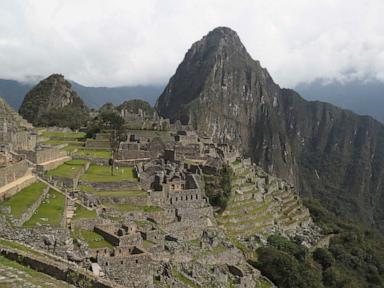
UNESCO and global heritage groups are currently patting themselves on the back for offering to "help" Peru manage Machu Picchu. They speak in hushed, reverent tones about preservation, sustainability, and technical assistance. It sounds noble. It sounds necessary. It is actually a slow-motion bureaucratic strangulation of one of the world's most significant economic engines.
The "lazy consensus" suggests that more oversight from international bodies is the only way to save the Incan citadel from the "threat" of its own popularity. This narrative treats tourism as a virus and local management as inherently incompetent. Both assumptions are wrong. The real threat to Machu Picchu isn't the foot traffic; it’s the calcification of the site into a static museum piece that serves global elites while stifling the very people who live in its shadow.
The Preservation Paradox
International heritage groups operate on a fundamental misunderstanding of what a site like Machu Picchu represents. They view it as a fragile artifact that must be frozen in time. This is the Preservation Paradox: the more you attempt to "protect" a living cultural landmark by restricting access and imposing rigid international standards, the more you strip away its relevance.
I have watched this play out across the globe. From Venice to the Galapagos, when "global experts" swoop in, they bring a checklist of restrictions that prioritize the aesthetics of the site over the vitality of the local economy. They want the site to look perfect for the coffee table books, regardless of whether the local community can actually afford to keep the lights on.
In Peru, the government is often caught between a rock and a hard place. If they increase daily visitor caps to meet demand, they face the wrath of international monitors who threaten to put the site on the "List of World Heritage in Danger." This isn't protection. It is a form of soft-power colonialism where Western standards of "quiet contemplation" are forced upon a developing nation’s primary source of revenue.
The Myth of the Over-Tourited Ruin
Let’s look at the numbers. The current visitor cap at Machu Picchu is roughly 4,500 to 5,600 people per day, depending on the season and the specific circuit. Critics claim this is "too many."
Compare that to the Eiffel Tower, which sees roughly 16,000 to 19,000 visitors a day. Or the Louvre, which handles over 25,000.
The immediate retort is that Machu Picchu is "fragile." But is it? It is a masterpiece of Incan engineering designed specifically to withstand the seismic activity of the Andes and the torrential rains of the cloud forest. The drainage systems built by the Incas over 500 years ago still function more efficiently than many modern urban sewer systems.
The site isn't crumbling under the weight of human feet. It is suffering from a lack of dynamic infrastructure. Instead of heritage groups offering "technical advice" on how to limit visitors, they should be financing high-tech, low-impact infrastructure—transparent walkways, advanced crowd-flow sensors, and decentralized entry points—that would allow the site to safely host 10,000 people a day.
The False Choice: Revenue or Ruins
The heritage industry loves to frame the debate as a binary: you either care about the history or you care about the money. This is a false choice designed to keep the "experts" in charge.
The truth is that without massive, consistent revenue, preservation is impossible. The stones don’t stay in place by magic. They require constant maintenance, vegetation clearing, and geological monitoring. By artificially suppressing the visitor count to satisfy international aesthetic preferences, we are starving the very budget required for high-end conservation.
We need to stop treating Machu Picchu like a fragile porcelain vase and start treating it like the robust, living infrastructure it was built to be.
Why the "Experts" are Wrong About "Overtourism"
- The Dispersal Failure: The problem isn't that too many people go to Machu Picchu. It’s that we haven't built the infrastructure to move them through the Sacred Valley efficiently.
- The Luxury Bias: Many "preservation" arguments are just thinly veiled elitism. High-priced permits and restricted access don't save the site; they just ensure that only the wealthy get to see it.
- The Static Model: Heritage groups focus on "carrying capacity," a metric used for wildlife parks. Humans are not wandering caribou. We can be managed through intelligent design and technology.
The Peruvian Government Doesn't Need a Babysitter
The offer from global heritage groups to "work with" the Peruvian government is often code for "oversight." It implies that the Peruvian Ministry of Culture is incapable of managing its own treasure. This ignores the fact that Peru has navigated political upheaval, global pandemics, and massive logistical challenges to keep the site open and functional.
When a global body steps in, they bring a layer of bureaucracy that moves at the speed of glacier melt. They demand studies that take years to complete while the local hotel owners in Aguas Calientes go bankrupt.
If these heritage groups truly wanted to help, they wouldn't offer "consultation." They would offer capital. They would fund the completion of the Chinchero International Airport without the strings of "developmental oversight." They would pay for the electrification of the rail lines to reduce the carbon footprint of the journey.
But they won't. Because capital gives the locals power. Consultation keeps the power in Paris or D.C.
A Better Way: The High-Throughput Model
Instead of following the "quiet museum" model, Machu Picchu should embrace the "high-throughput" model used by modern world-class attractions. This involves:
- Digital Twin Monitoring: Using LiDAR and real-time sensors to track structural stress, allowing for data-driven visitor management rather than arbitrary caps.
- Tiered Access Infrastructure: Building elevated, non-invasive walkways over sensitive areas to allow more people to view the site without touching a single Incan stone.
- Decentralized Marketing: Actively pushing visitors toward Choquequirao—the "sister city"—by building the long-promised cable car system, rather than just telling people "not to come" to Machu Picchu.
The Cost of Compliance
The downside of my approach is obvious: it requires a massive upfront investment and a willingness to ignore the pearl-clutching of international observers. It turns a "sacred" site into something that looks a bit more like a managed attraction.
But the alternative is worse. The alternative is a site that becomes a playground for the 1%, where a permit costs $1,000 and the local population is relegated to being "cultural performers" rather than stakeholders in a booming economy.
The "lazy consensus" says we must protect Machu Picchu from the world. I say we must protect Machu Picchu from the protectors. It was built to be a center of power, administration, and life. It was never meant to be a tomb.
Stop asking how we can limit the number of people who see this wonder. Start asking why we are so afraid of the prosperity that their presence brings. The stones can handle it. The question is whether the bureaucrats can.
Tear up the "assistance" contracts. Build the infrastructure. Open the gates.