Two teenagers are dead in Scarborough. Another is fighting for their life in a trauma ward. And right on schedule, the press releases are rolling out.
"Deeply saddened." "Heartbroken." "Thoughts and prayers with the families."
If you work anywhere near municipal policy, policing, or community intervention, you have seen this exact script run a thousand times. A tragedy hits the east end of Toronto. Local politicians issue a template statement expressing profound grief. Journalists copy-paste those quotes into a 400-word breaking news brief. The public shakes its head, clicks to the next tab, and waits for the next headline.
This is the lazy consensus of modern crime reporting. It treats youth gun violence like a freak weather event—an unpredictable hurricane that blows through an intersection, leaves bodies on the pavement, and demands nothing more from our leaders than a somber press conference.
It is a lie. And repeating that lie is getting kids killed.
The Anatomy of a Performative Press Release
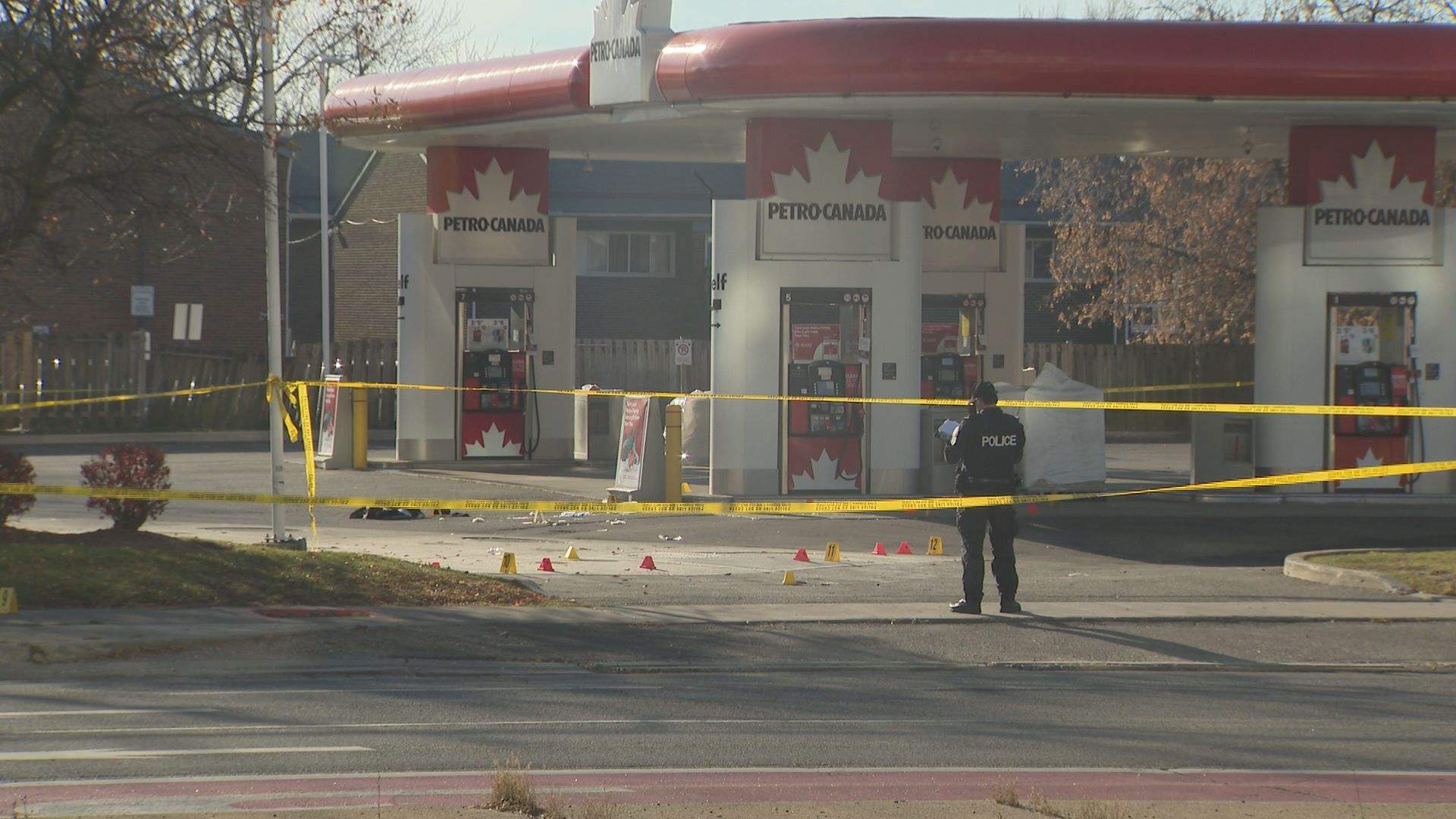
Look at how standard news coverage frames a Scarborough shooting. The focus is entirely on the immediate aftermath: the yellow tape, the forensic vans, the vague appeal for witnesses, and the obligatory quote from an elected official expressing sorrow.
By centering the narrative on how "saddened" officials feel, the media inadvertently lets those exact officials off the hook. Sorrow requires no accountability. Grief demands no budget reallocation. When a city councillor says they are heartbroken, they are positioning themselves as a fellow victim of a tragic circumstance rather than an architect of the system that failed to prevent it.
I have spent years analyzing urban violence prevention strategies across North America, and the pattern is identical in every major city. Whenever leadership defaults to performative empathy, operational urgency dies. Nobody asks why the street-level outreach programs in that specific postal code ran out of funding six months ago. Nobody asks why illegal firearms are crossing the border with near-impunity while lawmakers argue over legal sport-shooting regulations. Nobody asks why the school-to-street pipeline in neglected suburbs remains wide open.
They just say they are deeply saddened, and the news cycle moves on.
Defining the Real Problem
To dismantle the lazy consensus, we have to get brutally precise about what is actually happening on the ground. Mainstream reporting loves to use broad, sanitized terms like "gang violence" or "senseless tragedy." Both terms are inaccurate and counterproductive.
First, it is rarely "gang violence" in the cinematic, organized-crime sense that people imagine. Criminologists who study urban youth violence—researchers like David Kennedy, the architect of the Group Violence Intervention (GVI) model, and Anthony Braga—have demonstrated for decades that modern street violence is overwhelmingly driven by hyper-local, retaliatory micro-conflicts. It is not about massive drug cartels fighting for territory. It is about disrespect on social media, neighborhood stigma, and small cliques of terrified teenagers carrying guns because they genuinely believe nobody else will protect them.
Second, it is never "senseless." Calling a shooting senseless implies there is no logic behind it. If there is no logic, you cannot predict it, and you cannot disrupt it. In reality, retaliatory street violence follows a rigid, predictable social logic. When a young person is humiliated or threatened in an environment where calling the police means being labeled a snitch—and where the police themselves often struggle to clear non-fatal shooting cases—carrying an illegal handgun becomes a rational survival strategy in the mind of a 16-year-old.
Until we stop calling these shootings senseless, we will never bother to understand the rules governing them.
What People Actually Ask (And Why the Questions Are Wrong)
Whenever a shooting involving teenagers dominates the headlines, search engines light up with the same predictable questions. Almost all of them are built on flawed premises.
Is Scarborough becoming more dangerous?
This is the wrong question. It treats a massive, sprawling geographic area of over 600,000 people as a single monolith. Violence is never evenly distributed across a city or even a suburb. Epidemiological studies of gun violence consistently show that shootings cluster tightly around specific micro-locations—sometimes a single apartment complex, a specific transit hub, or two adjacent blocks. Asking if Scarborough is dangerous stigmatizes hundreds of thousands of working-class residents while obscuring the exact hotspots where targeted intervention is desperately needed.
Why don't witnesses come forward?
Mainstream commentary treats witness silence as a moral failing of the community. That is pure fiction written by people who have never lived in a high-risk neighborhood. Witnesses do not stay silent because they support violence; they stay silent because the justice system cannot guarantee their safety. A teenager who testifies in court has to take the same public transit home the next day. Expecting a kid to risk their life to cooperate with an investigation when the state offers zero realistic protection is delusional.
Do we need more police patrols or more social programs?
This binary debate is the biggest time-waster in municipal politics. One side screams for "tough on crime" policing sweeps; the other demands vague investments in "community centers." Both sides are wrong when they treat these approaches as mutually exclusive. Heavy-handed, unfocused policing sweeps—like the failed carding practices of the past—destroy community trust and generate zero actionable intelligence. Conversely, opening a basketball court does nothing to stop an active retaliatory feud between two groups of armed teenagers tonight.
The Counter-Intuitive Blueprint That Actually Works
If press releases and binary political debates do not work, what does? We do not have to guess. We have decades of empirical data from cities that successfully drove down youth homicide rates. The catch is that the real solution requires admitting uncomfortable truths that neither politicians nor activists like to hear.
1. Treat Violence Like an Infectious Disease, Not a Moral Failing
Dr. Gary Slutkin, an epidemiologist who spent years fighting tuberculosis and cholera in Africa before founding Cure Violence, proved that street shootings spread through a population using the exact same transmission dynamics as an epidemic. Exposure to violence increases the likelihood that an individual will commit violence.
When a teenager is shot in Scarborough, the clock immediately starts ticking on a retaliation event. You do not stop an epidemic by holding a press conference. You stop it by deploying trained "violence interrupters"—credible messengers who have lived that life, carry genuine street legitimacy, and can step between two feuding groups within hours of a shooting to cool down the conflict before the next trigger is pulled.
2. Focus Deterrence on the Tiny Fraction of Trigger-Pullers
In any given neighborhood, less than one percent of the population is responsible for the overwhelming majority of gun violence. Traditional policing casts too wide a net, alienating the 99 percent of residents who just want to go to work and raise their kids.
The Group Violence Intervention framework flips this on its head. Law enforcement, social service providers, and community leaders sit down directly with the specific young men identified as being at the highest risk of shooting or being shot. The message is blunt and unambiguous: We know who you are. We want you alive and out of prison. Here are immediate jobs, housing support, and relocation assistance if you put the guns down. But if you shoot, every legal lever available will be pulled against your entire group.
It replaces random street sweeps with surgical precision.
3. Fix the Clearance Rate for Non-Fatal Shootings
Here is a statistical reality that rarely makes the evening news: the biggest driver of fatal shootings is unpunished non-fatal shootings. When someone shoots at a rival and misses, or only wounds them, and the police fail to make an arrest, the victim and their friends realize the state is not going to deliver justice. So they go buy a gun and handle it themselves.
Solving non-fatal shootings requires dedicated, specialized detective units focused purely on ballistics tracing, digital forensics, and witness protection—not beat cops writing traffic tickets.
The Uncomfortable Downsides Nobody Mentions
If this targeted, public-health-meets-precision-policing model works, why isn't every city running it flawlessly? Because it is messy, politically dangerous, and carries massive operational risks.
First, hiring credible messengers—people with past criminal records who actually have influence with street-involved youth—is a political minefield. If a city funds an outreach organization and one of those outreach workers gets arrested, the opposition press and rival politicians will crucify the mayor for "funding criminals." Politicians would rather fund safe, bureaucratic charities that accomplish nothing on the street than risk a scandal with an organization that actually reaches high-risk kids.
Second, this approach is slow, unglamorous, and invisible when it succeeds. You cannot hold a ribbon-cutting ceremony for a shooting that did not happen. A violence interrupter talking a 17-year-old out of a retaliatory drive-by at 2:00 AM generates zero headlines. Meanwhile, a single failure—one tragic night where two teens end up dead—wipes out months of quiet progress in the eyes of the public.
Third, local interventions cannot fully stop a macroeconomic supply chain. As long as illegal handguns flow freely across international borders, street-level workers are constantly trying to bail out a boat with a hole in the hull.
The Real Measure of Leadership
When two teenagers lose their lives in Scarborough, the community deserves real grief. Their mothers, fathers, siblings, and friends have every right to be devastated.
Elected officials, police brass, and policy makers do not get that luxury. Their job is not to feel sad on camera. Their job is to audit the exact failures that allowed a teenager to access an illegal firearm, feel compelled to carry it, and end up dead on a residential street.
The next time a shooting breaks the news, read the official statements carefully. Count how many times the words "saddened" or "tragic" appear. Then look for a single concrete metric: clearance rates, outreach funding timelines, illegal firearm seizure data, or immediate intervention deployments.
If all you see is sorrow, you are being lied to. Stop applauding politicians for having a heart, and start demanding they do their jobs.