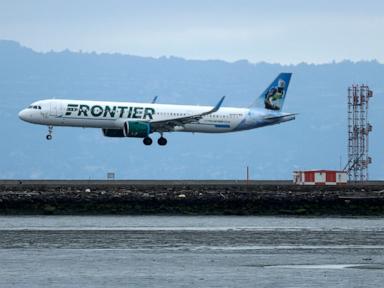
The industry is currently weeping over a $2.5 billion "relief" figure like it’s a humanitarian crisis. It isn’t. It is a death rattle for a business model that was built on a foundation of cheap debt and even cheaper kerosene.
Most analysts are looking at the rising cost of fuel and the sudden panic in the boardroom of every ultra-low-cost carrier (ULCC) and asking, "How do we save them?" They are asking the wrong question. The real question is: Why are we trying to keep a zombie industry on life support?
The $2.5 billion being discussed isn't a bridge to a better future. It is a taxpayer-funded band-aid for companies that spent a decade prioritizing share buybacks and aggressive expansion over basic financial resilience. Fuel price volatility is not a "black swan" event. It is a fundamental law of aviation. If your entire business collapses the moment oil ticks up, you don't have a business; you have a gamble.
The Myth of the "Low-Cost" Savior
The common narrative suggests that budget airlines "democratize" travel. This is the first lie we need to kill.
What they actually do is externalize their costs. They use secondary airports that are subsidized by local municipalities. They rely on "lean" staffing models that burn through human capital. They charge you for the "privilege" of carrying a backpack.
When fuel prices spike, these carriers claim they need relief to keep travel affordable for the "everyman." Look closer. When these airlines get a windfall, do they lower fares permanently? No. They expand into routes they can’t afford to service long-term.
I’ve spent years watching balance sheets in this sector. The pattern is always the same. In the fat years, they act like tech disruptors. In the lean years, they act like public utilities. You cannot have it both ways. If you want the rewards of a free-market disruptor, you have to accept the risk of free-market liquidation.
Fuel Hedging is Not a Strategy It is a Guess
The competitor reports suggest that "unprecedented" fuel costs are the culprit. This is a convenient excuse for poor management.
Sophisticated legacy carriers manage fuel through complex hedging. They lock in prices. They build buffers. Budget carriers, in their desperate race to the bottom on ticket prices, often leave themselves exposed. They bet that prices will stay low forever.
When that bet fails, they turn to the government. This $2.5 billion is essentially a bailout for a bad trade. Imagine if a hedge fund lost $2.5 billion on a bad margin call and asked for "relief" to keep the market "accessible." We would laugh them out of the room. Why do we treat airlines differently?
The Efficiency Trap
The industry loves to talk about "load factors." They brag about planes being 95% full. They tell us this is the peak of efficiency.
It’s actually a sign of extreme fragility.
When you operate at 95% capacity just to break even, you have zero margin for error. One mechanical delay, one storm, or one $10 jump in the price of a barrel of oil sends the entire system into a tailspin.
We’ve been sold a version of aviation that is "just-in-time" and optimized to the point of breaking. True efficiency requires redundancy. It requires a balance sheet that can absorb a bad quarter without crying for a handout. The budget model is the corporate equivalent of living paycheck to paycheck while driving a leased Ferrari.
The Problem With $19 Fares
Let’s be brutally honest about the economics. A $19 cross-country flight is a mathematical impossibility without massive hidden subsidies.
- Airport Infrastructure: Taxpayer-funded.
- Air Traffic Control: Government-managed.
- Environmental Impact: Unpriced.
When we talk about "relief," we are talking about further subsidizing a price point that shouldn't exist. If a flight costs $150 to operate per seat, but the airline sells it for $40 to grab market share, that $110 deficit doesn't disappear. It sits on the balance sheet like a ticking time bomb.
Now, the bomb is going off.
The "contrarian" take isn't that we need more competition; it's that we need better competition. If an airline cannot survive a fuel spike without $2.5 billion in help, it shouldn't be flying. Let it fail. Let its assets—the planes and the slots—be bought by carriers that actually know how to run a sustainable business.
Why Consolidation is the Only Honest Path
The "lazy consensus" says that consolidation is bad for the consumer. They say it leads to higher prices.
Higher prices are exactly what we need.
Cheap travel has a cost. It results in cramped cabins, miserable staff, and a fragile infrastructure. If prices rise because airlines are forced to be financially responsible, the market becomes more stable. You might pay more for your flight to Vegas, but the airline won't go bankrupt while you're at the gate.
The $2.5 billion "relief" package is a move to prevent the inevitable. It prevents the market from cleaning itself out. It keeps weak players in the game, which prevents stronger, more efficient players from taking over those routes and running them properly.
Stop Treating Air Travel Like a Human Right
This is the hardest pill for the industry to swallow. Air travel is a miracle of engineering and logistics. It is carbon-intensive, capital-heavy, and inherently risky.
Treating it like a cut-rate commodity has been a disaster for everyone involved—except for the executives who cashed out during the boom years.
The push for relief is a play on your emotions. They want you to think about your vacation being "stolen" by greedy oil companies. The reality is your vacation was being subsidized by a broken business model, and the bill has finally arrived.
If we give in and provide this relief, we are just starting the clock on the next $5 billion request. We are teaching the industry that they can be reckless with their hedges, aggressive with their growth, and the public will always be there to catch them.
The Actionable Truth for the Industry
If you are an investor or a traveler, stop looking at "relief" as a sign of recovery. It is a sign of systemic failure.
- Watch the Debt-to-Equity: Any airline asking for relief while holding massive debt should be avoided. They aren't "victims" of fuel prices; they are victims of their own leverage.
- Value Reliability Over Price: The era of the $19 ticket is over, whether the "relief" comes or not. The airlines that survive will be the ones that price their product honestly.
- Applaud the Failures: When a poorly managed budget carrier goes under, it frees up pilots, planes, and gates for companies that aren't one oil spike away from insolvency.
The $2.5 billion shouldn't be granted. The market needs a correction, not a cushion. Let the zombies fall so the industry can finally breathe.
Quit calling it "relief" and start calling it what it is: an admission of incompetence.


