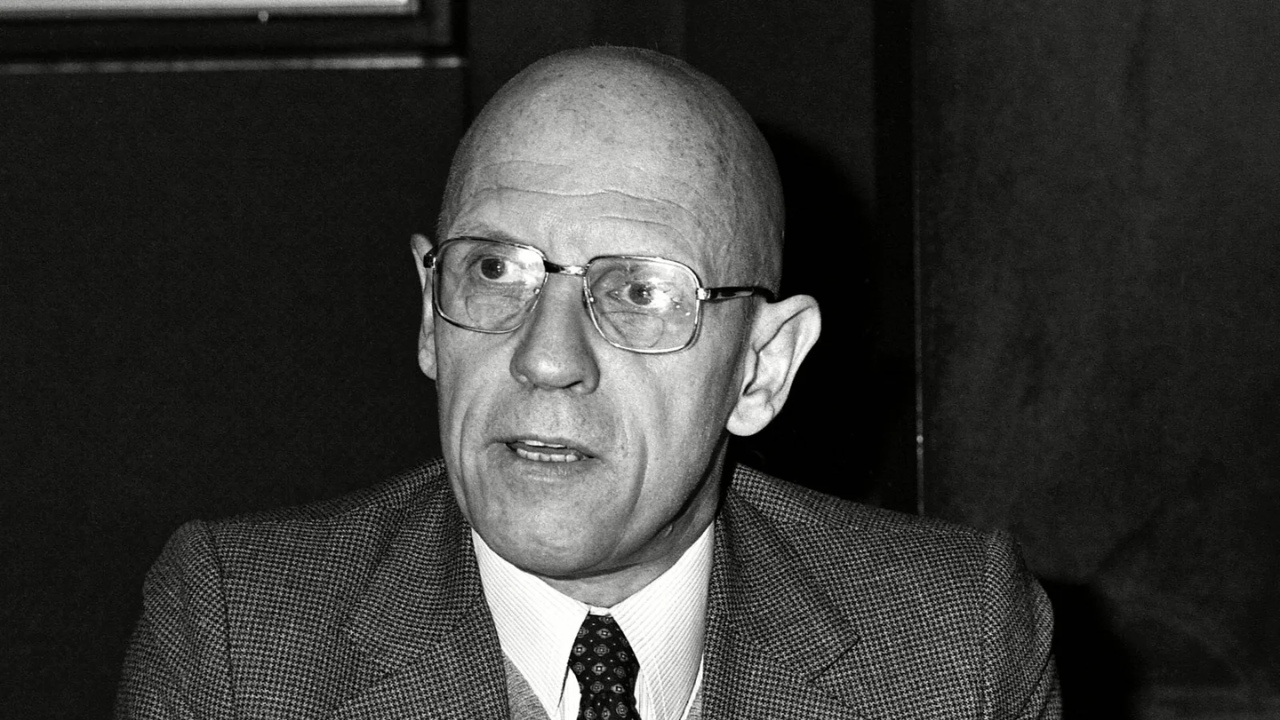
For decades, self-help gurus and pop philosophers have peddled a toxic falsehood wrapped in a comforting blanket. They quote Michel Foucault like a sacred text: “Maybe the target nowadays is not to discover what we are but to refuse what we are.” The lazy consensus treats this quote as an invitation to engage in endless, navel-gazing reinvention. People spend thousands of dollars on retreats, take personality tests until their eyes bleed, and quit stable jobs to go find themselves in Bali. They think the grand project of modern existence is stripping away layers of social conditioning to unearth some pure, authentic core buried deep inside.
It is a complete waste of time.
I have watched smart professionals burn their careers to the ground chasing this phantom authenticity, only to realize they are still miserable on the other side of the globe. You cannot refuse what you are if you do not exist in the first place as a fixed, stable monument.
The Myth of the Inner Core
Let us look at the actual mechanics of human identity. Modern psychology and neuroscience agree on a brutal truth: the unified self is an illusion.
Think of your brain not as a temple housing a wise, unchanging soul, but as a committee of competing sub-routines constantly arguing in a dark room. When you ask, "What am I really?", you are asking a broken question. There is no inner treasure chest waiting to be unlocked. There is only a biological machine generating narratives to make sense of random stimuli.
Foucault was not telling you to go on a spiritual scavenger hunt. He was talking about institutional power, biopolitics, and how states and corporations construct categories of human subjects to control them. He argued that the modern identity—our classification as patients, consumers, workers, and citizens—is an administrative cage.
When you try to "discover what you are" within that framework, you are simply learning to love your chains. You are adopting the diagnostic labels and lifestyle brands handed to you by marketing algorithms and calling it self-expression.
Why Refusal Without Construction is Suicide
The counter-argument from the radical crowd is simple: just reject everything. Smash the system, quit your job, drop out of the grid, and refuse all assigned roles.
I have seen people try this. It fails spectacularly.
Refusal without a replacement architecture is not liberation; it is vulnerability. If you strip away every structure, every routine, and every social commitment without building something dense and functional in its place, you do not become a free spirit. You become anxious, isolated, and utterly dependent on whatever cheap dopamine source fills the vacuum.
Imagine a scenario where a software engineer quits their high-paying job to "refuse the corporate machine." They spend six months meditating and reading theory. They feel lighter for about three weeks. Then the savings run dry, the daily structure evaporates, and executive dysfunction sets in. They have successfully refused what they were, but because they built nothing new, they default right back to the exact same patterns under worse conditions.
Foucault understood this. His later work focused heavily on the "care of the self"—an active, rigorous, almost militaristic discipline of shaping one's habits, thoughts, and reactions. You do not discover yourself; you forge yourself out of raw, unyielding materials.
The Antidote to Identity Panic
If discovery is a trap and pure refusal is a dead end, what is the actual play?
Stop treating your identity as an archaeological site and start treating it as a software project.
- Abandon Authenticity. The obsession with being "true to yourself" is a modern disease. Your feelings change with your blood sugar. Your beliefs change when you read a better book. Stop trying to align your actions with some sacred internal compass and start aligning them with functional outcomes.
- Design Constraints. Freedom without friction leads to paralysis. If you want to change who you are, do not meditate on your flaws. Change your environment, your inputs, and your daily friction points. You do not need to know who you are to decide what you will do at 8:00 AM tomorrow.
- Weaponize Routines. As the philosopher Will Durant summarized Aristotle: “We are what we repeatedly do. Excellence, then, is not an act, but a habit.” You are the sum of your executed protocols. If your protocols are trash, your life is trash. No amount of self-discovery will fix a broken morning routine.
The cultural obsession with self-discovery is a multi-billion-dollar distraction keeping you paralyzed while you wait for permission to live.
Nobody is coming to hand you a manual with your true name on it. There is no hidden blueprint.
Delete your personality tests, stop scrolling through existential philosophy quotes, and go build a Tuesday routine that doesn't make you want to throw your phone out the window.