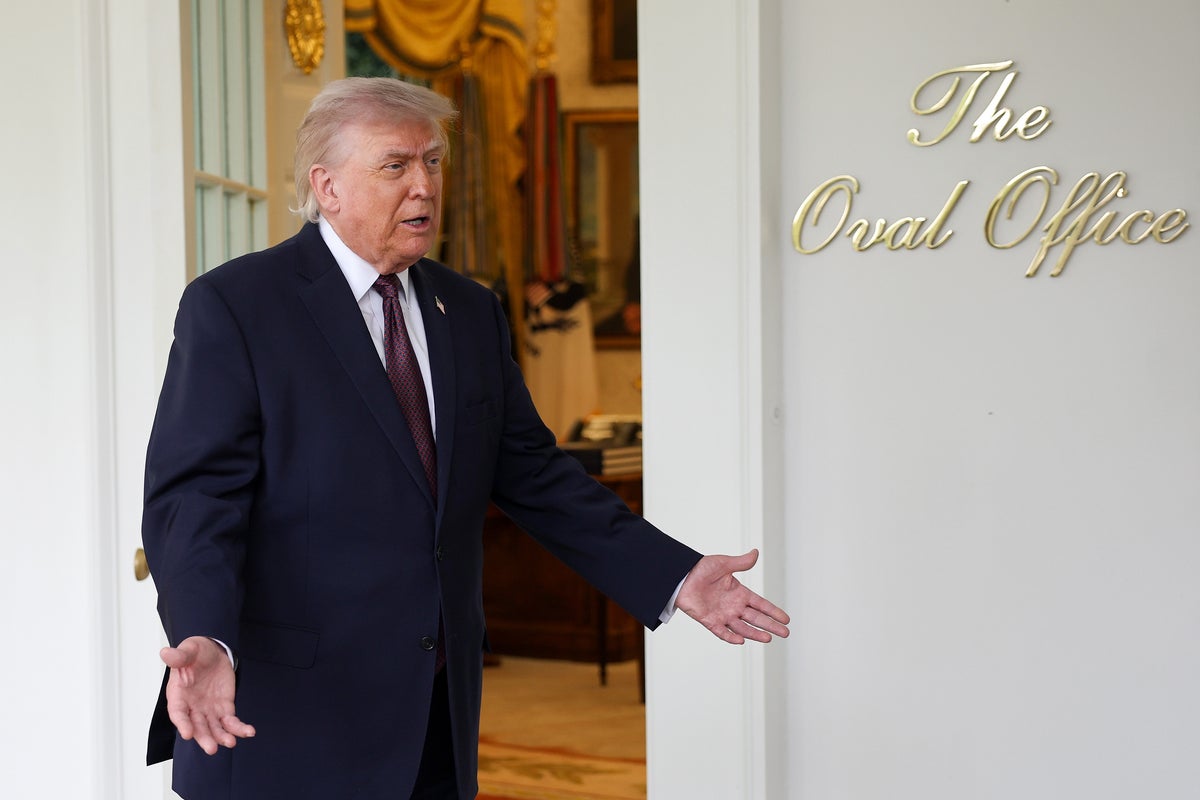
Geopolitics is currently suffering from a collective fever dream. The headlines suggest that the Strait of Hormuz—the world’s most sensitive oil artery—is a gate that can be slammed shut or swung open at the whim of a single superpower. Donald Trump’s rhetoric about "permanently reopening" the waterway suggests a fundamental misunderstanding of how global trade and maritime law actually function.
You cannot reopen a door that is already off its hinges. Learn more on a related topic: this related article.
The mainstream media falls for the bait every time. They treat the Strait like a toll booth on the New Jersey Turnpike. They frame the narrative around "hugs" from Xi Jinping and unilateral American "promises." This isn't just simplistic; it’s dangerous. It ignores the cold, hard physics of naval transit and the legal reality of "transit passage."
The Sovereignty Myth
The primary delusion here is that the United States, or even Iran, has the legal or physical capacity to "close" or "open" the Strait in a vacuum. Under the United Nations Convention on the Law of the Sea (UNCLOS), the Strait of Hormuz is governed by the regime of transit passage. Further analysis by Al Jazeera highlights related views on the subject.
Most people—and certainly most politicians—confuse "transit passage" with "innocent passage." They aren't the same. Innocent passage allows a coastal state to suspend travel if it deems its security is at risk. Transit passage, which applies to international straits, is non-suspensible.
Even though the U.S. hasn't ratified UNCLOS, it treats these rules as customary international law. Iran, similarly, is bound by these norms in practice, even when it rattles the saber. When a politician talks about "permanently reopening" the Strait, they are promising to enforce a status quo that already exists on paper and in daily operation. Roughly 20% of the world's liquid petroleum passes through that 21-mile-wide chink in the armor every single day. If it were truly "closed," the global economy wouldn't be "at risk"—it would be extinct.
Xi Jinping Does Not Give Hugs
The idea that a "big fat hug" from the Chinese President solves the Middle East puzzle is the peak of geopolitical narcissism. China is the world's largest importer of crude oil. Its interest in the Strait of Hormuz isn't a favor to Washington; it's a matter of national survival.
Beijing’s strategy isn't built on hugs; it’s built on hedging. While the U.S. focuses on military presence and "opening" what is already open, China has been quietly building the "Belt and Road" alternatives. They are investing in pipelines through Pakistan (the China-Pakistan Economic Corridor) and Myanmar to bypass maritime chokepoints entirely.
If you think Xi is going to play the role of a junior partner in a U.S.-led "reopening" ceremony, you haven't been paying attention to the last decade of South China Sea maneuvers. China wants the Strait open, but they want it open under a multipolar security framework where the U.S. Fifth Fleet isn't the sole arbiter of who gets to pass.
The Insurance Reality Check
I have spent years looking at how maritime insurance syndicates, like those at Lloyd's of London, actually price risk. They don't care about campaign promises. They care about "War Risk" premiums.
When a politician says they will "permanently" fix a maritime chokepoint, the markets laugh. Risk in the Strait of Hormuz is inherent to its geography. You have two hostile powers—Iran and the U.S. (along with its Gulf allies)—operating in a space so narrow that a single grounded VLCC (Very Large Crude Carrier) or a few stray sea mines could derail the entire system for weeks.
"Permanent" is a word that doesn't exist in the Persian Gulf.
Imagine a scenario where the U.S. "permanently" secures the Strait through a massive naval surge. What happens?
- Asymmetric responses: Iran moves to drone swarms or cyberattacks on port infrastructure.
- Escalation: Insurance premiums skyrocket because the presence of more warships increases the mathematical probability of a kinetic accident.
- Market Volatility: Oil prices spike on the news of the "solution" because the solution looks exactly like the beginning of a war.
The "lazy consensus" is that security equals more ships. The reality is that security in the Strait is maintained through a delicate, unspoken balance of mutual economic destruction.
The Tanker War Lesson
We’ve seen this movie before. During the 1980s "Tanker War," the U.S. launched Operation Earnest Will to escort Kuwaiti tankers. It was the largest naval convoy operation since World War II.
Did it "permanently reopen" the Strait? No. It turned the Gulf into a shooting gallery. The U.S. accidentally downed a civilian airliner (Iran Air Flight 655). Mines were hit. Frigates were nearly sunk.
The lesson was clear: You can't "police" a strait into submission. You can only manage the level of friction.
The Wrong Question
People always ask: "Can Iran close the Strait?"
The answer is: Yes, for about three days. Then their own economy, which relies almost entirely on those same waters, would collapse.
The better question is: "Why are we still pretending that a 19th-century naval blockade is the primary threat?"
The real threat to the "openness" of the Strait isn't a chain across the water. It's the transition to land-based infrastructure and the shifting of the energy center of gravity. Saudi Arabia’s East-West Pipeline and the UAE’s Habshan-Fujairah pipeline already allow millions of barrels to bypass Hormuz entirely.
The Strait is becoming a tactical theater rather than a strategic necessity. By promising to "reopen" it, politicians are fighting a war that is becoming obsolete. They are doubling down on a geographic vulnerability that the rest of the world is busy engineering its way around.
The Cost of the Promise
There is a massive downside to this brand of "tough-talk" diplomacy. When you promise a "permanent" solution to a fluid problem, you remove your own room for maneuver.
If the U.S. guarantees a "permanently open" Strait and an Iranian-backed militia nudges a drone into a tanker, the U.S. is then forced into a kinetic response to maintain "credibility." We are essentially outsourcing our foreign policy to the most radical actor in the region.
It is the height of arrogance to assume that the complex, centuries-old tensions between the littoral states of the Gulf can be smoothed over by a bilateral deal between a U.S. President and the leader of China. It ignores the Omanis, who act as the silent de facto regulators of the Strait. It ignores the Emiratis, who are building the world’s largest oil storage facilities outside the chokepoint.
Stop Fixing, Start Navigating
The obsession with "closing" and "opening" the Strait is a relic of a unipolar world that no longer exists.
Instead of chasing the ghost of a "permanent" fix, the focus should be on:
- Redundancy: Supporting the expansion of pipelines that bypass the chokepoint.
- De-escalation: Maintaining the quiet, professional "bridge-to-bridge" communication between the U.S. Navy and the IRGC that actually prevents accidents.
- Honesty: Admitting that the U.S. can no longer unilaterally dictate maritime security in the Eastern Hemisphere.
The Strait of Hormuz isn't a problem to be "solved" by a deal. It is a reality to be managed.
The "big fat hug" isn't coming. Even if it did, it wouldn't change the fact that a dozen speedboats with RPGs have more influence over today's oil prices than a handshake in Mar-a-Lago or Beijing.
Stop looking for a hero to "reopen" the world. Start looking at the map. The water is moving, the ships are sailing, and the only thing "closed" is the vision of anyone who thinks this is a simple fix.
Don’t buy the hype of a permanent solution in a region defined by permanent instability.