The Ghost in the Shipping Lanes
Every few months, the mainstream financial press triggers a collective panic attack over the Strait of Hormuz. Tehran rattles its saber, an official makes a sweeping statement about shutting down the world's most critical naval chokepoint, and commodity traders code-red their dashboards.
It is a predictable, exhausting ritual. And it is entirely hollow.
The lazy consensus among geopolitical commentators is that a permanent or even semi-permanent closure of the Strait of Hormuz by Iran would instantly trigger a global economic apocalypse, sending crude oil skyrocketing to $250 a barrel and grinding Western civilization to a halt. This narrative sells advertisements and juices cable news ratings. It also completely ignores the structural realities of modern naval warfare, state survival, and global energy logistics.
Iran cannot permanently close the Strait of Hormuz. More importantly, they know they can't. The real threat to global trade isn't a total physical blockade; it is the permanent premium attached to the fear of one.
The Logistics of an Impossible Blockade
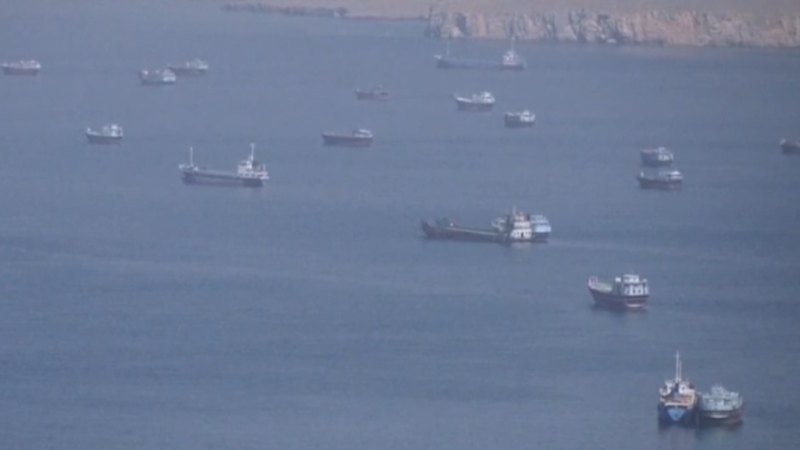
Let's dismantle the physics of a total closure. The Strait of Hormuz is not a narrow canal with a wooden toll gate. At its narrowest point, the shipping channels consist of two two-mile-wide corridors for inbound and outbound traffic, separated by a two-mile buffer zone. It is deep, wide, and heavily monitored.
To actually "close" this body of water, a nation must achieve absolute sea denial. In the modern era, that requires continuous projection of firepower.
[Strait of Hormuz Shipping Lanes]
Inbound Lane (2 Miles) | Buffer Zone (2 Miles) | Outbound Lane (2 Miles)
If Tehran attempts a hard blockade using naval mines, fast-attack craft, and anti-ship cruise missiles like the Noor or Ghadir variants, they trigger an immediate, overwhelming international kinetic response. I have spent years analyzing maritime supply chains and risk metrics. Here is what happens thirty minutes after a definitive blockade is initiated: the global insurance market pulls coverage for the entire Persian Gulf, and the United States Fifth Fleet, alongside regional allies, initiates a systematic campaign to neutralize every coastal missile battery and naval asset within 100 miles of the coast.
A total blockade is an act of absolute state suicide. Iran relies on the exact same waters to export its own crude—primarily to buyers in Asia who keep the regime’s economy afloat. To choke off the strait is to starve their own treasury while begging for total military destruction. It is a classic Mexican standoff where one party is threatening to pull the trigger on their own foot.
The Overlooked Bypass Networks
The "zero-sum" media narrative treats the Persian Gulf like an isolated swimming pool with only one drain. If the drain is plugged, everything stops. This completely misses the massive infrastructure investments made over the past two decades specifically designed to render the Strait of Hormuz obsolete.
Consider the actual hard infrastructure currently sitting on the Arabian Peninsula:
- The Habshan–Fujairah Pipeline: Operated by the UAE, this pipeline cuts straight across the desert, bypassing the strait entirely and delivering up to 1.5 million barrels per day directly to the Gulf of Oman.
- The Saudi East-West Crude Pipeline: This massive conduit can move up to 5 million barrels per day from the Eastern Province fields directly to the Red Sea port of Yanbu.
While these pipelines currently do not operate at maximum capacity, they represent immediate operational redundancy. In a crisis scenario, almost 40% of the oil that typically transits Hormuz can be rerouted through overland networks within days. Is it a perfect solution? No. It introduces friction, logistical bottlenecks, and increased transit costs. But it completely destroys the premise that a disruption in the strait equates to a total freeze of Gulf energy output.
Why the Energy Markets Already Priced You Out
Why doesn't oil shoot to the moon every time a drone is intercepted or an exercise is announced? Because the algorithms running the major commodity desks understand what retail investors do not: volatility is the product, not the risk.
The premium on crude oil isn't calculated based on the probability of a permanent war; it is calculated based on insurance premiums and freight rates. When tensions rise, the War Risk Insurance premium surges. Shipowners pass this cost down the line. The physical oil still moves; it just costs an extra $2 to $4 a barrel to cover the risk profile of the hull.
The market doesn't fear the closure. The market thrives on the anticipation of friction. The moment an actual conflict breaks out, the uncertainty vanishes, replaced by hard operational parameters.
Imagine a scenario where an oil tanker is actually struck by a loitering munition. The immediate reaction is a spike in spot prices. The secondary reaction—occurring within hours—is the activation of international naval escorts under frameworks like International Maritime Security Construct (IMSC). The supply chain adapts, the ships keep moving under armed guard, and the price premium decays back to the mean.
The Real Vulnerability Nobody Is Talking About
If the physical closure of the strait is a myth, where is the actual danger? It sits squarely in the realm of asymmetric gray-zone harassment and cyber operations targeting port infrastructure.
You do not need to sink a carrier battle group to disrupt global trade. You just need to make the digital ledger system of a major port like Jebel Ali unreadable for 72 hours. A coordinated cyber offensive against the automated crane systems, customs clearing software, and ballast control mechanisms of major regional terminals would cause far more economic damage than a handful of naval mines scattered in the shipping lanes.
A physical mine can be swept by an advanced navy in days. A corrupted operational technology network at a terminal handling millions of twenty-foot equivalent units (TEUs) can paralyze a supply chain for weeks. Yet, the narrative remains stubbornly obsessed with 20th-century naval blockades because they look better on a map with red arrows.
Stop looking at the geographic chokepoints. Start looking at the software running the terminals that feed them. The next major maritime disruption won't feature a smoking hull; it will feature a blank screen and an enterprise system that refuses to boot up.