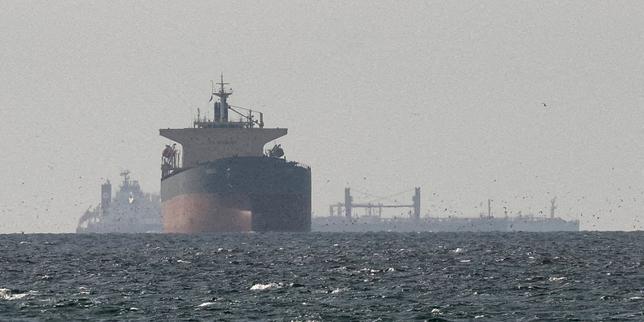
The idea of the "high seas" as a lawless, free-for-all frontier is dying. If you still think the ocean is a global common where anyone can sail anywhere without consequence, you're living in the past. The Strait of Hormuz proves it every single day. This tiny stretch of water, barely 21 miles wide at its narrowest point, has become the world's most expensive choke point. It's not just a shipping lane anymore. It’s a tool for geopolitical extortion where the right of passage is a commodity you buy with political compliance or hard naval power.
The end of Mare Liberum
For centuries, the concept of Mare Liberum—free seas—governed how we thought about the water. It was a simple rule. No one owns the ocean. That's changing. Today, we’re seeing the "territorialization" of the sea. Nations aren't just protecting their coasts; they’re projecting sovereignty over international transit corridors. In the Strait of Hormuz, Iran and its neighbors have turned a geographic necessity into a strategic lever.
When a tanker gets seized or a drone hits a freighter, it’s a signal. The message is clear: "This space isn't free." Access now has a price tag. That price might be paid in higher insurance premiums, or it might be paid in diplomatic concessions. If you’re a global superpower, you pay in the cost of carrier strike groups and constant patrols. The ocean is being carved into zones of influence. It’s starting to look a lot like land.
Why 20 million barrels a day changes everything
Let's talk numbers because they don't lie. Roughly one-fifth of the world’s total petroleum consumption passes through this strait. We’re talking about 20 to 21 million barrels of oil daily. If you think your gas prices are high now, imagine a total blockage. We aren't just talking about a few extra cents at the pump. We're talking about a global economic cardiac arrest.
The U.S. Energy Information Administration (EIA) tracks these flows closely. They’ve noted that there are very few workarounds. You can’t just "reroute" 20 million barrels through a pipeline overnight. The East-West Pipeline across Saudi Arabia has a limit. The Abu Dhabi Crude Oil Pipeline has a limit. Most of that oil has no other way out. This physical reality gives whoever controls the water a massive thumb on the scale of the global economy.
The myth of international law on the water
We love to talk about the United Nations Convention on the Law of the Sea (UNCLOS). It’s a nice document. It talks about "transit passage" and "innocent passage." But here’s the reality: law only exists if someone enforces it. In the Strait of Hormuz, the "law" is whatever the person with the fastest patrol boats says it is.
I've seen how this plays out. A vessel gets accused of a minor maritime violation—a "collision" that never happened or a "pollution" incident with no spill. Suddenly, a multi-million dollar cargo is held hostage. This is "lawfare." It’s the use of legal systems or the pretense of law to achieve a military or political objective. It turns the ocean into a courtroom where the judge also happens to be your primary adversary.
The high cost of staying safe
Shipping companies are tired of being pawns. I’ve spoken with maritime security consultants who say the "war risk" premiums for transiting the Persian Gulf can spike by 1000% in a single week after an incident. Think about that. You’re a ship owner. You have a crew of 20 people and a cargo worth $100 million. Suddenly, your insurance costs more than your fuel.
What do you do? You hire private maritime security companies (PMSCs). You put armed guards on your deck. You install "citadels"—armored rooms where the crew can hide if the ship is boarded. This is the new normal. The sea is becoming a series of gated communities. If you can’t afford the security, you don’t get to play.
Technology changed the game for small players
In the old days, you needed a massive navy to control a strait. You needed battleships and cruisers. Not anymore. Now, you can close a strait with $20,000 "suicide" drones and land-based anti-ship missiles. This is asymmetric warfare. It’s cheap, it’s effective, and it’s terrifying for traditional navies.
Look at the Houthi rebels in the Red Sea or the IRGC in the Strait of Hormuz. They’ve used fast inshore attack craft (FIAC) to swarm much larger vessels. A swarm of twenty small boats armed with RPGs and machine guns is a nightmare for a billion-dollar destroyer. The destroyer has to be right every time; the swarm only has to be lucky once. This tech has democratized the ability to disrupt the global supply chain. It’s no longer a game played only by the G7.
The energy transition won't save us yet
Some people argue that as we move to electric vehicles and renewables, the Strait of Hormuz will matter less. That’s a dangerous assumption. First, the transition is taking decades, not years. Second, the Persian Gulf isn't just about oil. It’s also about Liquefied Natural Gas (LNG). Qatar is one of the world's top LNG exporters. If the world wants to move away from coal, it needs that gas.
Even if we stopped using oil tomorrow, the "choke point" logic remains. The world’s trade relies on a few specific arteries. The Suez Canal, the Panama Canal, the Strait of Malacca, and Hormuz. Once a nation realizes it can monetize its geography, it won't stop just because the cargo changed from crude oil to lithium batteries or grain.
How to navigate the new maritime reality
If you're involved in global trade or just an investor trying to understand why the market is volatile, you need to change your perspective. Stop viewing the ocean as a blue void on a map. View it as a series of sovereign territories with toll booths.
- Diversify your supply routes. If your entire business model depends on goods moving through a single choke point, you’re one "accident" away from bankruptcy. Look at northern routes or trans-continental rail, even if they’re more expensive.
- Watch the insurance markets. The maritime insurance world (like Lloyd’s of London) is often a better indicator of conflict than the news. When "Joint War Committee" areas expand, pay attention.
- Factor in "sovereignty risk." When calculating the cost of doing business, add a line item for geopolitical instability in maritime corridors. It’s no longer an "if," it’s a "when."
The era of the free ocean was a historical anomaly, mostly guaranteed by a single dominant navy. That dominance is being challenged. The Strait of Hormuz is the blueprint for how regional powers will exert control in the future. They aren't just looking for fish or oil under the seabed. They’re looking to control the movement itself. Control is the new currency. If you want to sail through someone's backyard, expect to pay the rent.
Protect your assets by assuming that every "international" waterway is actually a contested border. Don't wait for a crisis to secure your supply chain. The walls are going up on the water, and they aren't coming down anytime soon.