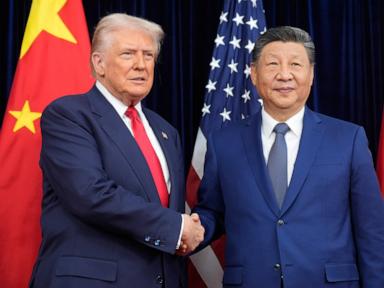
Bilateral summits between the United States and China operate on a strict hierarchy of immediate domestic deliverables over long-term ideological flashpoints. When Xi Jinping and Donald Trump convene for a third time at an Asia-Pacific Economic Cooperation (APEC) forum, the Taiwan question does not vanish from strategic planning; rather, it undergoes deliberate tactical subordination. Both leaders enter the negotiating room constrained by domestic economic pressures, institutional calendars, and the mechanics of transactional diplomacy, rendering the status of Taipei an inefficient bargaining chip for immediate bilateral wins.
The Structural Mechanics of Summit Agenda Setting
High-level statecraft at multilateral venues like APEC is governed by severe time compression and asymmetric political incentives. Unlike dedicated state visits, which allow for sprawling communiqués and ceremonial posturing, an APEC sideline meeting provides a narrow operational window—often measured in a few hours—to establish a baseline for bilateral stability or extract concrete concessions. For another view, consider: this related article.
To maximize the return on diplomatic capital within this constrained timeframe, negotiators filter agenda items through a three-part viability matrix:
- Immediate Quantifiability: Can the outcome be measured in dollars, metric tons, tariff basis points, or verifiable enforcement actions within a single fiscal quarter?
- Domestic Political Utility: Does the concession directly satisfy a core domestic constituency—such as Midwestern agricultural producers, domestic manufacturing unions, or provincial Chinese industrial planners—without triggering immediate legislative or bureaucratic revolt?
- Escalation Containment: Does raising the issue stabilize the bilateral floor, or does it introduce binary, zero-sum dynamics that derail secondary agreements?
Taiwan fails all three criteria for a transactional summit. Sovereignty and territorial integrity are non-divisible goods; neither Beijing nor Washington can offer a quantifiable, incremental concession on Taiwan's political status without incurring catastrophic domestic political costs. In game-theoretic terms, introducing Taiwan into the primary negotiating track converts a variable-sum bargaining session (where both sides can claim wins on trade, supply chains, or fentanyl precursor controls) into a zero-sum deadlock. Similar coverage on this trend has been provided by Al Jazeera.
The Three Pillars of Transactional Deprioritization
Understanding why Taiwan moves to the periphery requires analyzing the specific structural incentives driving both administrations at this juncture. The deprioritization is not an oversight; it is an engineered outcome resting on three distinct pillars.
1. The Macroeconomic Imperative and Tariff Asymmetry
The primary driver of a third Xi-Trump encounter is the management of bilateral economic friction. For Washington, trade policy under Trump relies heavily on tariffs as both a revenue mechanism and a coercive tool to force manufacturing reshoring and market access. For Beijing, navigating domestic structural headwinds—specifically sluggish domestic consumption, real estate sector deleveraging, and local government debt—makes external export stability an acute priority.
When the American delegation prepares its briefing books, the core deliverables center on trade deficit reductions, intellectual property enforcement, agricultural purchasing commitments, and industrial overcapacity in sectors like electric vehicles and green technology. Beijing’s counter-agenda focuses on tariff relief, easing export controls on advanced semiconductors, and stabilizing foreign direct investment inflows.
Every minute spent debating the phrasing of the "One China" policy or U.S. arms sales to Taipei is a minute subtracted from negotiating tariff exemptions or supply chain quotas. Because economic deliverables can be packaged as immediate victories for domestic audiences—a new soybean purchase order or a delayed tariff hike—both leaders possess a strong incentive to quarantine the Taiwan issue to standard, pre-scripted talking points at the end of the meeting.
2. The Coercive Utility of Strategic Ambiguity
A second factor driving deprioritization is the distinct operational approach both leaders take toward deterrence. Conventional diplomatic orthodoxy relies on predictable alliance reassurance and rigid red lines. Transactional statecraft, conversely, treats predictability as a liability that allows counterparties to price in American reactions.
By refraining from elevating Taiwan to the centerpiece of the summit agenda, Washington preserves maximum tactical flexibility. If the U.S. administration makes Taiwan the primary metric of summit success, Beijing gains the ability to hold the entire bilateral relationship hostage to American concessions on Taipei—such as demanding explicit opposition to Taiwanese independence or reductions in transit diplomacy. Keeping Taiwan off the primary negotiating table denies Beijing that leverage.
Simultaneously, Beijing benefits from this restraint. Xi Jinping’s strategic objective is long-term geopolitical integration and the gradual erosion of Taipei’s diplomatic space, paired with continuous gray-zone military pressure. Forcing a high-stakes confrontation over Taiwan at an economic summit risks cornering a U.S. president who thrives on unpredictable, escalatory retaliation. Beijing prefers to keep the Taiwan file compartmentalized within military-to-military channels and grey-zone operations in the Taiwan Strait, rather than exposing it to the volatile horse-trading of a Trump summit.
3. Multilateral Venue Constraints at APEC
The institutional architecture of APEC itself acts as a structural damper on sovereignty disputes. Founded to promote free trade and economic cooperation across the Pacific Rim, APEC operates on consensus and includes Taiwan as a member economy under the designation "Chinese Taipei."
Because Taipei is an institutional participant in the broader APEC ecosystem—represented by a designated envoy rather than its president—the venue is inherently calibrated to submerge political status disputes beneath technical economic coordination. Hosting a bilateral showdown over Taiwan on the margins of an APEC summit violates the institutional norms of the host nation, which invests significant diplomatic capital in producing a unified economic declaration. Neither Washington nor Beijing gains strategic advantage by alienating regional middle powers—such as South Korea, Japan, Australia, and ASEAN members—who view APEC as a vital forum for trade stability rather than a theater for superpower brinkmanship.
The Cost Function of Diplomatic Bandwidth
To grasp the operational reality of these summits, one must examine the "cost function" of executive attention. A head of state possesses finite cognitive and political bandwidth during a multilateral summit. Allocating that bandwidth to a specific issue imposes an opportunity cost on every other file in the bilateral portfolio.
Consider the mechanics of a standard two-hour leader-level meeting:
- Translation Overhead: Consecutive interpretation consumes roughly 40% to 45% of total meeting time. A 120-minute session yields approximately 65 to 70 minutes of actual substantive speech.
- Opening Monologues: Pre-written opening statements by both leaders typically consume 15 to 20 minutes per side, leaving less than 35 minutes for unscripted exchange and genuine negotiation.
- Protocol Recitations: Standard restatements of baseline positions—such as Beijing’s boilerplate warnings on core interests and Washington’s standard reaffirmations of the Taiwan Relations Act—are delivered rapidly to satisfy bureaucratic records without inviting extended debate.
Within a 35-minute window of active negotiation, an executive must prioritize issues where a single presidential directive can unblock a bureaucratic stalemate. On trade, fentanyl precursor interdiction, or resumption of specific commercial flights, a leader can say "yes" in the room and alter policy the next morning. On Taiwan, neither leader can alter the foundational legal or ideological architecture of their state in a 35-minute exchange. Therefore, rational summit managers strip Taiwan down to a five-minute scripted exchange to protect the remaining 30 minutes for actionable deals.
Distinguishing Tactical Silence from Strategic Abandonment
A persistent analytical error in geopolitical commentary is conflating the tactical deprioritization of Taiwan at an economic summit with strategic abandonment by Washington or indefinite patience from Beijing. The mechanism at work is compartmentalization, not resolution.
What remains unchanged beneath the summit surface:
- Force Posture Modernization: The U.S. Department of Defense continues executing the Pacific Deterrence Initiative, dispersing forces across the First and Second Island Chains, hardening bases in Guam and Japan, and accelerating asymmetric weapons deliveries to Taipei. None of these defense procurement cycles pause because Taiwan was omitted from the top line of an APEC readout.
- People's Liberation Army (PLA) Operations: Beijing’s military pressure campaign—characterized by daily median-line crossings, joint combat readiness patrols, and amphibious logistics exercises—operates on an independent operational tempo. The PLA uses these maneuvers to normalize a heightened military presence around Taiwan regardless of the diplomatic warmth displayed at leader-level summits.
- Supply Chain Decoupling: The structural reconfiguration of global semiconductor manufacturing continues apace. Both Washington’s CHIPS Act incentives and Beijing’s drive for indigenous silicon self-sufficiency are driven by the assumption that a contingency in the Taiwan Strait remains a severe tail-risk that could sever access to advanced logic chips fabricated by TSMC.
The summit serves as a pressure-release valve for the economic and diplomatic tracks, preventing an accidental spiral into total decoupling or kinetic conflict. However, the underlying structural rivalry—rooted in maritime hegemony in the Western Pacific and technological supremacy—remains untouched by APEC communiqués.
Operational Risks of the Compartmentalization Strategy
While keeping Taiwan in the backseat maximizes the probability of short-term economic agreements, this approach carries distinct operational vulnerabilities that strategists in Taipei, Washington, and Beijing must manage.
First, the signaling distortion risk. When senior U.S. officials publicly emphasize trade deals and bilateral stabilization while minimizing rhetoric on democratic alliances, regional actors may misinterpret the signal. In Taipei, perceived diplomatic sidelining can trigger domestic political anxiety, potentially fueling polarization or prompting unilateral rhetorical moves by local politicians seeking to test American commitment. In Beijing, hawks within the security apparatus may misread American transactionalism as a sign of declining resolve, encouraging riskier gray-zone coercion in the Kinmen islands or surrounding waters.
Second, the linkage trap. Even if Washington attempts to separate trade from security, Beijing consistently views all bilateral tracks as interconnected components of "comprehensive national power." Chinese negotiators frequently use progress on American priorities—such as counternarcotics cooperation or Treasury debt purchases—as implicit leverage to extract quiet restraint from Washington on Taiwan, such as delaying high-profile Congressional delegations or slowing the notification of major arms sales packages until after the summit concludes.
Third, the domestic backlash constraint. A transactional leader faces acute domestic scrutiny if perceived as trading away core security commitments for commercial gain. If an APEC summit produces a major tariff reduction or agricultural deal alongside a noticeably muted U.S. stance on Taiwan, defense hawks in the U.S. Congress will inevitably move to pass statutory mandates—such as accelerated foreign military financing or mandatory diplomatic protocols—that constrain executive flexibility and re-escalate tensions within weeks of the summit.
Strategic Forecast and Positioning Protocol
Based on the structural incentives of executive bandwidth, domestic economic imperatives, and the institutional design of APEC, a third Xi-Trump summit will almost certainly follow a predictable operational script: high-visibility focus on commercial friction, targeted announcements on narrow transnational issues, and a tightly scripted, low-temperature exchange on Taiwan.
For geopolitical risk analysts, corporate supply chain planners, and policy practitioners, interpreting this summit requires looking past the diplomatic theater and tracking concrete operational indicators:
- Audit the Readout Asymmetry: Compare the length and placement of the Taiwan paragraph in the White House readout against the Ministry of Foreign Affairs (MFA) readout. Beijing will invariably place Taiwan at the top of its summary to satisfy domestic nationalist audiences; Washington will place it near the bottom. The true indicator of friction is not its presence, but whether the MFA introduces new qualifying adjectives regarding U.S. actions or whether the U.S. omits standard references to peace and stability across the Strait.
- Track Post-Summit Arms Notifications: Monitor the Defense Security Cooperation Agency (DSCA) notifications in the 30 to 60 days following the APEC meeting. If Washington delays routine maintenance or munitions packages prior to the summit to preserve the negotiating atmosphere, a rapid release of cleared packages immediately afterward confirms that deprioritization was purely tactical scheduling rather than a policy shift.
- Separate Tariff Relief from Export Controls: Do not mistake reductions in broad consumer tariffs for a softening of technological containment. Even if the summit yields tariff adjustments, maintain strict supply chain diversification timelines for advanced semiconductors and critical minerals, as national security export controls remain insulated from transactional trade deals.
- Hedge Against Post-Summit Volatility: Recognize that summit-induced stability has a short half-life. The structural drivers of U.S.-China competition—military modernization in the Western Pacific and ideological incompatibility—reassert themselves rapidly once leaders return to their respective capitals. Corporate and strategic planning should treat any bilateral thaw generated at APEC as a temporary tactical window to execute capital adjustments, rather than a durable shift in the geopolitical baseline.