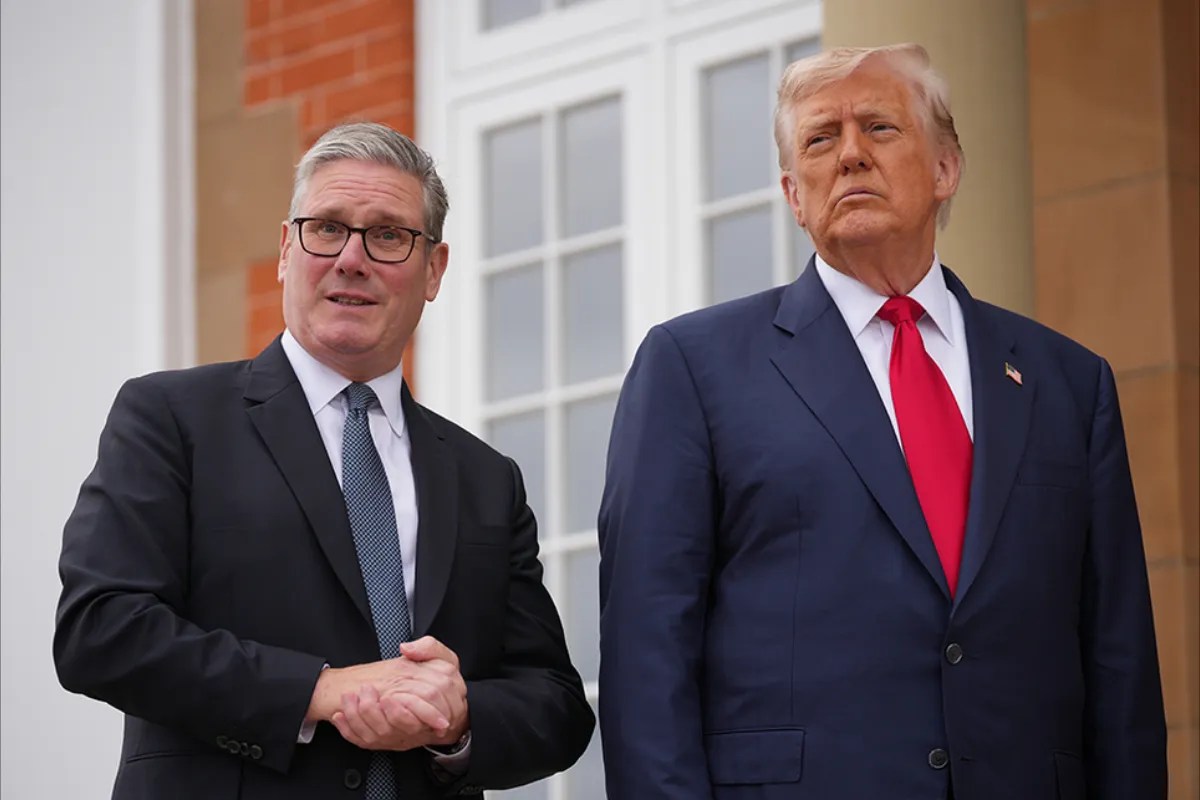
The refusal of the Keir Starmer administration to commit British naval assets to a blockade of the Strait of Hormuz marks a fundamental shift in the United Kingdom’s "Special Relationship" from reflexive interventionism to a policy of resource preservation and regional containment. While the geopolitical surface suggests a rift between the UK and the incoming Trump administration, the underlying mechanics reveal a calculated assessment of maritime logistics, economic vulnerability, and the limits of power projection in the Persian Gulf.
The Strategic Calculus of Maritime Denial
A blockade of the Strait of Hormuz is not a singular event but a high-entropy operation involving three distinct operational layers: physical interdiction, electronic warfare suppression, and psychological deterrence. The UK’s refusal to participate is rooted in the "Overextension Trap."
The Royal Navy’s surface fleet is currently optimized for carrier strike group protection and North Atlantic anti-submarine warfare. Diverting Type 45 destroyers or Type 23 frigates to the Gulf of Oman to enforce a blockade requires a logistical tail that the UK cannot sustain without compromising its commitments to NATO’s northern flank. The cost of maintaining a continuous presence in the Strait—where the Iranian Revolutionary Guard Corps (IRGC) utilizes asymmetric "swarm" tactics—exceeds the marginal benefit of a symbolic show of force alongside US assets.
Economic Feedback Loops and Energy Fragility
The Strait of Hormuz handles approximately 21% of the world’s daily liquid petroleum consumption. Any move to "block" or "secure" the strait through aggressive naval posturing triggers an immediate volatility spike in the Brent Crude index. For the Starmer government, the internal economic mandate is to stabilize inflation and drive domestic growth.
- Price Transmission Mechanism: A blockade creates an instant premium on insurance for tankers (War Risk Surcharges). Even if no shots are fired, the mere presence of a blockade force increases the cost of landed energy in the UK.
- Supply Chain Contagion: The UK relies on Liquefied Natural Gas (LNG) imports from Qatar. A blockade intended to squeeze Iranian exports would inadvertently bottleneck Qatari LNG, creating an energy deficit in the UK power grid during peak demand cycles.
- Currency Devaluation: Sudden spikes in energy import costs widen the trade deficit, putting downward pressure on the Pound Sterling.
The UK government has identified that the "security" provided by a blockade is a net negative when weighed against the "instability" it introduces into global commodity markets.
The Physics of Narrow-Water Combat
The Strait of Hormuz is only 21 miles wide at its narrowest point, with shipping lanes just two miles wide in each direction. This geography negates the traditional advantages of blue-water navies.
- Asymmetric Saturation: Iranian coastal defense systems utilize the Silkworm and Noor missile families. In the confined space of the Strait, the reaction time for a destroyer’s Aegis or Sea Viper system is reduced to seconds.
- The Mine Menace: Clearing mines in the Strait is a slow, methodical process that requires specialized Mine Countermeasures Vessels (MCMVs). The UK possesses world-class mine-hunting capabilities, but deploying them into an active combat zone without total air superiority is a high-risk endeavor that Starmer's military advisors have flagged as unsustainable.
- Geographic Vulnerability: The Musandam Peninsula (Oman) and the Iranian coastline create a "kill zone" where high-value naval assets have zero room for maneuver.
Diplomatic Decoupling as Risk Mitigation
By distancing itself from the Trump administration's "Maximum Pressure 2.0" framework, the UK is attempting to preserve its role as a diplomatic mediator. This is not a moral stance but a functional one. The UK’s remaining influence in the Middle East depends on its ability to talk to all stakeholders, including the GCC (Gulf Cooperation Council) states who are themselves wary of a total kinetic shutdown of the Strait.
If the UK were to join a blockade, it would lose its "Arbitrage Advantage"—the ability to negotiate de-escalation pathways that the US, as a primary belligerent, cannot access. Furthermore, the Starmer administration is prioritizing the "Indo-Pacific Tilt." Committing the bulk of the Royal Navy to a static blockade in the Gulf prevents the UK from participating in freedom of navigation operations in the South China Sea, which London views as more critical to long-term trade resilience.
The Logic of the Refusal
The UK's decision is driven by the Three-Body Problem of Modern Statecraft:
- Pillar 1: Domestic Solvency. The UK cannot afford the multi-billion pound surge required for a prolonged Middle Eastern naval campaign.
- Pillar 2: Alliance Management. The UK is signaling to the European Union that its security interests are becoming more continental and less "Atlanticist."
- Pillar 3: Threat Prioritization. The existential threat remains Russia and the security of undersea cables in the Atlantic. The Strait of Hormuz, while vital, is a regional volatility problem that the UK believes should be managed by regional powers or the primary superpower (the US) alone.
Tactical Implications for Global Trade
The absence of the UK from a potential US-led blockade force reduces the international legitimacy of such an action. It shifts the burden of "policing" onto the US Fifth Fleet, increasing the probability of a unilateral American move that could be easily framed as an act of aggression rather than a multilateral security mission.
For global logistics firms, this means the risk profile of the Strait of Hormuz has moved from "predictable tension" to "unpredictable escalation." Without a broad coalition, any attempt to close the Strait becomes a bilateral conflict between Washington and Tehran, with the UK standing on the periphery to catch the economic fallout.
The strategic play for the UK is to leverage its neutrality in this specific theater to secure better bilateral trade terms with both the US (as a "reluctant but loyal" ally on other fronts) and Middle Eastern energy exporters. The Starmer administration is betting that the US will ultimately realize the futility of a naval blockade in such a confined space and revert to cyber and financial warfare, where the UK is more willing to provide support.
British naval strategy is no longer about being everywhere at once; it is about being in the right place when the cost of absence becomes higher than the cost of presence. For the Strait of Hormuz, that threshold has not been met.