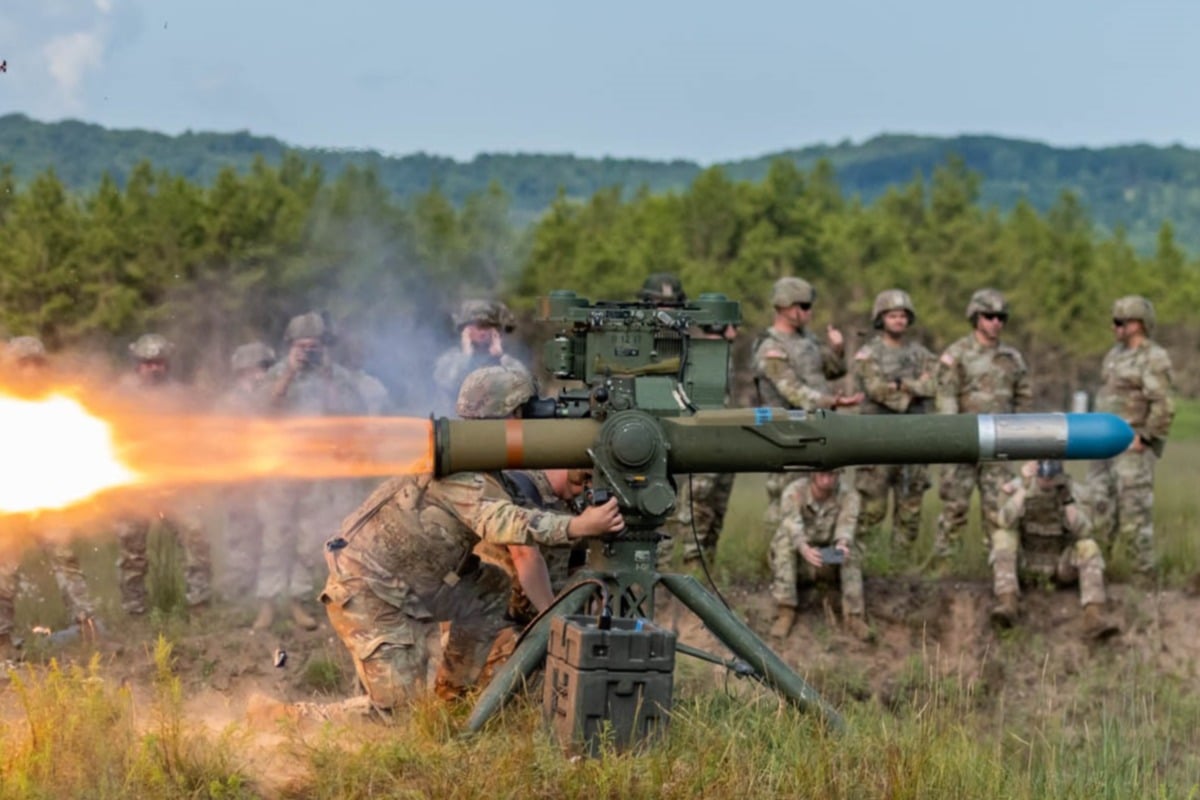
The decision by the United States Army to extend the operational lifecycle of the Tube-launched, Optically tracked, Wire-guided (TOW) missile system into the 2050s highlights a fundamental challenge in defense procurement: the tension between radical innovation and functional reliability. Originally fielded in 1970, the TOW missile is a heavy anti-tank weapon system that has outlived multiple generations of armored vehicles. The extension strategy is driven by economic necessity, industrial capacity constraints, and the tactical realities of modern, high-intensity conflict. By evaluating this system through a structured framework of lifecycle economics, supply chain security, and tactical evolution, the underlying logic of the Army's modernization strategy becomes clear.
The Tri-Pillar Framework of Weapon System Retention
Retaining an aging kinetic platform like the TOW missile relies on three interdependent variables: unit economics, operational availability, and target-set matching. When these pillars remain stable, the marginal utility of upgrading an existing system far exceeds the return on investment of developing a clean-sheet replacement. For a more detailed analysis into similar topics, we suggest: this related article.
1. The Cost Function of Kinetic Effects
The primary driver for extending the TOW system is the cost per engagement. Advanced, fire-and-forget anti-tank guided missiles (ATGMs) require complex uncooled or cooled infrared seekers, which significantly increase production costs. The TOW system relies on a command-to-line-of-sight guidance architecture. This design keeps the expensive electronics inside the reusable launcher rather than the disposable missile casing.
The economic equation can be expressed through a simple cost-benefit ratio: For additional context on this issue, in-depth reporting can be read on ZDNet.
$$R = \frac{C_{\text{missile}} + \frac{C_{\text{launcher}}}{N}}{P_{\text{kill}}}$$
Where $C_{\text{missile}}$ is the flyaway cost of the munition, $C_{\text{launcher}}$ is the lifecycle cost of the firing platform, $N$ is the number of rounds fired over the launcher's lifespan, and $P_{\text{kill}}$ is the probability of destruction against a designated target class. By maintaining a low $C_{\text{missile}}$, the TOW system allows for sustained, high-volume fires that would be financially unsustainable with newer, more complex munitions.
2. Industrial Base Capability and Supply Chain Inertia
The defense industrial base cannot instantly scale production of advanced microelectronics, focal plane arrays, and specialized solid-rocket motors. Extending the TOW system leverages established, mature manufacturing lines. The tooling, quality control protocols, and raw material supply chains are already optimized. Attempting to replace the entire U.S. Army inventory of heavy ATGMs with a new design would create immediate production bottlenecks, leaving a capability gap during the multi-year transition period.
3. Target-Set Optimization
The common assumption that all frontline weapon systems must defeat modern main battle tanks (MBTs) ignores the reality of the battlefield. The target set for a heavy ATGM includes:
- Infantry fighting vehicles (IFVs) and armored personnel carriers (APCs).
- Fortified bunkers, urban structures, and field fortifications.
- Lightly armored or unarmored logistics vehicles.
- Static surveillance nodes and command posts.
Against these targets, the armor-piercing capability of a tandem-charge High-Explosive Anti-Tank (HEAT) or bunker-busting warhead remains effective. The TOW missile delivers sufficient kinetic and chemical energy to defeat these threats, making a more advanced seeker unnecessary for most targets.
The Technological Evolution: Removing the Wire
The survival of the TOW system depends on its ability to evolve without changing its core mechanical form factor. The most critical shift in the system's history is the transition from physical wire guidance to Radio Frequency (RF) data links. This change addresses several key tactical vulnerabilities.
The original wire-guided mechanism required a physical connection between the launcher and the missile via two strands of copper wire unspooling during flight. This architecture introduced specific operational constraints:
- Environmental Interference: Firing over bodies of water, dense brush, or power lines risked snagging, shorting, or snapping the wires, causing a total loss of missile control.
- Range Limitations: The maximum range of the weapon was mechanically limited by the length of wire stored within the missile spool.
- Mobility Restraints: Firing platforms had to remain completely stationary or move at minimal speeds during the entire time of flight to avoid breaking the wire.
The RF guidance modification replaces the physical wire with an encrypted, directional wireless command link. The gunner operates the system identically, using the optical sight to keep the crosshairs on the target. The launcher's electronics track a beacon on the rear of the missile and transmit course corrections over the RF link. This update removes environmental restrictions, allows for longer engagement ranges, and enables firing from faster-moving platforms.
Structural Bottlenecks and Systemic Risk Factors
While extending the TOW system is practically sound, it introduces distinct technical risks that require careful mitigation. The long-term viability of the platform depends on addressing three vulnerabilities.
Electronic Warfare Vulnerability
The shift from wire guidance to RF data links introduces vulnerability to electronic warfare (EW). A physical wire is completely immune to radio frequency jamming and spoofing. An RF link, however, is a potential point of failure if an adversary deploys localized, high-power electronic countermeasure (ECM) systems. To counter this, the Army uses frequency-hopping spread spectrum algorithms and directional antennas to limit the window of interception. If these encryption and anti-jamming measures fail, the utility of the weapon drops significantly in contested electronic environments.
Active Protection Systems (APS)
The emergence of vehicle-mounted Active Protection Systems (APS) poses a direct threat to legacy ATGM platforms. Hard-kill APS detects incoming projectiles using radar or optical sensors and intercepts them with counter-munitions before they hit the vehicle's hull.
Because the TOW is a subsonic missile with a predictable, flat trajectory, it is an ideal target for modern APS. Overcoming these defensive networks requires deploying specialized tactics, such as simultaneous firing to oversaturate the sensor suite, or updating the missile's software to support alternative flight profiles.
Counter-Battery and Gunner Survivability
The TOW remains a Semi-Automatic Command to Line-of-Sight (SACLOS) system. The gunner must keep the crosshairs on the target for the entire duration of the missile's flight, which can take up to 20 seconds at maximum range. This creates a dangerous vulnerability.
Modern counter-unmanned aerial systems (C-UAS), thermal optics, and acoustic gunfire detection networks can quickly locate a missile's launch signature. If the firing platform is detected, enemy forces can launch immediate counter-fire. If the gunner is forced to take cover or the vehicle must maneuver away before the missile impacts, the guidance loop is broken, and the missile misses its target.
Tactical Reconfiguration for Modern Conflict
To keep the TOW relevant through the 2050s, the U.S. Army is shifting its deployment from traditional infantry tripods to highly mobile, integrated vehicle platforms. This approach combines the cost-efficiency of the munition with the protection and mobility of armored chassis.
+-------------------------------------------------------------+
|                     TOW Modernization                       |
+------------------------------+------------------------------+
                               |
            +------------------+------------------+
            |                                     |
            v                                     v
+-----------------------+             +-----------------------+
|  Platform Integration |             |   Modular Payloads   |
|  - Stryker (M1134)     |             |  - Multi-mission      |
|  - Bradley (M2A4/M4)  |             |    warheads           |
|  - AMPV variants      |             |  - Extended range RF  |
+-----------------------+             +-----------------------+
Integrating the TOW onto platforms like the Stryker Anti-Tank Guided Missile vehicle (M1134) and the Bradley Infantry Fighting Vehicle (M2A4/M4) balances out the weapon's inherent limitations. Vehicles provide heavy armor protection for the crew during the missile's flight, automated reloading systems to increase the rate of fire, and long-range thermal optics that allow gunners to spot, track, and engage targets at night or through obscured visibility.
Furthermore, mounting the system on highly mobile vehicles allows crews to use "shoot-and-scoot" tactics. This mitigates the risk of counter-battery fire by letting the platform immediately displace as soon as the missile hits its target.
Strategic Forecast
The long-term reliance on the TOW system indicates that the U.S. Army will maintain a tiered anti-tank architecture for the next three decades. Rather than striving for an all-premium fleet of expensive, autonomous weapons, the force will manage a mixed inventory. High-cost, fire-and-forget systems like the Javelin and future micro-cruise missiles will be reserved for high-value targets and highly contested environments. Concurrently, the modernized RF TOW system will serve as the primary heavy direct-fire option for volume engagements and structural destruction.
The success of this strategy relies on continuous software upgrades to the ground wire guidance emulators and firing units. These updates must improve the system's resistance to electronic warfare and allow for seamless handoffs with off-board sensors, such as scouting drones. By focusing research and development on the tracking and targeting infrastructure rather than redesigning the physical missile airframe, the Army minimizes technical risk and maximizes fiscal efficiency. This approach ensures a reliable, heavy kinetic effect remains viable across global operational theaters.