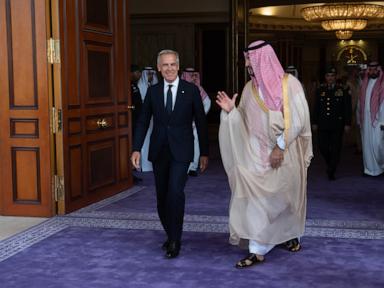
Sovereign foreign policy functions as a risk-hedging mechanism designed to optimize trade optionality and defense security while minimizing single-point vulnerabilities. Canada’s diplomatic pivot toward Saudi Arabia, executed through Canadian Prime Minister Mark Carney’s July 2026 summit in Jeddah, marks a structural transition from virtue-signaling diplomacy to transactional pragmatism. This strategic shift addresses a multi-decade structural deficit in bilateral capital flows and reduces systemic exposure to shifting United States trade policies.
The Geopolitical Risk Matrix and Strategic Hedge
Middle-power diplomacy operates under strict asymmetric constraints. When a sovereign nation relies on a single market for over 75 percent of its export volume, political volatility in that dominant market creates systemic domestic vulnerability. The current Canadian strategic posture responds directly to economic volatility generated by U.S. tariff policy and bilateral trade renegotiations.
+-----------------------------------------------------------------------+
|                       DIPLOMATIC RISK FRAMEWORK                       |
+------------------------------------+----------------------------------+
| Public Moralism Strategy           | Transactional Engagement Strategy|
+------------------------------------+----------------------------------+
| * Zero economic optionality        | * Expanded market access         |
| * High domestic political optics   | * Capital co-investment channels |
| * Total diplomatic isolation       | * Direct leverage on key issues  |
| * Zero influence on counterparty  | * Managed political trade-offs   |
+------------------------------------+----------------------------------+
To insulate against bilateral trade friction with Washington, middle powers must establish non-correlated diplomatic and economic positions with primary regional brokers. Saudi Arabia and Türkiye represent the two primary regional stabilization hubs in the Middle East. Strategic engagement with these entities yields three structural benefits:
- Trade Optionality Expansion: Diversifying capital export channels into high-growth GCC sovereign wealth pools.
- Resource Security Integration: Developing supply-chain corridors across critical minerals, energy transition infrastructure, and agricultural commodities.
- Diplomatic Access Mechanics: Replacing unilateral public statements with direct channel access to sovereign decision-makers.
The Cost Function of Moralistic Diplomacy versus Direct Engagement
Public diplomatic rebukes yield zero measurable policy adjustments in sovereign counterparties while imposing immediate, high-friction economic penalties. The 2018 diplomatic rupture between Ottawa and Riyadh—triggered by public social media declarations regarding Saudi domestic judicial policy—resulted in the expulsion of ambassadors, the suspension of direct trade talks, and severe capital flight from Canadian commercial interests in the Gulf.
The economic penalty of this approach can be quantified across three main areas:
- Opportunity Cost of Capital: Canadian institutional investors and pension funds were systematically excluded from Saudi Vision 2030 infrastructure allocation rounds.
- Market Share Liquidation: Rival G7 and East Asian engineering firms captured market share in Gulf municipal and infrastructure developments, replacing Canadian corporate contracts.
- Diplomatic Leverage Elimination: Public condemnation destroyed informal communication channels, leaving Ottawa with zero capacity to advocate for human rights, regional stability, or political prisoners.
Direct bilateral engagement operates on a starkly different utility curve. Adopting an operational framework that separates dialogue from endorsement allows middle powers to pursue economic co-investment without sacrificing core sovereign values. Face-to-face negotiations create structural friction reduction, opening avenues for discrete diplomatic advocacy that remote public statements explicitly prevent.
Capital Allocation Pillars in Gulf Infrastructure
The commercial framework established during the Jeddah summits targets five strategic sectors where Canadian engineering capabilities intersect with Saudi economic diversification objectives:
                  ┌────────────────────────────────────────┐
                  │      SOVEREIGN ASSET INTEGRATION       │
                  └───────────────────┬────────────────────┘
                                      │
     ┌──────────────────┬─────────────┴────────────┬──────────────────┐
     ▼                  ▼                          ▼                  ▼
┌─────────┐      ┌─────────────┐            ┌─────────────┐    ┌─────────────┐
│ Energy  │      │  Critical   │            │ Engineering │    │ Capital &   │
│ & Tech  │      │  Minerals   │            │ & Defense   │    │ Institutional│
└─────────┘      └─────────────┘            └─────────────┘    └─────────────┘
Critical Minerals and Mining Infrastructure
Saudi Arabia’s mining capital expansion requires advanced extraction technology, geological mapping, and ESG-compliant processing frameworks. Canadian firms hold distinct technical advantages in subsurface mapping and sustainable extraction methodologies, positioning them to secure primary engineering, procurement, and construction contracts.
Defense and Institutional Capital Co-Investment
Resuming institutional capital flows opens pathways for major Canadian pension funds to deploy capital directly into sovereign-backed logistics, renewable energy, and digital infrastructure assets. Concurrently, stabilizing bilateral defense relationships protects long-term military technology export contracts while opening strategic procurement channels.
Infrastructure and Urban Engineering
The operational participation of major Canadian firms such as Hatch and AtkinsRéalis at the Saudi Arabia-Canada Investment Forum demonstrates a return to large-scale municipal contract bidding. These firms provide technical oversight, structural engineering, and heavy machinery integration for Gulf mega-projects.
Operational Execution Strategy
To maximize the commercial and geopolitical returns of this realignment, sovereign policymakers and enterprise leaders must execute a four-stage deployment plan:
- Formalize Institutional Investment Corridors: Deploy dedicated trade delegations comprising major pension managers to secure co-investment rights in GCC energy transition projects within six months.
- Establish Institutional Bilateral Working Groups: Form joint ministerial committees focused specifically on critical mineral supply chains, technology transfers, and agricultural exports to ensure continuous operational communication regardless of political headwinds.
- Institute Private-Led Diplomatic Channels: Utilize trade councils and corporate executives as persistent diplomacy proxies to maintain commercial continuity during periods of broader geopolitical volatility.
- Deploy Strategic Discretion in Human Rights Advocacy: Transition all diplomatic interventions regarding civil liberties, political detainment, and judicial processes into closed-door bilateral sessions, eliminating public media rhetoric that risks commercial retaliation.