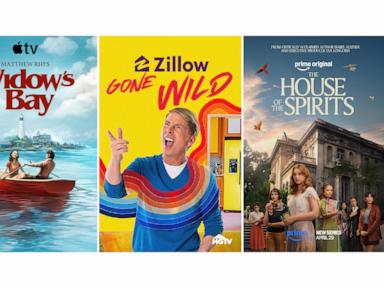
The current streaming economy functions on a high-churn, low-loyalty model where platform growth is no longer a metric of simple subscriber counts but of attention-share duration. To mitigate the "infinite scroll" fatigue that results in session abandonment, content distributors are shifting away from randomized discovery toward a strategy of thematic clustering. This analysis deconstructs the current high-performance content cycle—specifically the intersection of literary adaptations like Wuthering Heights, the atmospheric pop-noir of Kacey Musgraves and Tori Amos, and the character-study prowess of Matthew Rhys—to reveal how platforms engineer emotional and aesthetic consistency to drive retention.
The Architecture of Literary Modernization
The adaptation of Emily Brontë’s Wuthering Heights serves as a case study in the Intellectual Property (IP) Arbitrage. Studios utilize public domain texts to minimize licensing overhead while capitalizing on built-in brand recognition. However, the success of a modern adaptation does not rely on fidelity to the source material but on its ability to satisfy the Gothic Resonance Requirement.
This requirement is defined by three specific variables:
- Isolation Geometry: The use of cinematography to emphasize physical distance, which mirrors the psychological alienation of the protagonists.
- Moral Ambiguity Scaling: Shifting the narrative away from a hero/villain binary into a spectrum of trauma-informed toxicity.
- Visual Asset Integration: Ensuring the "look" of the production—muted palettes, high-contrast lighting—aligns with the "dark academia" aesthetic currently driving high engagement on social discovery engines.
When a platform suggests Wuthering Heights, it is not suggesting a book; it is suggesting a mood-state. The algorithm identifies users who have high dwell-times on period dramas and cross-references them with "mood-based" search queries. The adaptation becomes a gateway drug for a specific atmospheric category, leading directly into the sonic profiles of specific musical artists.
Sonic Branding and the Melancholy Feedback Loop
The inclusion of Kacey Musgraves and Tori Amos in a singular viewing recommendation is not coincidental. It represents an Auditory Aesthetic Alignment. Musgraves, particularly in her post-Golden Hour era, and Amos, throughout her career, utilize specific frequency ranges and lyrical structures that trigger the same neurological responses as the "brooding" period drama.
The mechanism at work is Affective Forecasting. Users do not choose content based on what they want to watch, but on how they expect to feel.
- Kacey Musgraves: Functions as the "accessible melancholy" tier. Her production utilizes clean, high-fidelity acoustics that provide a sense of safety despite lyrical themes of heartbreak or societal critique.
- Tori Amos: Represents the "complex cerebral" tier. Her piano-driven, non-linear compositions demand higher cognitive loads, appealing to the segment of the audience that seeks intellectual validation through their media consumption.
From a strategic standpoint, pairing these artists with a Gothic literary adaptation creates a Synesthetic Moat. Once a user is immersed in this specific aesthetic ecosystem, the "switching cost" to a different genre (e.g., a bright, fast-paced sitcom) feels jarring. The platform retains the user by offering a path of least resistance: more of the same gloom, refined by different mediums.
The Matthew Rhys Multiplier and Talent Verticalization
The presence of Matthew Rhys in multiple high-profile projects—the "double dose"—is an example of Talent Density Optimization. For a streaming service, an actor like Rhys represents a low-risk, high-yield asset. His brand is built on "internalized conflict" and "stoic vulnerability," traits that bridge the gap between historical drama and contemporary thriller.
The "Matthew Rhys Effect" can be mapped via a Reliability Matrix:
- Variable A: Genre Versatility: The ability to move from 19th-century settings to 20th-century espionage without losing audience trust.
- Variable B: Demographic Pull: Rhys occupies a unique intersection of "critically acclaimed" (appealing to the prestige-seeking demographic) and "traditionally masculine" (appealing to broader procedural audiences).
- Variable C: Binge-Compatibility: His performances are often understated, which reduces "actor fatigue." High-energy, eccentric performances are difficult to consume for more than two hours; subtle, grounded performances like those of Rhys allow for 8-10 hour continuous viewing cycles.
When a platform features an actor across two disparate projects, they are effectively A/B testing the user's genre preference while holding the central talent variable constant. If a user watches Rhys in a period piece but ignores him in a modern drama, the platform gains a high-fidelity data point on that user’s specific aesthetic threshold.
The Bottleneck of Niche Oversaturation
While this strategy of thematic clustering (Period Drama + Atmospheric Music + Stoic Lead) is effective for retention, it creates a structural bottleneck: Genre Cannibalization. By training the algorithm to favor these "prestige-melancholy" clusters, platforms risk alienating the casual, high-volume viewer who seeks "lean-back" entertainment.
The second limitation is the Production-to-Consumption Lag. Atmospheric dramas are expensive and time-consuming to produce. Music, conversely, is consumed at a much higher frequency. This creates a supply-chain imbalance where the platform has enough music to sustain the mood, but not enough visual content to anchor it. This leads to the "zombie-scroll" where users browse for 20 minutes in a specific category, find nothing new, and exit the ecosystem entirely.
Quantifying the "Atmospheric" User Journey
To optimize this content mix, we must move beyond the "What to Stream" list and toward a Predictive Consumption Model.
- Phase 1: The Anchor Content. The user engages with a tentpole release (e.g., Wuthering Heights).
- Phase 2: The Sonic Bridge. The platform’s internal radio or soundtrack integration pushes a Musgraves or Amos track during the credits or via a curated playlist.
- Phase 3: The Cross-Pollination. The algorithm identifies the "Matthew Rhys" variable and presents his alternative work as a secondary option, leveraging the existing emotional investment.
- Phase 4: The Retention Loop. The user enters a state of "aesthetic lock-in," where their perceived cost of leaving the platform (losing that specific mood-state) outweighs the benefit of exploring a competitor.
The failure of the competitor's analysis was the assumption that these three elements (book, music, actor) were merely "good things to watch this weekend." They are actually the gears of a Behavioral Engineering Machine.
The strategic imperative for content creators is clear: do not build isolated projects. Build Atmospheric Ecosystems. A period drama is no longer just a movie; it is an anchor for a specific sonic, visual, and talent-led lifestyle brand. To win the streaming wars, you do not need the best content; you need the most cohesive loop.
The next tactical move for distributors is the integration of Metadata-Driven Soundtrack Syncing, where the background music of a user's Spotify or Apple Music account influences the "Recommended for You" trailer audio on Netflix or Max. If the data shows a 48-hour spike in Tori Amos streams, the visual interface should immediately pivot to highlight Rhys’s most brooding, piano-scored scenes.
The goal is a frictionless transition from the earbuds to the screen. Every second spent re-adjusting to a new "vibe" is a second where the user might remember they have other things to do. Eliminate the re-adjustment period, and you own the attention.