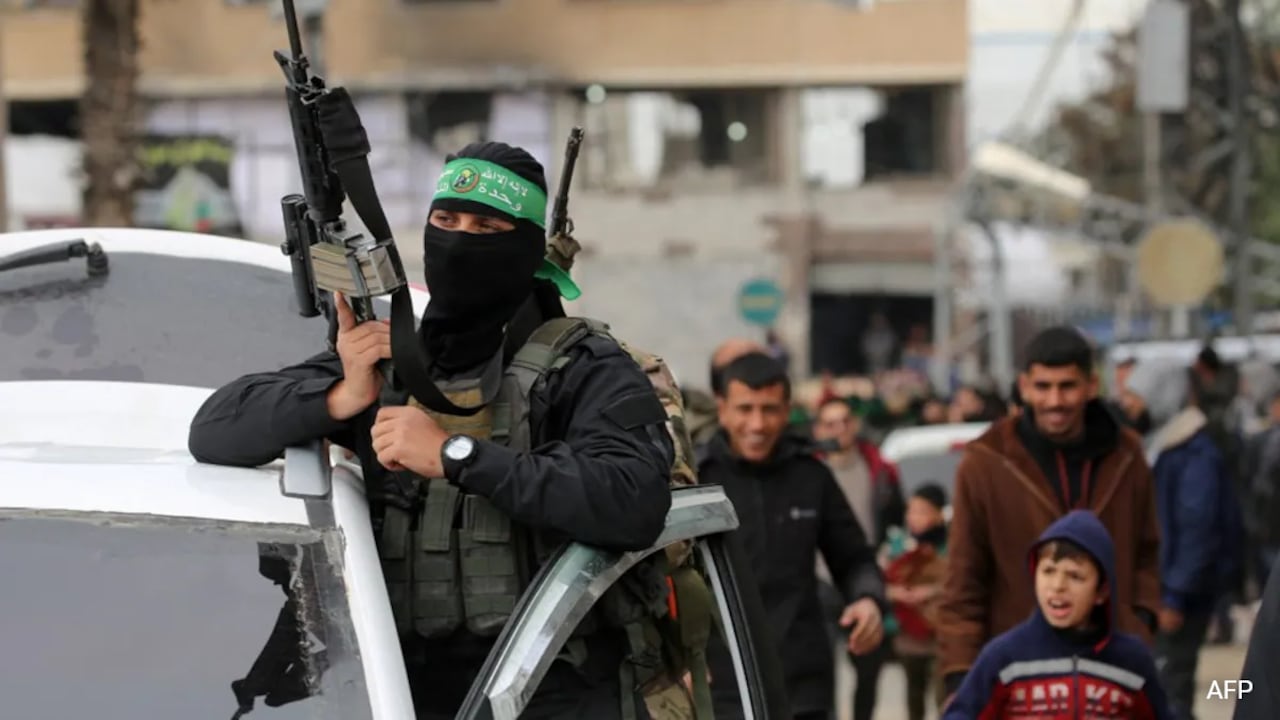
The capture of a high-ranking security official during an active military campaign functions as a stress test for an organization's internal architecture. When Israeli forces detained the head of Hamas internal security in Gaza, the immediate media narrative reduced the event to a binary metric of tactical success. This framing misses the systemic mechanics of counterintelligence and urban warfare. Intelligence collection at this scale is not a single point-in-time victory; it is a structural disruption that cascades through an adversary's command hierarchy, communications network, and resource allocation models.
Understanding this event requires examining the operational constraints of high-density urban warfare, the economics of human intelligence extraction, and the systemic vulnerabilities exposed when a core node in a decentralized security apparatus is suddenly removed.
The Operational Mechanics of Urban Security Captures
Military operations in dense urban environments operate under extreme friction. The adversary relies on a cellular topology designed specifically to mitigate the impact of individual node failure. When the central security chief of such an organization is neutralized or captured, the system experiences a specific sequence of structural shocks.
The Breakdown of Distributed Command
Cellular networks rely on compartmentalization. Lower-level operatives maintain zero visibility into adjacent cells to protect the broader network from compromise. However, internal security apparatuses require a central clearinghouse to vet members, enforce internal discipline, and manage counter-espionage protocols. Removing the chief of this apparatus forces the remaining leadership into a difficult trade-off:
- Maintain total radio silence to prevent tracking, which induces operational paralysis across all subordinate units.
- Attempt to re-establish centralized command channels, which exponentially increases the digital and physical signature of the network.
Every communication required to bypass the leadership vacuum creates a telemetry trail that opposing intelligence forces can exploit. The capture transforms an opaque network into a noisy environment where patterns become visible.
The Mechanics of Data Recovery
The value of capturing a high-level security official lies primarily in non-volatile storage and institutional memory rather than immediate tactical coercion. Modern security chiefs rarely hold tactical frontline details, but they retain master maps of organizational dependencies, financial routing mechanisms, and internal vetting files.
The recovery of physical or digital archives yields structural insights rather than mere coordinates. This includes the identification of sleeper cells, dormant logistical corridors, and procurement networks that sustain operations over extended timelines. The extraction process is governed by strict operational timelines. Intelligence agencies measure the utility of a captured asset by the half-life of their knowledge base. As hours pass, subordinate cells realize their node is dark and initiate pre-planned emergency protocols, rendering the captive's baseline data increasingly obsolete.
The Cost Function of Leadership Attrition
To evaluate the true impact of this capture, analysts must apply a cost-benefit model to leadership loss within asymmetrical organizations. Traditional military forces measure attrition through equipment loss and personnel casualties. Asymmetrical groups measure attrition through friction, trust degradation, and recovery cost.
Total Organizational Friction = (Communication Overhead * Security Protocols) / Institutional Trust
When a key security leader is compromised, institutional trust plummets. The remaining leadership is forced to assume that every protocol managed by the captive has been decoded. This triggers a defensive contraction. Security sweeps, internal purges, and paranoid verification procedures consume massive quantities of organizational bandwidth.
The primary cost to the organization is not the loss of a single decision-maker, but the subsequent operational drag. Units spend more time verifying internal security than executing strategic objectives. The operational tempo collapses under the weight of defensive paranoia.
Strategic Implications for the Regional Theater
The detention of a primary internal security coordinator alters the bargaining calculus for all involved actors. Intelligence operations of this caliber provide strategic leverage that extends far beyond immediate tactical gains.
Shifting Information Asymmetry
In any conflict, the side with superior information density dictates the pace of engagement. By securing a primary architect of internal security, military intelligence gains a granular view of the adversary's internal vulnerabilities, morale thresholds, and supply chain bottlenecks. This shifts the information asymmetry from a fog of war scenario to a predictive modeling environment. Operations can now be planned against known structural weaknesses rather than probabilistic estimations.
The Ripple Effect on Counter-Espionage
An internal security chief is responsible for hunting opposing spies and maintaining ideological purity. When that specific node is turned inside out, the entire counter-intelligence apparatus becomes compromised. Operatives who relied on the chief for protection, validation, or resource allocation suddenly find themselves exposed. This induces widespread defection or operational withdrawal, as the fear of internal betrayal outweighs the motivation to maintain the fight.
Accelerate intelligence exploitation phases to maximize the utility of captured archives before the adversary's emergency protocol window closes, and redirect tactical assets toward the newly exposed communication nodes revealed by the systemic disruption of the internal security network.