Geopolitical stability in South Asia increasingly hinges on the operational mechanics of resource distribution rather than traditional diplomatic signaling. The friction surrounding the Indus Waters Treaty illustrates a shift from static treaty management to active strategic leverage. When legal frameworks established in 1960 encounter modern security threats and ecological stress, the resulting friction exposes deep vulnerabilities in basin governance. Understanding this dynamic requires examining the structural architecture of the treaty, the economic cost functions of water mismanagement, and the legal limits of international adjudication.
The Architecture of the Indus Waters Treaty and Structural Asymmetry
Signed under the auspices of the World Bank, the Indus Waters Treaty divided the six-river basin into distinct operational jurisdictions. The eastern rivers (Sutlej, Beas, Ravi) were allocated to India for unrestricted use, while the western rivers (Indus, Jhelum, Chenab) were allocated primarily to Pakistan, with narrow allowances for Indian run-of-the-river hydroelectric projects. This division created an inherent geographic asymmetry: India occupies the upper riparian position, granting it physical control over data flows, infrastructure positioning, and initial storage capabilities.
[Upper Riparian: India] ---> Control Over Flow Data & Infrastructure Placement
       |
       v
[Lower Riparian: Pakistan] ---> Dependence on Downstream Volume & Predictability
This structural reality means that any alteration in data sharing, project acceleration, or treaty interpretation alters the baseline risk calculations for the lower riparian state. For decades, the treaty survived political hostilities because its dispute-resolution mechanisms—moving from the Permanent Indus Commission to Neutral Experts and ad-hoc Courts of Arbitration—were insulated from external security variables. However, the persistence of cross-border terrorism fractured this institutional insulation, prompting New Delhi to reassess the premise that technical water sharing can remain isolated from overarching security externalities.
The Cost Function of Internal Mismanagement Versus External Blame
A rigorous examination of Pakistan's water scarcity indicators reveals that external factors account for only a fraction of its systemic deficit. International panels assessing basin health highlight that domestic structural deficits drive the crisis far more than upper riparian interference.
- Distribution Inefficiencies: Unlined canal networks and flood irrigation practices result in massive conveyance losses, wasting a high percentage of diverted water before it reaches agrarian end-users.
- Urban Demand Spikes: Rapid, unregulated urbanization and population growth in downstream municipal centers outpace infrastructure capacity, creating localized shortages that municipal systems misattribute entirely to international disputes.
- Aquifer Depletion: Unregulated tube-well extraction has lowered the water table across the Punjab and Sindh plains, decoupling localized water scarcity from actual river flow volumes.
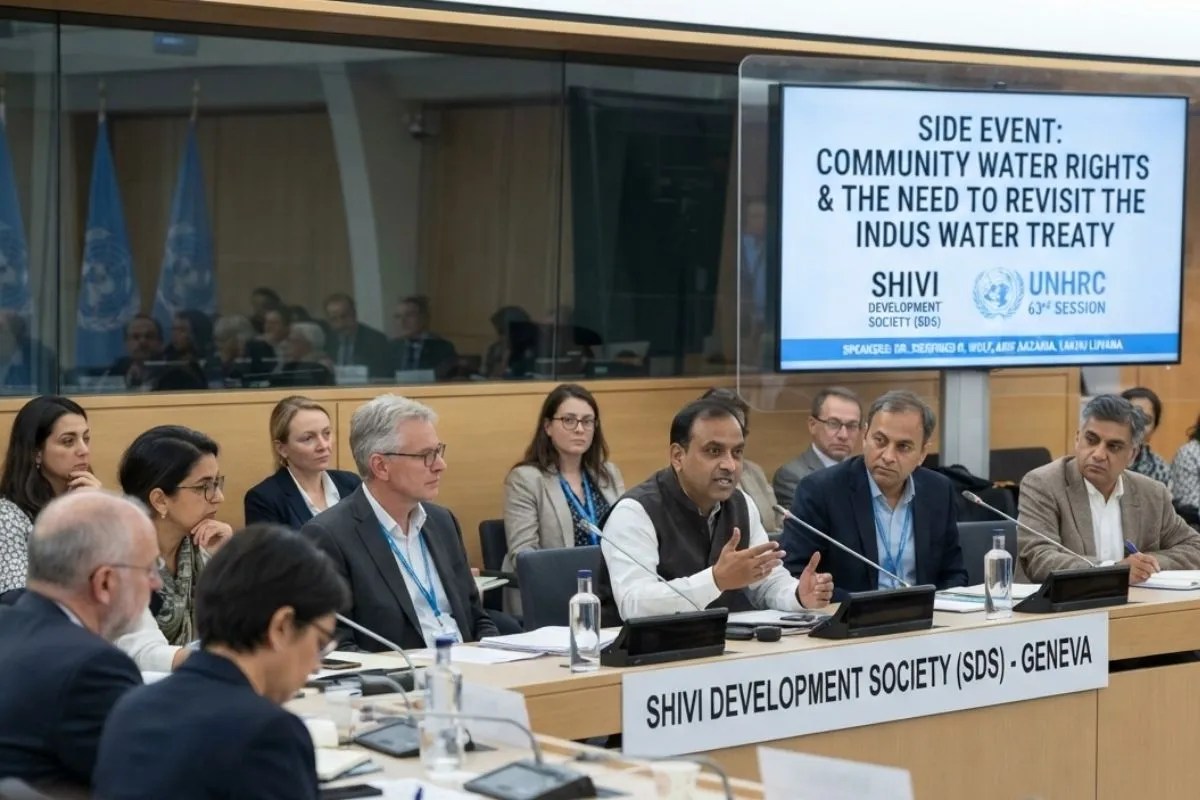
When state actors utilize international forums like the United Nations Human Rights Council (UNHRC) to frame these endogenous management failures as human rights violations caused by upper riparian policies, they misallocate diagnostic focus. The economic cost of this misdirection is severe: capital is directed toward legal and diplomatic posturing in Geneva rather than infrastructure modernization, lining, and drip-irrigation retrofits domestically.
Legal Fragmentation and the Limits of Adjudication
The institutional crisis deepened with conflicting rulings between the Permanent Court of Arbitration (PCA) and World Bank-appointed Neutral Experts regarding parallel dispute mechanisms. Pakistan sought an ad-hoc Court of Arbitration to adjudicate design specifications of hydroelectric projects, while India insisted on the Neutral Expert route, arguing that simultaneous proceedings violate the treaty's sequential dispute-resolution architecture.
When international tribunals issue determinations that fail to incorporate contemporary security challenges—such as state-sponsored irregular warfare—their operational relevance declines. India’s rejection of arbitration rulings that attempt to restrict sovereign infrastructural rights without addressing underlying security breaches establishes a firm precedent: international water law cannot function in a vacuum devoid of compliance with counter-terrorism obligations.
Strategic Forecast and Operational Adjustments
The friction over the Indus basin is transitioning from a legal dispute to a long-term test of coercive economic and hydrological statecraft. Future stability depends on whether institutional mechanisms can evolve to link resource security with regional security compliance.
- Enforce Conditional Transparency: Data-sharing protocols and technical cooperation must be tied directly to measurable verifications of security compliance and cross-border terrorism mitigation.
- Prioritize Basin-Wide Efficiency: Downstream stakeholders must reallocate capital from international legal lobbying toward domestic demand-side management, wastewater recycling, and modern agricultural pricing reforms.
- Modernize Dispute Frameworks: Future-proofing transboundary water agreements requires embedding clauses that automatically adjust operational parameters during prolonged security crises or severe climatic shifts, bypassing the rigid binaries of total abeyance or uncritical compliance.