Afghanistan is experiencing a dual-shock humanitarian contraction where internal regulatory hostility collides directly with external capital flight. When a governing regime systematically dismantles the labor pool required to distribute aid at the exact moment international donors withdraw liquidity, the resulting deficit is not a temporary dip in living standards; it is a systemic breakdown of survival infrastructure. Standard reporting frames this crisis through isolated anecdotes of suffering and generalized pleas for charity. To understand why millions are being left without basic sustenance, one must analyze the operational mechanics driving this collapse: the regulatory suffocation of non-governmental organizations (NGOs), the donor fatigue elasticity curve, and the localized economic feedback loops that trap populations in acute vulnerability.
The Mechanics of Regulatory Suffocation
Humanitarian operations rely on predictable supply chains, access to vulnerable demographics, and a localized workforce capable of navigating cultural boundaries. Since August 2021, the de facto authorities in Kabul have introduced a series of edicts that function as severe operational friction on aid delivery.
The primary bottleneck is the restriction on female humanitarian workers. In a society governed by strict gender segregation, male aid workers cannot legally or culturally enter private residences, conduct needs assessments for female-headed households, or distribute targeted nutrition and maternal healthcare. By banning Afghan women from working for national and international NGOs—and later extending these restrictions to United Nations agencies—the authorities effectively severed the "last-mile" delivery mechanism for roughly half the population.
From an operational perspective, this creates an immediate structural failure across three core functions:
- Data Blindness: Without female enumerators on the ground, aid agencies lose visibility into household-level caloric deficits, domestic health crises, and infant malnutrition. Allocation models become skewed toward male-accessible public spaces, leaving the most vulnerable demographic uncounted and unserved.
- Compliance Paralysis: International agencies operate under strict donor mandates regarding gender equity and non-discrimination. When local decrees force organizations to choose between violating core humanitarian principles or ceasing operations, many are forced into temporary suspensions or permanent withdrawals.
- Administrative Overhead: Navigating shifting, localized interpretations of national edicts forces NGOs to divert capital from direct aid procurement into security, negotiation, and bureaucratic compliance. Every dollar spent negotiating access with local ministries is a dollar removed from food baskets or medical supplies.
This dynamic illustrates a fundamental contradiction in governance: the de facto authorities rely on international aid to subsidize basic public services—healthcare, food security, and water sanitation—while simultaneously enacting policies that make the delivery of those subsidies functionally impossible.
The Donor Liquidity Crisis and Capital Flight
The second driver of the crisis is the sharp contraction in international humanitarian funding. Between 2021 and 2023, the global community mobilized billions of dollars to prevent immediate famine following the collapse of the Western-backed republic and the freezing of central bank reserves. By 2024 and beyond, that financial buffer evaporated.
Humanitarian financing operates within a zero-sum global capital market. Major institutional donors—primarily the United States, the European Union, and multilateral development banks—allocate funds based on geopolitical urgency, domestic political pressure, and perceived return on investment. As competing high-intensity crises emerged in Eastern Europe and the Middle East, Afghanistan fell down the hierarchy of global strategic priorities.
The Erosion of Donor Confidence
Beyond competing crises, donor capital has retreated due to a perceived lack of operational autonomy. Institutional funders face intense domestic scrutiny over whether tax dollars are inadvertently legitimizing or financially propping up an unrecognized regime that actively suppresses human rights.
This creates a severe moral hazard dilemma for Western policymakers:
- Full Engagement: Funding large-scale development and infrastructure risks entrenching the regime and absolving it of its fiscal responsibilities toward its own citizens.
- Pure Isolation: Cutting off funds entirely accelerates state collapse, triggers mass migration flows into neighboring states, and inflicts catastrophic mortality rates on an already traumatized civilian population.
The compromise adopted by major donors—restricting aid strictly to emergency, life-saving interventions while starving long-term development—has proven structurally flawed. Emergency aid keeps populations alive in the short term, but without investment in agricultural irrigation, banking infrastructure, and local enterprise, recipients never transition off assistance. When emergency budgets are inevitably slashed due to donor fatigue, the population falls off a cliff because no underlying economic resilience was ever built.
Macro-Economic Asymmetry and Household Vulnerability
To grasp why reduced aid triggers immediate desperation—captured in the widespread sentiment among Afghans of being abandoned to fend for themselves—one must examine the macroeconomic architecture of the country.
For two decades, the Afghan economy was artificially buoyed by foreign military spending and international development grants, which at their peak accounted for roughly 75 percent of public expenditure. The abrupt cessation of this capital inflow in 2021 caused a massive contraction in Gross Domestic Product (GDP), estimated by international financial institutions at over 20 percent within the first year alone.
The Collapse of Purchasing Power
In most modern economies, a humanitarian crisis is a supply-side problem caused by war or natural disaster destroying physical goods. In Afghanistan today, food is often visible in local markets, particularly in urban centers like Kabul or Herat. The crisis is fundamentally a demand-side failure driven by the collapse of household purchasing power.
Several compounding variables lock families into this deficit:
- Labor Market Contraction: The dissolution of the civil service, security forces, and the service sectors that supported international organizations eliminated hundreds of thousands of salaried jobs overnight. Furthermore, the exclusion of women from public life, education, and most private-sector employment immediately halved the potential income-generating capacity of the average household.
- Banking Sector Paralysis: Ongoing sanctions, the lack of international correspondent banking relationships, and severe liquidity constraints prevent businesses from accessing credit. Without working capital, local enterprises cannot expand, hire, or import raw materials at competitive rates.
- Climate Shocks and Agricultural Deficits: Afghanistan remains heavily agrarian, yet consecutive years of severe drought, erratic rainfall, and sudden flash floods have devastated subsistence farming. Rural households, unable to harvest sufficient crops, migrate to urban centers where no jobs exist, swelling the ranks of the urban poor.
- Forced Repatriation: The mass expulsion of hundreds of thousands of undocumented Afghan refugees from neighboring countries, particularly Pakistan, has injected a massive wave of destitute returnees into an economy with zero absorptive capacity. These returnees arrive without assets, housing, or employment networks, placing immediate strain on already depleted community resources.
When international agencies like the World Food Programme (WFP) are forced to cut millions of people from their distribution lists due to funding shortfalls, there is no private-sector safety net to catch them. A family removed from food assistance cannot simply seek formal employment because the formal labor market barely exists.
The Infrastructure of Neglect: Healthcare and Education
The intersection of restrictive policies and funding deficits is most lethal within the healthcare and education sectors, where short-term cuts produce irreversible generational damage.
Healthcare System Fragmentation
Prior to 2021, Afghanistan’s public health system was almost entirely financed by international donors through the Sehatmandi project, managed by the World Bank. When that funding mechanism froze, thousands of clinics faced immediate closure. While emergency UN interventions prevented a total collapse, the system now operates on a fragmented, underfunded triage basis.
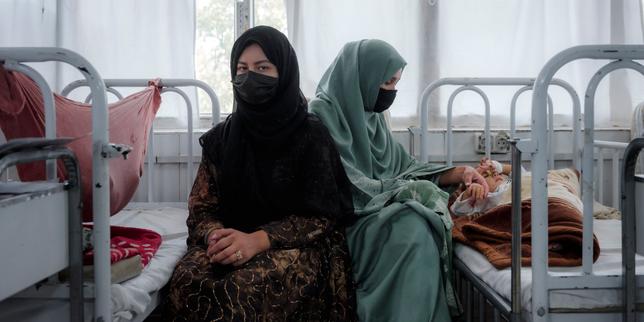
Rural clinics frequently lack basic pharmaceuticals, diagnostic equipment, and specialized staff. Because female doctors and nurses face severe restrictions on their movement—often required to travel with a mahram (a male chaperone)—rural facilities struggle to retain female medical personnel. In a system where male doctors are often prohibited from treating female patients, the absence of female staff translates directly into higher maternal and infant mortality rates. Treatable conditions such as acute respiratory infections, measles, and malnutrition-related complications become fatal due to the sheer physical and regulatory distance between the patient and the provider.
The Economic Cost of Educational Exclusion
The ban on secondary and university education for girls is frequently analyzed purely as a human rights violation. From an economic and operational standpoint, it is an act of long-term systemic self-sabotage.
By halting the pipeline of educated women, Afghanistan is guaranteeing a catastrophic shortage of female doctors, midwives, teachers, and administrators within a single decade. As the current generation of trained female professionals retires, emigrates, or is forced out of the workforce, there will be no qualified replacements to staff gender-segregated hospitals and schools. The long-term trajectory points toward the complete institutional erasure of women from public infrastructure, permanently depressing the nation’s human capital index and locking the economy into low-productivity subsistence.
Limitations of Current Humanitarian Models
The prevailing strategy employed by international organizations—attempting to negotiate piecemeal exemptions with local authorities while appealing to Western capitals for stopgap funding—has reached the point of diminishing returns.
First, localized negotiations create an inconsistent operational map. An exemption granted by a provincial governor in Balkh may be rejected by a ministry official in Kabul or ignored by local enforcement units in Kandahar. This unpredictability prevents NGOs from scaling programs efficiently and forces them into reactive, hyper-localized crisis management.
Second, relying on emergency humanitarian appeals is structurally unsustainable. Humanitarian aid is designed to bridge acute, short-term shocks, not to indefinitely replace the fiscal budget of a nation of over 40 million people. As long as the international community treats Afghanistan exclusively as a humanitarian emergency rather than addressing the underlying macroeconomic and governance paralysis, funding gaps will widen annually.
Third, isolationist sanctions regimes intended to pressure the de facto authorities disproportionately punish the civilian population. The regime has demonstrated a high tolerance for economic pain, maintaining internal security and consolidating ideological control despite international ostracization. Meanwhile, the middle class has been hollowed out, leaving only a ruling apparatus and an impoverished majority dependent on dwindling external rations.
Strategic Realignment for Aid Allocation
To prevent a total systemic collapse without capitulating to policies that erase half the population, international stakeholders, donor agencies, and operational NGOs must abandon traditional top-down aid delivery in favor of decentralized, resilience-focused architectures.
1. Shift from Direct Food Distribution to Localized Asset Creation
Where cash and food distributions are cut due to budget constraints, remaining capital must be aggressively reallocated toward micro-level agricultural resilience. Funding small-scale solar water pumps, drought-resistant seed distribution, and localized irrigation repair reduces long-term dependency on imported food aid and keeps rural populations anchored to productive land rather than fleeing to destitute urban slums.
2. Utilize Decentralized, Women-Led Micro-Enterprise Networks
Formal NGOs face intense scrutiny and physical restrictions, yet home-based economic activities often operate below the regulatory threshold of local enforcement. Donors should channel capital through informal financial networks and community-based organizations to fund home-bound female artisans, agricultural processors, and localized service providers. Supporting economic autonomy within the domestic sphere bypasses public-space restrictions while preserving household income.
3. Enforce Conditionality Tied to Operational Access
Donors and UN agencies must establish unified, non-negotiable red lines regarding operational access. Fragmented negotiations allow local authorities to play agencies against one another. Aid allocation must be strictly conditioned on verifiable access for female staff and unrestricted data collection. Where access is blocked, funds should be transparently and immediately reallocated to districts or provinces where local authorities permit full operational compliance, creating competitive pressure among provincial leaders to retain international resources within their jurisdictions.
4. De-Risk Basic Commercial Banking Channels
Humanitarian exemptions to international sanctions remain largely theoretical if commercial banks refuse to process transactions due to fear of secondary compliance penalties. Western treasuries must issue explicit, legally binding safe-harbor guarantees to correspondent banks facilitating verified humanitarian and basic commercial trade. Restoring basic liquidity to the private sector is the only viable mechanism to revive domestic job creation and reduce the population's total reliance on external charity.