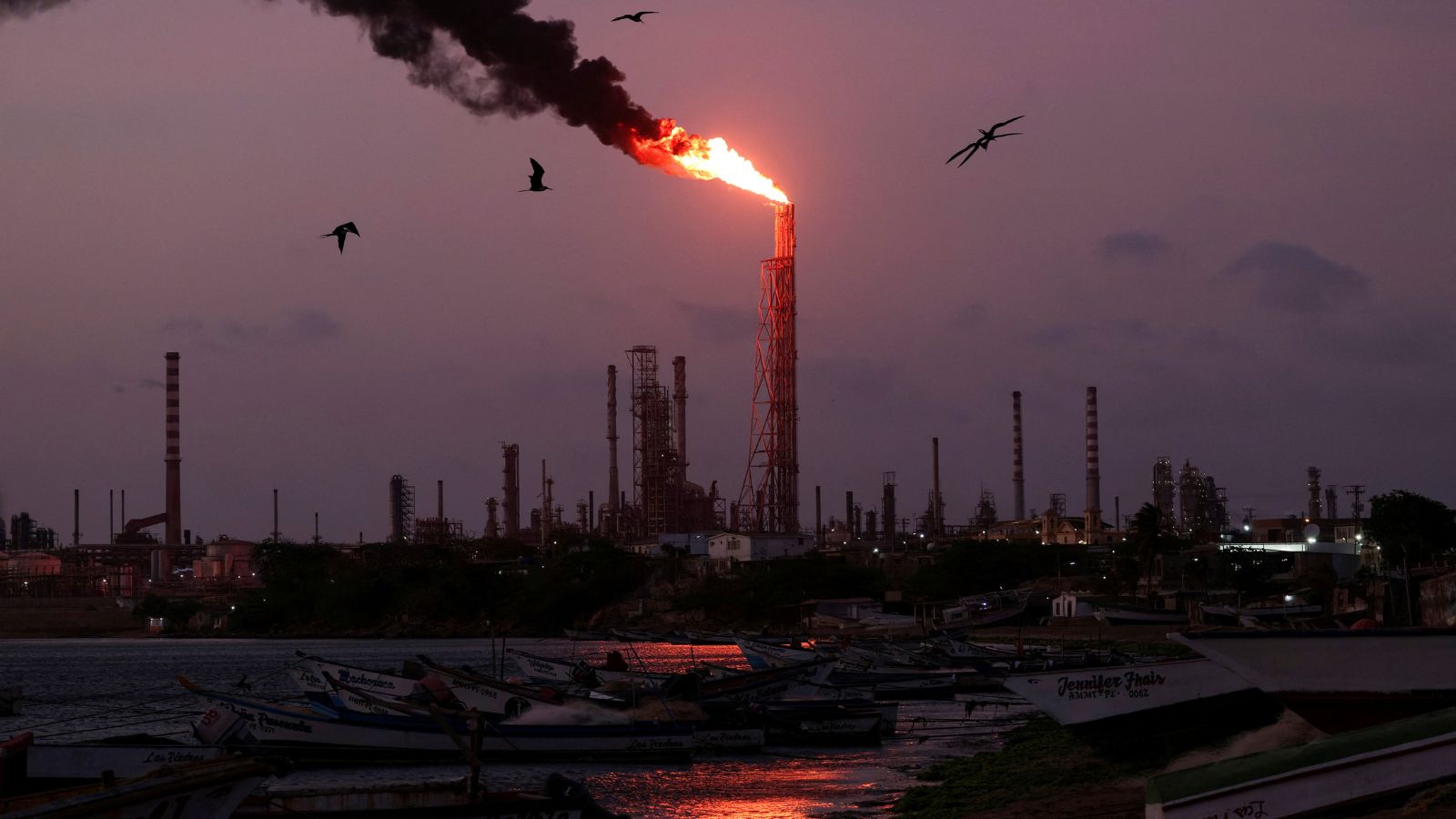
Modern industrial processing facilities operate under tight safety tolerances where thermal energy, pressurized hydrocarbons, and mechanical integrity intersect. When these tolerances are breached, cascading system failures occur. The emergency shutdown of the Cardon refinery following a natural gas line rupture and subsequent fire illustrates the operational vulnerability inherent in aging hydrocarbon processing infrastructure operating under constrained maintenance regimes.
Evaluating this event requires moving past superficial incident reporting to examine the core mechanical failure modes, the structural economic mechanics of the Paraguaná Refining Complex, and the systemic factors governing industrial reliability in high-risk environments.
The Mechanical Failure Cascade
Hydrocarbon processing plants rely on continuous distribution networks for feedstock, utility fuel, and intermediate products. The primary trigger at Cardon—a failure in the natural gas line feeding the facility boilers—demonstrates a foundational vulnerability in plant utility systems.
Boilers require an uninterrupted, stable feed of fuel gas to maintain steam generation pressures across distillation and conversion units. When a supply line ruptures, the immediate safety response protocol mandates an emergency shutdown to isolate fuel sources and prevent catastrophic ignition or vessel explosion.
The physical mechanics of such incidents typically involve three sequential stages:
- Containment Loss: Material degradation, mechanical fatigue, or corrosion causes a breach in a pressurized line.
- Ignition Vector: Escaping gas encounters an ignition source, often hot surfaces within furnace or boiler areas, resulting in a localized flash fire.
- Emergency Interlock Activation: Safety instrumented systems trip pumps, close emergency shutdown valves, and depressurize units to starve the fire of fuel.
While response teams successfully contained the blaze without casualties, the secondary effect is an immediate loss of hydraulic and thermal equilibrium throughout the complex. Re-establishing stability requires purging units, inspecting metallurgy for thermal damage, and verifying instrument calibration before any restart sequence can initiate.
Capacity Utilization versus Operating Reality
Nameplate capacity metrics frequently mask operational thresholds. Cardon possesses an installed capacity of 310,000 barrels per day, positioning it as a major asset within the broader Paraguaná Refining Complex. However, nameplate capacity represents theoretical maximum output under optimal operating conditions with fully redundant systems.
Prior to the incident, the facility operated far below this threshold, constrained by broader structural headwinds affecting the national refining network. Operating at fractional capacity alters the thermal dynamics of processing units. Running distillation columns and hydrotreaters at low throughput rates often introduces flow instabilities, catalyst inefficiencies, and uneven thermal stress on piping metallurgy.
The operational bottleneck is further compounded by external infrastructure dependencies:
- Electrical Grid Stability: Refineries require continuous, high-voltage power supplies to run massive centrifugal pumps, compressors, and control systems. Voltage fluctuations or grid trips force emergency shutdowns that stress mechanical seals and rotating equipment.
- Spare Parts and Metallurgy Supply Chains: Long-term asset integrity depends on scheduled replacements of valves, gaskets, and piping segments subject to naphthenic acid corrosion or high-temperature hydrogen attack. Access restrictions to specialized OEM components force operators to extend maintenance cycles beyond engineering recommendations.
- Human Capital Retention: Complex industrial facilities require experienced operational engineers and technicians to monitor telemetry anomalies and execute safe manual overrides. The emigration of specialized technical personnel creates operational risks during abnormal situations.
Systemic Economic and Supply Pressures
Refinery outages generate localized and regional supply shocks, particularly when the affected facility serves as a primary hub for domestic fuel distribution.
The economic cost function of a refinery shutdown comprises three distinct vectors:
- Opportunity Cost of Lost Throughput: The volume of crude oil that cannot be processed into high-value distillates (gasoline, diesel, jet fuel) must either be redirected as raw crude export or shut in at the wellhead if storage capacity reaches saturation.
- Capital Repair Expenditure: Restoring a damaged processing unit requires specialized inspection techniques—such as ultrasonic testing and radiography—followed by metallurgical repairs or complete section replacements.
- Logistics Realignment: Domestic distribution networks must absorb the deficit through reserve inventories or alternative supply routes, increasing transportation costs and creating temporary supply tightening in regional markets.
Strategic Outlook for Industrial Asset Recovery
The long-term viability of high-capacity processing nodes like Cardon depends on moving from reactive emergency management to predictive reliability engineering.
The immediate strategic priority requires completing metallurgical integrity assessments on affected piping loops to ensure no micro-fissures remain undetected following the thermal event. Concurrently, facility operators must institute comprehensive acoustic monitoring on high-pressure gas lines to detect early-stage vibrational fatigue before containment loss occurs. Without structural capital reinvestment and rigorous adherence to preventive maintenance protocols, high-consequence operational interruptions will continue to constrain production output regardless of nameplate potential.


