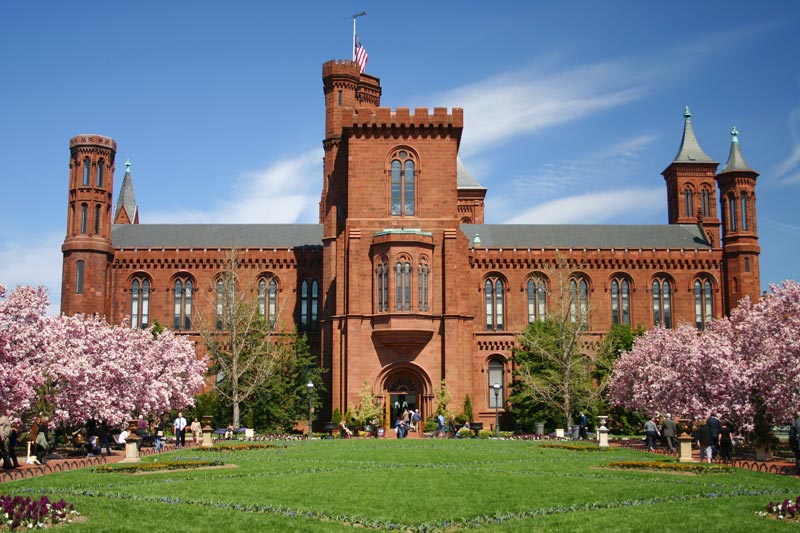
The departure of Lonnie Bunch III as secretary of the Smithsonian Institution marks a critical inflection point for public cultural infrastructure under direct executive pressure. While official statements frame the exit of the institution's first African American leader around personal tenure milestones, the structural reality reveals a calculated campaign of state intervention designed to reshape national historical narratives. Understanding this transition requires looking past individual announcements to analyze the mechanisms of political leverage, institutional autonomy, and the economic dependencies that expose public-trust entities to executive coercion.
The Mechanics of Executive Intervention
Public institutions like the Smithsonian operate under a hybrid governance model. They receive federal appropriations to maintain operations, yet they maintain a statutory mandate for independent scholarly curation. This duality creates a structural vulnerability. When an administration seeks to alter the ideological output of a museum complex, direct firing is rarely necessary. Instead, the executive branch deploys a three-pronged friction model:
- Regulatory and Investigative Pressure: Issuing executive orders that mandate reviews of internal curation, accusing institutions of promoting divisive ideologies, and commissioning federal reports to delegitimize curatorial staff.
- Fiscal Coercion: Threatening the restriction, delay, or withdrawal of federal funding streams required to sustain vast physical plant operations and artifact conservation.
- Personnel Exhaustion: Creating a high-conflict operational environment where leadership spends disproportionate capital defending baseline institutional integrity rather than advancing strategic cultural initiatives.
This friction model alters the cost function for institutional leaders. The price of maintaining nonpartisan historical complexity rises significantly, while the administrative support for defending controversial exhibits diminishes under congressional and executive crossfire.
The Governance Vulnerability Matrix
The Smithsonian Board of Regents—chaired by the Chief Justice of the United States and comprising congressional members from both parties alongside executive branch officials like the Vice President—acts as the ultimate arbiter of leadership. However, this composition mirrors broader political polarization.
When institutional governance bodies are politically heterogeneous, they struggle to present a unified shield against executive overreach. Rather than serving as an insulated buffer, a mixed board often internalizes the external friction. Curation decisions transform into partisan proxy wars, forcing the secretary into an unsustainable balancing act. The calculus shifts from preserving long-term historical accuracy to managing short-term institutional survival.
[Executive Branch Pressure]
       │
       ▼
[Fiscal & Regulatory Friction] ──> [Board Polarization] ──> [Leadership Burnout & Exit]
       │
       ▼
[Curatorial Self-Censorship]
This feedback loop damages the institution long before a new leader takes office. Curators, recognizing the vulnerability of top cover, internalize boundaries. The anticipation of political penalty leads to preemptive self-censorship, shifting exhibition designs away from contested historical episodes toward safe, universally palatable narratives.
The Economic and Cultural Fallout of Curatorial Realignment
Cultural institutions function as public trust assets. Their market value is intangible, resting entirely on epistemic authority—the belief that their collections and interpretations reflect rigorous, peer-reviewed scholarship rather than transient political directives.
When state power forces a realignment toward a singular, uncritical patriotic narrative, the asset value of the institution depreciates.
- Epistemic Degradation: The substitution of scholarly consensus with executive mandates undermines international academic partnerships and lowers the credibility of research publications.
- Talent Attrition: Specialized historians, archivists, and directors face a deteriorating operational environment, accelerating brain drain toward private universities or independent foundations immune to federal interference.
- Donor Realignment: Philanthropic capital, which increasingly supplements federal allocations, can become polarized. Donors seeking uncensored historical inquiry withdraw support, while state-aligned funding sources attach compliance strings to future endowments.
Strategic Forecasting for the Succession Window
The selection of Bunch's successor by the Board of Regents will dictate the trajectory of American public history for the next decade. Two distinct strategic pathways emerge from this crisis:
First, the board may select an administrator optimized for compliance—someone capable of neutralizing executive hostility by softening institutional friction and aligning exhibits with prevailing political demands. This pathway achieves short-term administrative peace at the expense of long-term institutional authority, transforming the world's largest museum complex into an instrument of state-sanctioned narrative management.
Second, the board may appoint a figure with explicit mandates to fortify structural independence, utilizing legal firewalls and public transparency to resist future executive directives. This path ensures epistemic integrity but guarantees continuous budgetary and political warfare with the federal government.
The structural reality of public institutions leaves them exposed whenever executive leadership decides to weaponize administrative oversight. Safeguarding these spaces requires formalizing statutory insulation that goes beyond traditional norms, anchoring curatorial independence in legal protections that withstand shifts in political power. Without such structural reinforcement, the history presented to the public will continually bend to the immediate utility of whichever administration holds the executive office.