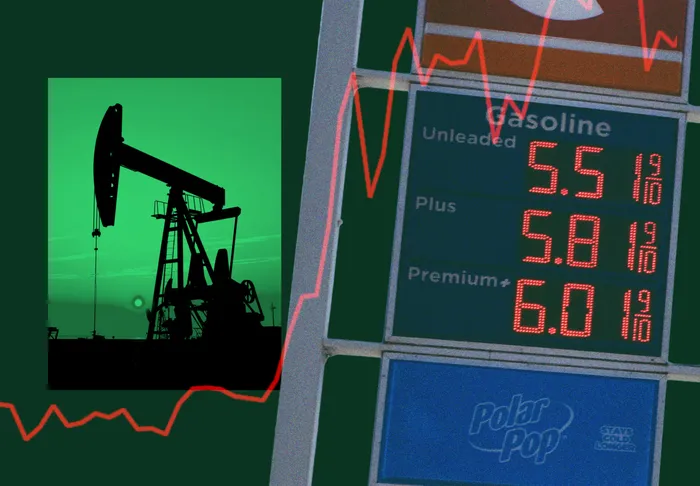
The current equity environment operates on a mechanism of punitive price discovery that fundamentally differs from the 1999 dot-com collapse. While the late nineties featured a speculative bubble characterized by a lack of earnings, the present volatility is driven by a compression of multiples against a backdrop of rising cost-of-capital. In 1999, markets remained buoyed by a belief in "eyeballs" over EBITDA; today, the market acts as a high-speed executioner for any company failing to meet specific, rigorous productivity benchmarks. This shift has created a environment where the penalty for missing expectations is not just a dip, but a total re-rating of a firm’s enterprise value.
The Triad of Modern Market Punishment
Three distinct structural pillars define why today’s market reacts with greater severity than previous cycles.
The Algorithmic Liquidity Vacuum: In 1999, human market makers provided a buffer of liquidity. Modern trading is dominated by high-frequency algorithms and passive index funds. When a stock misses a target or provides weak guidance, these algorithms trigger simultaneous sell orders. Because the "buy-side" liquidity is often provided by similar automated systems that retract during high volatility, the price falls through a vacuum until it hits a floor that is often 20% to 30% below the previous close.
The End of Free Money: For a decade, the hurdle rate for capital was near zero. This allowed "zombie companies" to survive on cheap debt. With the federal funds rate at its highest point in two decades, the cost of error has skyrocketed. A company that could previously mask operational inefficiencies with low-interest refinancing now faces a binary outcome: profitability or insolvency. The market is pricing in the literal death of the weakest players rather than a temporary cooling of enthusiasm.
Information Saturation and Velocity: In previous eras, information diffused through the market over days or weeks. Today, the synthesis of earnings transcripts, alternative data, and sentiment analysis happens in milliseconds. The market arrives at a "verdict" on a stock's value almost instantly, leaving no room for the slow recovery cycles seen in the early 2000s.
Quantifying the Value Compression
To understand the severity of the current downturn, one must analyze the relationship between the discount rate and the terminal value of a stock. In a low-interest-rate environment, the value of cash flows twenty years into the future is high. As rates rise, the present value of those future cash flows drops precipitously. This is the Discounted Cash Flow (DCF) Trap.
Growth stocks, which carry the majority of their value in the "out-years," are mathematically forced to trade at lower valuations when the risk-free rate increases. Unlike 1999, where many companies had no cash flow to discount, today’s market involves real companies with real revenue. The "punishment" is a cold, mathematical recalibration of what a dollar earned in 2030 is worth today.
The Quality Bifurcation
The market has ceased to move as a monolith. We are witnessing a radical divergence between firms with "fortress balance sheets" and those reliant on capital markets for survival.
- Tier 1: The Cash Generators: Large-cap technology firms with massive cash reserves and high margins. These stocks are being used as "defensive growth" plays. Their punishment for missing earnings is relatively light because their survival is not in question.
- Tier 2: The Speculative Growth Layer: Companies with high revenue growth but negative net income. These are the primary victims of the current regime. The market is demanding an immediate pivot to GAAP profitability. Those unable to demonstrate a clear path to positive cash flow within 12 to 18 months are being devalued by 50% or more.
- Tier 3: The Leveraged Middle: Mid-cap companies with significant debt loads. As their debt matures and must be rolled over at 7% or 8% interest—up from 2% or 3%—their earnings per share (EPS) are naturally cannibalized. The market is pricing this "interest expense creep" years in advance.
Operational Efficiency as the New Alpha
In 1999, the strategy was "growth at any cost." In the current cycle, the market is rewarding "margin at any cost." This change in investor preference has forced a fundamental shift in corporate strategy.
The Productivity-to-Payroll Ratio has become a critical metric. Companies that aggressively right-sized their headcount and embraced automation are being rewarded with stable multiples. Conversely, firms that maintained "bloated" pandemic-era staffing levels are seeing their stock prices hammered. The market is no longer impressed by headcount as a proxy for scale; it views headcount as a liability until proven otherwise.
The Feedback Loop of Passive Investing
The rise of passive indexation has exacerbated the downward pressure on individual stocks. Because a few massive entities dominate the indices, when an index-wide sell-off occurs, even "good" companies are sold off mechanically to meet redemption demands. However, the recovery for these companies is no longer guaranteed.
A "Broken IPO" or a "Broken Growth Story" faces a unique challenge in the passive era: if a stock’s market cap falls below certain thresholds, it is removed from major indices. This triggers a secondary wave of forced selling that has nothing to do with the company's fundamentals. This structural "trap door" is a feature of the modern market that did not exist in the 1990s.
The Inflationary Tax on Multiples
Inflation acts as a hidden tax on stock valuations. When the cost of goods sold (COGS) increases, companies must raise prices to maintain margins. However, there is a limit to consumer elasticity. The market is currently testing these limits.
If a company reports a 10% increase in revenue but that revenue is entirely driven by price hikes rather than volume growth, the market discounts the quality of those earnings. Volume-driven growth is sustainable; price-driven growth is a temporary hedge against inflation. Analysts are now stripping away the "inflationary noise" to see if companies are actually gaining market share or simply passing on costs. The stocks that cannot maintain volume growth are being treated with extreme prejudice.
Strategic Asset Allocation in a High-Penalty Environment
Navigating this landscape requires a transition from speculative momentum to "Structural Value" hunting. The following framework identifies the necessary characteristics for survival in a market that punishes mediocrity:
- Positive Free Cash Flow Yield: Only companies generating more cash than they consume can dictate their own destiny. Avoid any firm that requires a capital raise within the next 24 months.
- Pricing Power with Volume Stability: Identify firms in essential industries where the consumer has a high cost of switching. This ensures that margins can be protected without sacrificing the underlying customer base.
- Low Debt-to-Equity Ratios: In a high-rate environment, the balance sheet is the most important document. Companies with minimal leverage are immune to the interest rate shocks that are currently devaluing the rest of the market.
- Operational Flexibility: Firms with a high percentage of variable costs versus fixed costs can adapt more quickly to a slowing economy.
The current market volatility is not a "glitch" or a temporary panic. It is a return to a fundamental reality where capital has a price. The punishment observed in the markets today is the sound of the financial system purging inefficiency. Investors should expect this high-penalty environment to persist until the cost of capital stabilizes and the "zombie" elements of the economy have been fully liquidated. The move is away from the "everything rally" of the 2010s and toward a surgical, high-conviction approach where the balance sheet is the only true shield against a market that has lost its appetite for risk.