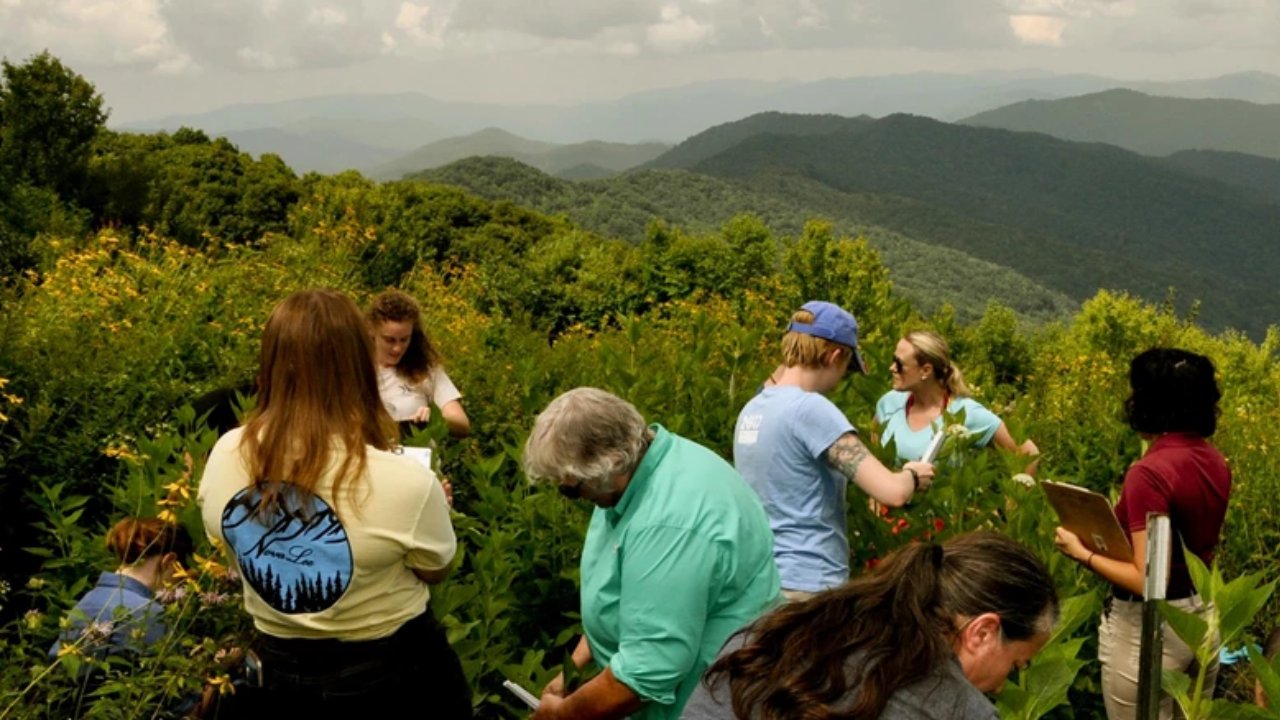
Private land tenure transitions in high-elevation ecological zones reveal fundamental mechanisms of asset reallocation, tax incentives, and conservation easements. When property owners Kathryn McNeil and Voit Gilmore transferred 535 acres of high-altitude real estate known as Purchase Knob in Haywood County, North Carolina, to the National Park Service in the year 2000, the transaction represented the single largest private land gift to the Great Smoky Mountains National Park since its establishment. Analyzing this transfer requires stripping away sentimental narratives to examine the structural intersection of real estate appreciation, municipal development pressures, and federal asset management.
The Capital Preservation Dilemma
Holding 535 acres of contiguous ridge-line property along the Cataloochee Divide for nearly four decades exposes owners to compounding opportunity costs. Real estate markets in the Southern Appalachians underwent significant structural shifts between 1964 and 2000. As surrounding low-elevation valleys experienced accelerated residential and commercial subdivision, the marginal value of high-elevation acreage for private recreational use diverged sharply from its speculative valuation for luxury resort development.
Property owners facing this divergence operate within a constrained decision matrix:
- Liquidation via commercial subdivision, maximizing short-term cash recovery while permanently altering ecosystem integrity.
- Retention under private equity models, absorbing rising property tax burdens and estate transfer liabilities without operational yield.
- Strategic philanthropic divestment, optimizing tax offsets through charitable deductions while transferring long-term asset maintenance costs to federal stewardship.
The McNeil-Gilmore portfolio choice leveraged the third mechanism. By transitioning the asset from private stewardship to public infrastructure, the transaction eliminated capital gains exposure on appreciated value while safeguarding the property from habitat fragmentation.
Ecosystem Fragmentation and Boundary Mechanics
Ecological degradation along national park perimeters typically follows a predictable trajectory known as edge effect expansion. Unprotected private parcels adjacent to federal boundaries are prone to subdivision, road construction, and utility installation, which collectively sever biological corridors. Purchase Knob sits at an elevation exceeding 5,000 feet, an ecological zone supporting glacial relict species and rare endemic flora unique to the Southern Appalachian crests.
When land parcels of this magnitude remain intact adjacent to federal borders, they function as natural buffer zones.
The structural defense against fragmentation relies on contiguous acreage retention:
- Surface area-to-perimeter ratios dictate the vulnerability of interior forest habitats to invasive species and microclimate alteration.
- Elevation gradients provide critical altitudinal migration pathways for fauna responding to shifts in regional climatic baselines.
- Hydrological integrity at high-altitude headwaters remains shielded from the chemical runoff associated with residential septic systems and impervious surfaces.
By converting the estate into the Appalachian Highlands Science Learning Center, the National Park Service preserved these ecological thresholds while repurposing existing architectural footprints—including laboratories, offices, and residential quarters for visiting researchers—into a decentralized scientific asset.
The Fiscal Architecture of Federal Land Integration
Absorbing large private tracts into federal agencies involves navigating complex legislative and administrative procedures. Unlike standard real estate acquisitions executed through direct capital outlays, philanthropic transfers require statutory boundary adjustments or administrative approvals to integrate new acreage into existing appropriations bills.
The operational shift from a seasonal private residence to a permanent institutional research station alters local municipal tax receipts. Removing 535 acres from county tax rolls shifts the local tax base, though this is frequently counterbalanced by the economic multiplier of institutional spending, academic tourism, and federal sub-allocations. The establishment of five congressionally mandated research learning centers across the national park network in 2001 provided the institutional framework necessary to absorb Purchase Knob into an active operational budget rather than leaving it as passive, unstaffed wilderness.
Strategic Asset Allocation for Conservation Trusts
Evaluating the long-term viability of private-to-public land gifts requires examining yield efficiency per acre conserved. Traditional land acquisition strategies rely on direct federal purchasing power, which is chronically constrained by congressional budget allocations and escalating land valuations. Philanthropic divestment bypasses capital acquisition bottlenecks entirely, allowing federal agencies to direct scarce administrative resources toward active habitat management and scientific infrastructure development rather than baseline land acquisition costs.
Future conservation frameworks must systematically incentivize multi-decadal private landowners to execute structured estate transfers prior to generational succession events. When heirs inherit vast high-altitude holdings, forced partition sales to satisfy estate taxes frequently trigger subdivision. Establishing pre-mortem philanthropic transfer pathways secures asset continuity without relying on ad-hoc legislative intervention.