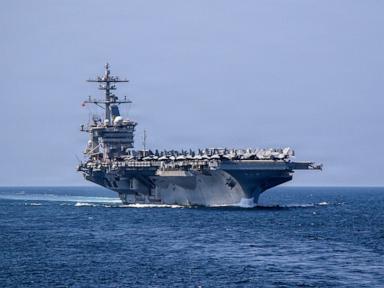
Strategic endurance in modern naval warfare is bounded by human biology, mechanical fatigue cycles, and logistical supply chains. When political leadership evaluates a prolonged naval deployment solely through the lens of continuous operational presence, it commits a foundational error in systems engineering. The commentary surrounding the USS Abraham Lincoln following its record-shattering operational window exceeding 260 days at sea frames the situation as a simple binary of military utility versus political rhetoric. A rigorous operational deconstruction reveals a vastly more complex reality: prolonged carrier strike group deployments generate exponential degradation curves across personnel mental health, mechanical asset integrity, and theater-level force readiness.
The Tripartite Cost Function of Extended Sea Periods
To understand why a deployment exceeding eight months creates acute systemic vulnerabilities, we must evaluate the trade-offs through three distinct functional categories: human capital decay, material fatigue, and logistical friction.
The human capital cost function operates on a non-linear trajectory. While initial adaptation to high-tempo combat operations in support of regional objectives yields high short-term output, cumulative sleep deprivation, chronic separation from domestic support structures, and nutritional monotony erode cognitive performance. The manifestation of this decay is not merely individual dissatisfaction; it degrades collective watchstanding reliability, increases technical error rates in flight deck operations, and diminishes psychological resilience. When political executives dismiss these variables as manageable externalities, they miscalculate the tipping point where operational fatigue transforms into operational risk.
Simultaneously, the material cost function accelerates. A Nimitz-class nuclear-powered aircraft carrier is an integrated floating city containing thousands of sub-systems operating in a highly corrosive marine environment. Routine maintenance cycles are designed to alternate with operational windows to prevent systemic component failure. Pushing a hull past the 240-day uninterrupted threshold means operating mechanical, electrical, and catapult systems far beyond their optimal preventive maintenance intervals. Spare parts inventory onboard is finite; once depleted, technicians must resort to cannibalization or wait for high-risk aerial resupply drops in contested environments.
The Strategic Illusion of Indefinite Blockades
The underlying driver of the USS Abraham Lincoln extension is the strategic requirement to maintain a persistent maritime choke point enforcement, specifically the blockade of Iranian ports within the Strait of Hormuz. Political assurances that military force can sustain such posture indefinitely ignore the zero-sum nature of global naval architecture.
Naval assets do not exist in a vacuum; they operate within a closed global inventory. Extending Carrier Strike Group Alpha in the Central Command area of responsibility directly impairs force posture elsewhere. For instance, the subsequent repositioning of the USS George Washington from the Indo-Pacific to relieve the Lincoln creates a temporary power vacuum in a critical theater. This creates a domino effect across global combatant commands, forcing planners to cannibalize future readiness to sustain current theater demands.
The strategic disconnect lies in the assumption that operational tempo is infinitely elastic. In practice, naval power relies on a triad of deployment, training, and maintenance. Lengthening the deployment phase directly compresses the maintenance and training windows that follow. Consequently, an extended mission today guarantees a depleted, delayed, or rushed readiness cycle tomorrow, compounding institutional fatigue across the entire surface fleet.
Operational Remediation and Force Rotation Mechanics
Resolving the friction between political objectives and naval capacity requires shifting from ad-hoc crisis management to structured rotational modeling. The traditional deployment paradigm relies on single-hull presence models that become brittle when regional conflicts exceed projected timelines. When a conflict originally projected to last weeks stretches past five months, rigidly holding a single capital ship on station transforms a tactical asset into a strategic bottleneck.
Mitigating this vulnerability necessitates several operational shifts:
- Decoupling carrier strike group rotations from fixed geographic anchors by utilizing distributed maritime operations and land-based tactical aviation where feasible.
- Establishing hard operational ceilings on uninterrupted days at sea to preserve crew psychological health and prevent catastrophic equipment wear.
- Re-evaluating logistics pipelines to ensure that high-contested environments do not compromise the delivery cadence of mail, medical supplies, and dietary variety.
- Enforcing transparent oversight mechanisms between the Department of Defense and legislative oversight committees regarding habitability metrics, rather than relying on reactive public relations responses.
The operational reality of modern naval power projection is stark. Sustaining high-intensity regional blockades with finite capital assets forces a choice between short-term tactical signaling and long-term institutional health. Ignoring the mechanical and biological limits of a carrier strike group does not eliminate those limits; it merely defers the bill until a failure occurs at sea.
Allocate replacement assets via pre-calculated rotational handoffs rather than reactive extensions, capping continuous at-sea periods to protect both the human element and the structural lifespan of the fleet.