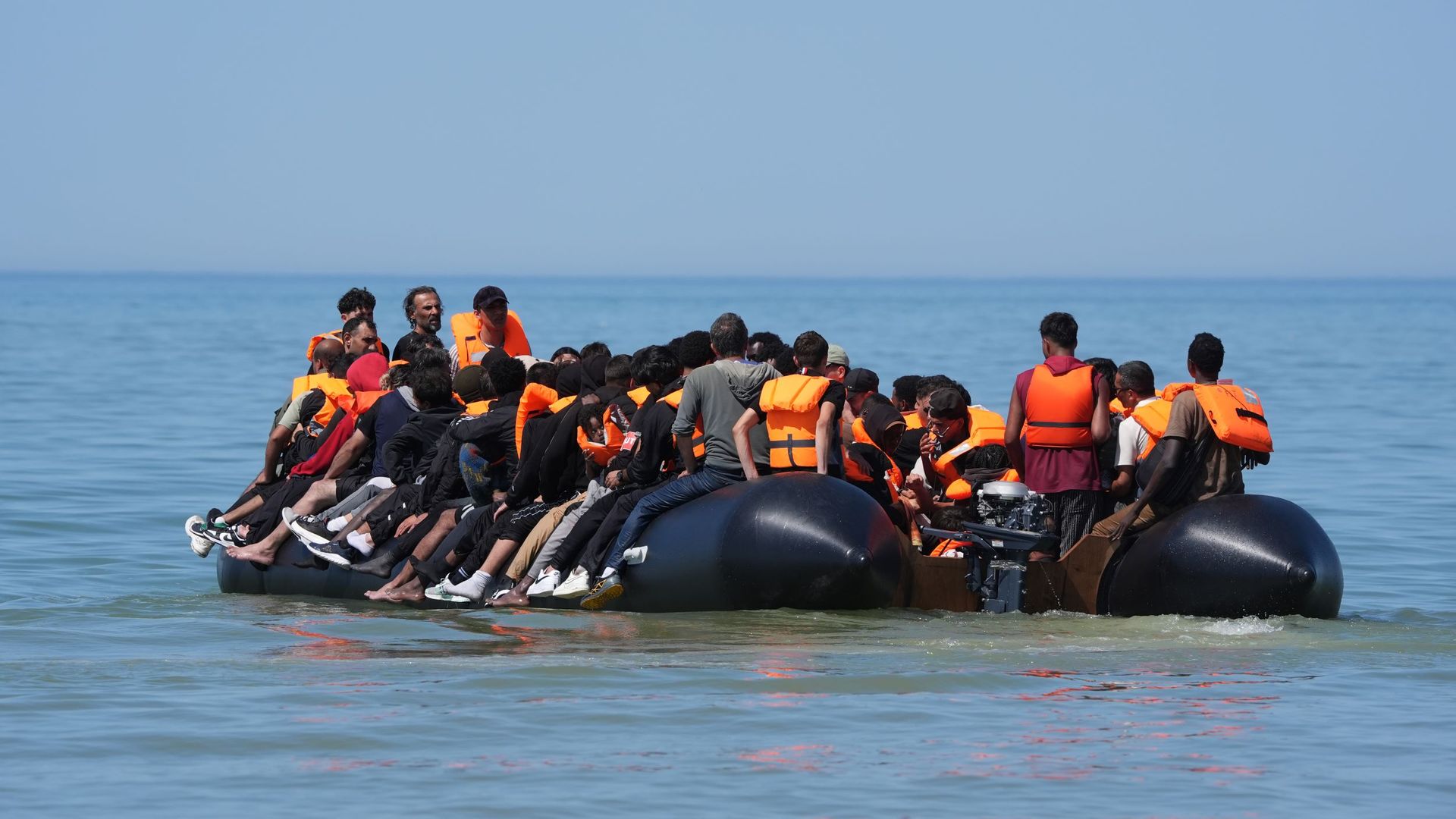
The mechanics of small boat maritime migration across the English Channel are governed by a predictable set of economic incentives, supply chain bottlenecks, and enforcement asymmetries. When a migrant dies and dozens are rescued, public discourse typically fixates on the immediate human tragedy or the polarized politics of border control. Beneath these surface narratives lies a rigid operational system. To understand why maritime crossings persist despite high mortality risks, one must examine the operational components that drive the market, the cost structures managed by smuggling networks, and the structural limitations of interdiction efforts.
Interdiction strategies deployed by state actors consistently fail to eliminate supply because they target the maritime phase rather than the logistical genesis. The crossing itself represents the final, highest-risk node of a multi-tier supply chain. Smuggling syndicates operate with decentralized cell structures, separating procurement, logistics, asset management, and financial clearing. When law enforcement seizes a rigid-hulled inflatable boat or an uninflated rubber dinghy, they impose a capital loss on a localized asset, but they do not disrupt the underlying procurement networks sourcing substandard watercraft from international industrial manufacturers.
The economic model of cross-channel smuggling functions on high-volume, low-margin asset utilization. Unlike narcotics trafficking, which relies on high unit value, human smuggling across this corridor relies on maximizing passenger density per transit to offset the high probability of asset seizure or destruction by coastal patrols.
The Cost Function of Channel Transits
To deconstruct the pricing mechanism charged by organizers, analysts must evaluate the variables comprising the total cost function for an end-user.
- Asset Procurement Cost: Low-grade PVC or hypalon vessels sourced through commercial supply chains, paired with underpowered outboard engines, typically ranging from 5 to 25 horsepower. These engines are intentionally undersized to reduce upfront capital expenditure and evade immediate suspicion during inland transit.
- Consumables and Safety Deficits: Life jackets provided to passengers are frequently non-certified, cosmetic buoyancy aids rather than professional marine safety equipment. This deliberate omission reduces variable cost per unit while shifting the mortality risk entirely onto the consumer.
- Logistical Overhead: Movement of vessels from inland warehouses to remote launch sites along the northern French coastline requires localized coordination, transport vehicles, and timing aligned with tidal windows and weather forecasts.
- Interdiction Insurance Premium: Organizers price the risk of asset loss directly into the fare structure. Because multiple attempts are often required before a successful launch, the initial fee charged to migrants frequently covers the amortized cost of future asset replacements.
This cost structure creates an asymmetric market. The consumer absorbs all physical and financial risk, while the network operator secures payment upfront through hawala systems or decentralized digital ledgers before the vessel ever touches the water.
Operational Variables Dictating Mortality Rates
Maritime fatalities are not random events; they are the statistical output of compounding operational failures during the launch and transit phases.
The primary catalyst for disaster is overloading. A vessel designed for a maximum payload of eight individuals is routinely loaded with fifty to seventy occupants to maximize revenue per trip. This introduces severe hydrostatic instability. The center of gravity shifts dangerously upward, transforming the inflatable craft into a dynamic hazard where minor weight shifts cause capsizing.
The secondary variable is meteorological timing. Smuggling organizers operate under severe pressure from law enforcement patrols, forcing them to launch during suboptimal weather windows. High winds, low water temperatures, and choppy sea states in the Dover Strait overwhelm unpowered or underpowered watercraft. Because the vessels lack bilge pumps, navigational electronics, and structural rigidity, any ingress of water rapidly compromises buoyancy.
The tertiary factor involves rescue response times. The English Channel is one of the busiest shipping lanes globally, featuring high densities of commercial container traffic alongside sovereign border patrol vessels. When a vessel becomes distressed, survivability depends entirely on rapid detection, signal propagation via satellite or mobile networks, and the physical capacity of rescue assets to deploy in high seas. Communication relies on smuggled mobile devices, which are prone to battery failure, water damage, and signal attenuation miles offshore.
Systemic Bottlenecks in Border Interdiction
State responses to maritime migration are constrained by international maritime law, territorial jurisdictions, and resource allocation limits. Under the Safety of Life at Sea convention, any vessel in distress must be assisted, creating a legal obligation that intersects with border enforcement mandates.
Border security agencies face a permanent surveillance deficit. The coastline spanning from the Opal Coast to Normandy is extensive, highly accessible, and characterized by secluded beaches and tidal estuaries. Patrolling this perimeter requires continuous aerial and terrestrial monitoring. Smugglers exploit gaps in radar coverage and response times by utilizing "flash launches"—rapid deployments where vessels are inflated, loaded, and pushed off the beach within a ten-minute window, well before local law enforcement units can intercept them.
When interception occurs at sea, operational protocols dictate rescue and transfer rather than aggressive physical halting, due to the high probability of capsizing and mass drowning caused by enforcement maneuvers. This operational restraint is factored into the strategic calculus of smuggling networks, who treat maritime patrols as an eventual rescue service rather than a definitive barrier.
Strategic Infrastructure Deficits
Efforts to suppress these crossings through bilateral financial agreements between destination and transit states have yielded mixed results. Funding directed toward increased police presence on French beaches alters the spatial distribution of launches rather than suppressing the aggregate volume. When one launch point is secured through intensified policing, operations simply displace geographically to less monitored sectors further down the coast.
True disruption requires dismantling the financial architecture underpinning the syndicates. Because transactions are decentralized and often conducted outside formal banking channels, traditional asset freezing mechanisms lack efficacy. Intelligence agencies must target the illicit procurement networks importing marine engines and maritime accessories in bulk, treating these commercial inputs as dual-use contraband.
Maritime agencies must transition from reactive rescue models to proactive supply chain interception upstream. Until enforcement mechanisms shift focus from the point of embarkation to the financial and logistical supply lines sustaining the trade, capacity will continue to match demand, ensuring that maritime crossings and their associated mortality rates remain a structural constant of the region.