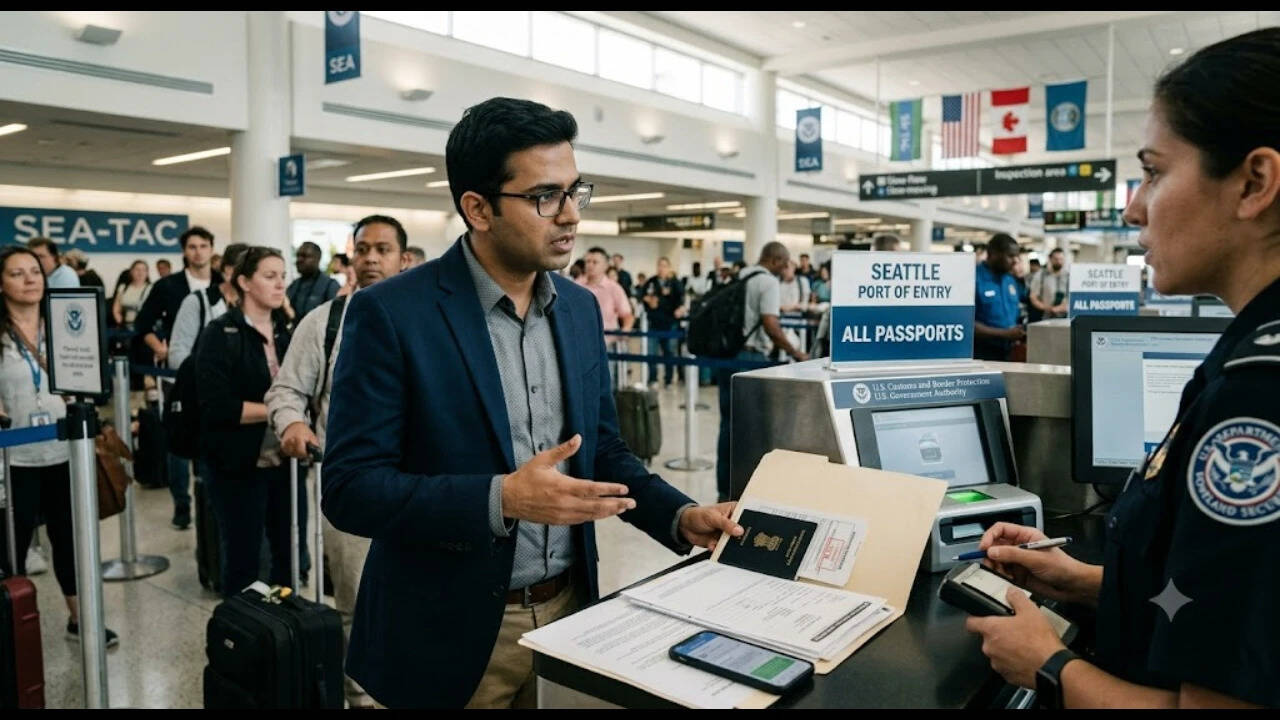
Navigating international borders on a non-immigrant work authorization requires treating the timeline as a high-stakes probabilistic calculation rather than a flexible calendar. When a high-skilled foreign national executes a return to the United States mere days before the expiration of their visa foil, they enter a compressed operational window where minor logistical anomalies cascade into catastrophic systemic failures. Anechetodally framed narratives of international travel near expiration dates obscure the underlying mechanics of immigration processing, Customs and Border Protection discretion, and employer-dependent status maintenance.
This analysis deconstructs the structural variables governing emergency or late-stage visa reentry, maps the points of friction within the regulatory framework, and establishes a tactical blueprint for minimizing systemic risk.
The Temporal Mechanics of the Visa Foil Versus Status Extension
A fundamental conceptual error occurs when individuals conflate the expiration date printed on the passport visa counterfoil with the authorized period of stay granted under Form I-94. The visa foil is merely an entry document; it grants permission to present oneself at a port of entry. The actual legality of presence inside the United States is governed by the I-94 arrival record, which is tied to the underlying petition validity date issued by United States Citizenship and Immigration Services.
When an individual re-enters the country three days prior to the visa foil expiration, the Customs and Border Protection officer possesses the statutory authority to admit the traveler up to the validity date of the approved Form I-797 petition. However, compressing this timeline introduces severe operational vulnerabilities:
- Flight Irregularities: International aviation is subject to weather anomalies, mechanical groundings, and air traffic control delays. A standard twenty-four-hour delay transforms a three-day buffer into a critical status violation.
- Secondary Inspection Queue Saturation: If an arriving traveler is routed to secondary inspection for administrative verification of employment or petition validity, processing times can exceed the remaining calendar life of the visa foil, complicating the admission decision at the desk.
- Systemic Data Lag: Electronic manifest updates and CBP database synchronizations can occasionally experience latency. Discrepancies between physical petition documents and electronic system records require manual adjudication by border agents, consuming finite operational time.
The Regulatory Cost Function of Border Discretion
Re-entering the United States near the terminus of a visa validity window shifts the burden of proof heavily onto the traveler during primary and secondary inspection. The decision-making calculus of a Customs and Border Protection officer relies on risk mitigation.
The primary variables evaluated during late-stage entry include the active status of the employer petition, the continuity of the employment relationship, and the intent of the traveler. If the petitioning entity has initiated an extension of status rather than consular notification, traveling internationally during the adjudication window introduces severe structural friction. Under standard regulatory guidance, departing the United States while an extension of status application is pending with United States Citizenship and Immigration Services results in the automatic abandonment of the extension request, unless specific exceptions apply.
Consequently, travelers attempting a late-stage return must distinguish between two distinct operational pathways:
- Consular Processing Pathways: Re-entry dependent entirely on a valid, unexpired visa foil, backed by an approved, unexpired petition where no extension is currently pending.
- Pending Extension Traps: Traveling internationally while an extension is pending forces the traveler to rely solely on the physical visa foil. If the foil expires during transit, boarding commercial aircraft becomes impossible due to carrier liability rules, effectively stranding the worker abroad.
Commercial Carrier Liability and Boarding Protocols
The operational bottleneck for international travel often occurs outside the jurisdiction of United States border officials, directly at the foreign departure gate. Under United States federal regulations, commercial airlines are heavily fined for transporting passengers to the United States without valid, unexpired entry documentation.
Gate agents utilize automated document verification systems that cross-reference passport data against United States immigration databases. When a visa foil is within three days of expiration, automated screening systems occasionally throw warning flags or hard blocks, requiring manual supervisor override.
Airlines exercise hyper-conservative risk management. Facing potential financial penalties and the obligation to return rejected passengers at corporate expense, foreign station managers frequently deny boarding to individuals traveling on the eve of document expiration, regardless of the theoretical legality of the travel. This creates an immediate operational failure point that bypasses legal validity entirely, subordinated instead to corporate liability mitigation strategies.
Systemic Vulnerabilities in Employer Compliance Chains
An H-1B holder does not operate in an institutional vacuum; their legal presence is inextricably bound to the corporate sponsor. When a worker cuts entry timelines to a three-day margin, they expose corporate immigration compliance teams to unmanaged liability.
Corporate immigration policies generally mandate minimum buffer zones—typically thirty to forty-five days prior to document expiration—to account for administrative lag, internal compliance audits, and potential Requests for Evidence. Breaching these internal thresholds forces immigration teams into reactive crisis management.
If a traveler is delayed abroad past the expiration date, the employer faces acute operational disruption. The legal entity cannot legally employ an individual whose work authorization has lapsed at the border, nor can they execute remote onboarding or continuation of duties while the worker remains outside the geographic jurisdiction of the United States without specific corporate structuring adjustments, such as temporary assignment to a foreign corporate affiliate.
Strategic Operational Protocol for High-Risk Travel Windows
To eliminate the systemic volatility associated with late-stage border crossings, organizations and individual workers must replace reactive scheduling with rigid operational thresholds. The following framework governs high-risk international transit:
- The Thirty-Day Hard Stop: Implement a mandatory freeze on international travel thirty days prior to any visa foil expiration or petition end date, unless an approved extension notice with a new I-94 is physically in hand.
- Document Verification Redundancies: Prior to departure, ensure that electronic I-94 records from previous entries accurately reflect the maximum allowable petition duration, mitigating reliance on the physical visa foil alone.
- Consular Backups: Before embarking on travel within sixty days of document expiration, verify appointment availability at the local United States Embassy or Consulate within the destination country to establish a fallback remediation channel should boarding be denied or entry deferred.
- Corporate Escalation Pathways: Establish pre-cleared communication channels between traveling personnel, corporate immigration counsel, and in-house human resources to execute immediate legal interventions if secondary inspection or carrier denial occurs.
International mobility under employment-based non-immigrant visas requires treating time as a finite, highly perishable asset. Relying on compressed margins introduces unnecessary exposure to institutional friction, carrier risk, and border discretion, transforming routine transit into an unmitigated operational hazard. Long-term compliance demands institutionalizing strict buffer protocols that insulate the worker and the sponsoring enterprise from the cascading failures of late-stage border crossings.