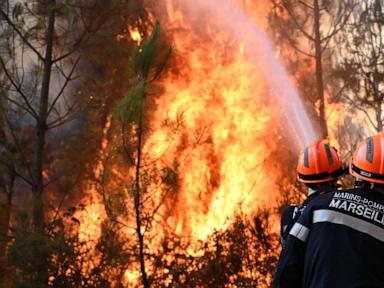
The spatial distribution of extreme weather events across Southern Europe demonstrates a systemic failure in resource pooling, capital allocation, and rapid response deployment. When the European Union confronts severe summer heat waves and the subsequent exponential expansion of wildland fires, the prevailing mechanism relies on ad hoc coordination rather than a centralized, elastic capacity model. This operational framework generates severe time-delay penalties, exposing the mismatch between national emergency response budgets and regionalized environmental risks.
To understand why traditional firefighting fleets fail under accelerated climate baselines, one must examine the cost function of emergency readiness. Maintaining idle aerial firefighting capacity across multiple sovereign states creates a heavy fiscal burden. Conversely, relying on shared continental reserves during simultaneous multi-country crises introduces a severe coordination bottleneck. Recently making news recently: The Geopolitical Cost Function of Bilateral Coercion.
The Mechanics of Capacity Deficits
National firefighting budgets historically operate on historical averages rather than tail-risk projections. When successive summer heat waves drive soil moisture deficit and vapor pressure deficit past critical thresholds, the simultaneous activation of multiple national emergency response coordination centers creates immediate resource scarcity.
[Simultaneous Heat Waves]
       ↓
[Concurrent National Emergencies]
       ↓
[Resource Contention at EU Level]
       ↓
[Deployment Delays & High Suppression Costs]
Under the current framework, individual member states retain primary operational sovereignty. When an intense wildfire overwhelms local suppression assets, states issue requests through the Union Civil Protection Mechanism. This introduces three distinct friction points: Further insights regarding the matter are explored by Associated Press.
- Procurement Latency: The time elapsed between localized ignition, national escalation, international request formulation, and actual cross-border asset dispatch.
- Asset Heterogeneity: Discrepancies in aircraft payload capacity, drop chemistry, and pilot interoperability certification across national fleets.
- Fiscal Friction: Disputes regarding fuel cost reimbursement, maintenance liability, and insurance frameworks during cross-border operations.
When these variables compound, initial attack success rates drop precipitously. Wildfire propagation is non-linear; an uncontained fire during the initial burning period requires exponential increases in suppression resources within twenty-four hours to achieve containment.
The Economic Efficiency of Centralized Pooling
Transitioning from bilateral mutual aid agreements to a centrally managed, permanently funded aerial fleet alters the economic equation. A dedicated fleet, prepositioned according to predictive fire weather indices rather than static national borders, optimizes two primary economic variables:
- Suppression Cost Minimization: Expenditures on early aerial intervention are fractions of the total economic loss—comprising infrastructure destruction, agricultural devastation, healthcare costs from particulate inhalation, and lost tourism revenue.
- Asset Utilization Rates: A centralized fleet can be rotated southward in early summer and redeployed or maintained based on continuous meteorological telemetry, reducing the idle capacity ratio per nation.
However, centralization introduces its own governance challenges. Sovereign states are hesitant to surrender tactical command authority over emergency assets during high-stakes domestic crises. Furthermore, determining the exact geographic positioning of permanent bases requires balancing political equity among member states with data-driven risk modeling based on historical burn scars, fuel loads, and ignition probability matrices.
Strategic Operational Shift
To achieve resilience against escalating seasonal extremes, transnational disaster response requires a shift from reactive insurance models to predictive asset deployment.
The primary vector for reform is the decoupling of asset funding from national GDP-linked contributions for emergency management, moving instead toward a risk-weighted premium structure. Member states situated within high-exposure zones must integrate their ground suppression protocols with the standardized drop patterns and communication frequencies of the pan-European aerial assets.
Without structural changes to how suppression assets are procured, stationed, and dispatched, continental wildfire strategies will remain permanently reactive—paying exponentially higher economic and ecological costs for delays engineered by bureaucratic fragmentation.