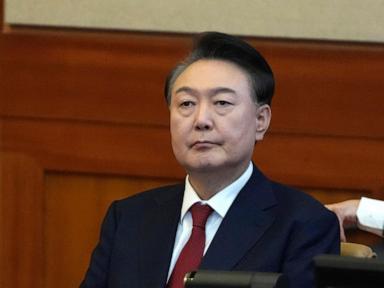
The request for a 30-year prison sentence for Yoon Suk Yeol by South Korean prosecutors marks the terminal phase of a constitutional stress test. This legal maneuver functions as a mechanism to recalibrate the boundaries of executive power in a presidential system characterized by high centralisation. While news outlets focus on the duration of the proposed term, the strategic reality lies in the intersection of three specific legal and political variables: the breach of constitutional neutrality, the criminalization of emergency powers, and the institutional reflex of the South Korean judiciary.
The Mechanics of Constitutional Dereliction
The prosecution’s case rests on the premise that the declaration of martial law was not a procedural error but a fundamental assault on the democratic operating system. In South Korea, the president’s authority to invoke emergency powers is constrained by Article 77 of the Constitution, which requires a "necessity to maintain public safety and order" in times of "war, armed conflict, or similar national emergency."
The failure of Yoon’s administration to provide evidence of a credible threat to national security transforms the martial law decree into a criminal act of insurrection. The logic follows a clear causal chain:
- Absence of External or Internal Threat: No troop movements from the North or widespread civil unrest were documented prior to the decree.
- Obstruction of Legislative Function: The attempt to bar the National Assembly from meeting—specifically to prevent a vote to lift martial law—represents a direct violation of Article 77, Paragraph 5, which mandates the president must comply when a majority of the Assembly requests the lifting of martial law.
- Intent of Power Preservation: Prosecutors argue the primary motivation was the suppression of political opposition rather than the preservation of the state.
This leads to a "Cost of Governance" crisis. When the executive uses the instruments of state security to settle legislative disputes, the legal system must impose a penalty high enough to deter future executive overreach. The 30-year request is not an arbitrary number; it is a symbolic and functional life sentence designed to signal that the cost of constitutional subversion is total political and personal liquidation.
Institutional Reflex and the South Korean Precedent
South Korea’s judicial history operates on a feedback loop of accountability that is unique among modern democracies. The prosecution of former presidents—including Chun Doo-hwan, Roh Tae-woo, Lee Myung-bak, and Park Geun-hye—has established a predictable legal framework for executive downfall.
- The Chun-Roh Precedent: Established that even former military leaders can be held accountable for treason and bribery once their term ends or they are removed.
- The Park Geun-hye Framework: Demonstrated that "influence-peddling" and "violation of election laws" can lead to sentences exceeding 20 years.
Yoon’s situation is distinct because it involves the direct deployment of military assets against civilian institutions. This moves the charges from the realm of corruption (financial) into the realm of sedition (structural). The prosecution is applying a "Total Risk Premium." Because the damage to the national brand, the economy, and the democratic fabric is perceived as near-irreparable, the punitive demand scales proportionally.
The Bottleneck of Evidence and Testimony
The velocity of this prosecution is driven by the density of digital and physical evidence. Unlike corruption cases, which often rely on complex money trails and "he-said-she-said" testimony, an insurrection case is built on:
- Operational Logs: The specific orders given to the Martial Law Command and the Ministry of National Defense.
- Communications Data: Real-time directives issued by the Blue House to military commanders.
- Video Documentation: The televised announcement and the subsequent physical blockade of the National Assembly.
The primary bottleneck for the defense is the "Doctrine of Illegal Orders." Under South Korean law, subordinates have a duty to refuse orders that are manifestly illegal. As military and police officials testify to protect themselves from secondary liability, they provide the granular evidence required to link Yoon directly to the criminal intent of the decree. This creates a cascading failure within the executive branch where the survival of the bureaucratic apparatus depends on the sacrifice of the former leader.
Socio-Economic Contagion and Market Stability
The 30-year sentence request serves a dual purpose as a market stabilization signal. Global investors view South Korean "Presidential Risk" as a recurring drag on the Won and the KOSPI. By pursuing the maximum penalty, the prosecution is attempting to demonstrate "Institutional Resilience."
The logic presented to international observers is as follows: The person in power is temporary, but the rule of law is absolute. If the state failed to prosecute a failed martial law attempt with extreme vigor, it would signal to the markets that the South Korean constitution is a "paper tiger," susceptible to the whims of any unpopular executive. Therefore, the severity of the legal response is an economic necessity to decouple the country's financial health from its political volatility.
Strategic Forecast for the Judiciary
The judiciary now faces a binary choice that will define the next decade of South Korean governance.
- Scenario A: The Hardline Adherence: The court grants a sentence close to the 30-year request. This solidifies the "Accountability Trap" for future presidents, making any deviation from constitutional norms a high-stakes gamble with life imprisonment as the downside.
- Scenario B: The Mitigation Path: The court reduces the sentence based on the fact that the martial law decree was short-lived and resulted in minimal physical casualties. However, this risks public backlash and the perception that the "Imperial Presidency" is still partially shielded.
Given the current political climate and the transparency of the evidence, the court is likely to lean toward Scenario A. The prosecution has successfully framed the event not as a political disagreement, but as an existential threat to the state’s legitimacy.
The strategic imperative for the South Korean legal system is the total delegitimization of emergency-powers-as-political-strategy. By seeking a three-decade term, the prosecution is moving to archive Yoon Suk Yeol not as a failed leader, but as a cautionary case study in the limits of executive sovereignty. The final judgment will not merely be a verdict on one man, but a structural reinforcement of the legislative branch's supremacy over the executive’s monopoly on force.


