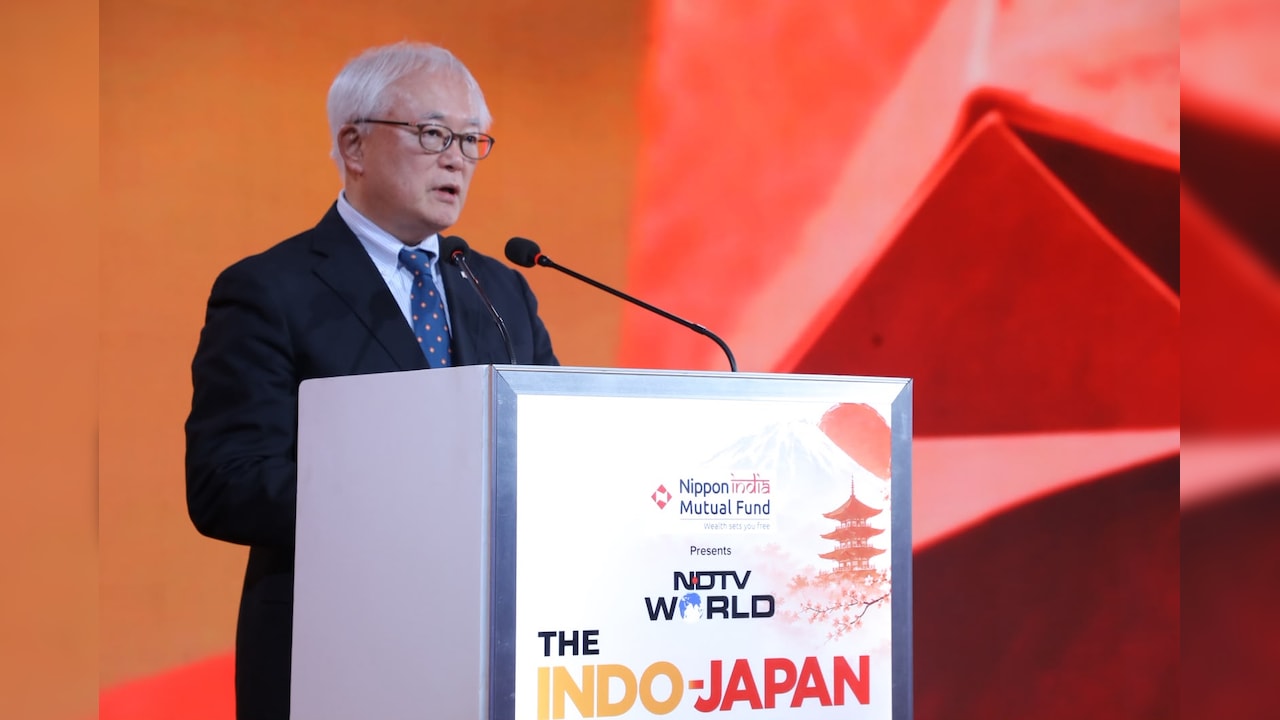
Long-term economic trajectory projections depend less on short-term monetary fluctuations and more on demographic velocity, institutional capital formation, and geopolitical architecture. When former Japanese Prime Minister Shinzo Abe formulated his foreign policy and economic alignment strategies regarding South Asia, his calculus extended beyond diplomatic pleasantries. Based on retrospective analyses articulated by his primary foreign policy speechwriter and advisor, Tomohiko Taniguchi, Abe’s core thesis was that India possessed the structural preconditions required to eventually outpace China in economic velocity.
Evaluating this premise requires a rigorous deconstruction of the macroeconomic variables, demographic boundaries, and geopolitical incentives that govern both nations. Meanwhile, you can read related developments here: The Architecture of Post-Tenure Diplomacy How Akie Abe Operationalizes Personal Grief into Geopolitical Capital.
The Demographic Dividend Curve and Dependency Ratios
The primary engine of long-term economic growth is labor force expansion combined with total factor productivity. China’s economic miracle over the past four decades was fueled by an optimal demographic structure: a rapidly expanding working-age population coupled with a low dependency ratio.
However, China’s demographic curve has crossed an inflection point. The implementation of the historical one-child policy, followed by rapid industrial urbanization, accelerated the contraction of the workforce. China is now aging before it has fully completed its transition to a high-income, consumption-driven economy. The median age in China has climbed past thirty-eight years and continues upward, constraining labor supply and drastically increasing eldercare expenditures relative to the tax base. To see the full picture, we recommend the detailed article by NBC News.
India presents the inverse demographic profile. With a median age hovering near twenty-eight years, India is entering the peak window of its demographic dividend. A growing absolute number of working-age individuals enters the labor market annually.
Yet, demographics represent a necessary, rather than sufficient, condition for growth. Converting population volume into economic output requires two intervening variables:
- Capital Deepening: The accumulation of physical and digital infrastructure that raises the marginal product of labor.
- Human Capital Transformation: The systemic upgrade of educational attainment and technical skills to match modern industrial demands.
Without these interventions, a young population risks translating into structural underemployment rather than GDP expansion.
Institutional Friction and the Cost of Doing Business
Economic catch-up growth is heavily influenced by institutional friction. China’s historical growth model relied on state-directed capital allocation, massive infrastructure investment, and centralized command-and-control directives. While efficient for rapid capital mobilization in the early phases of industrialization, this model generates diminishing marginal returns. As debt-to-GDP ratios expand and capital misallocation increases through localized overbuilding, growth rates naturally compress toward historical medians.
India operates under an alternative institutional framework characterized by a decentralized, friction-heavy democratic system. Historically, this friction created bureaucratic bottlenecks that impeded foreign direct investment and delayed large-scale manufacturing projects.
However, structural reforms implemented over the past decade have altered this cost function:
- Digital Public Infrastructure: The creation of interoperable digital identity and payment systems reduced transaction costs across informal and formal sectors.
- Fiscal Harmonization: The consolidation of disparate state taxes into a unified national framework streamlined interstate commerce and supply chain logistics.
- Manufacturing Incentives: Targeted capital subsidies shifted corporate strategies toward export-oriented manufacturing to capture supply chain diversification away from a single-hub model.
The strategic bet made by Tokyo under Abe was that India's institutional frictions, while frustrating in the short term, build systemic resilience. A decentralized market economy possesses decentralized error-correction mechanisms, whereas centralized economies remain vulnerable to systemic shock when top-down directives fail.
Geopolitical Hedging and the Indo-Pacific Supply Chain Architecture
Economic forecasting cannot be divorced from geopolitical risk management. The convergence of Japanese strategic capital with Indian manufacturing capacity was designed to construct an economic counterweight in the Indo-Pacific.
China’s economic strategy relied heavily on monopolizing upstream industrial supply chains and utilizing economic coercion as an instrument of statecraft. For nations heavily integrated into Sino-centric trade networks, economic dependency translated into strategic vulnerability.
Abe’s foreign policy framework, institutionalized through the Quadrilateral Security Dialogue, sought to de-risk regional trade corridors. By directing Japanese official development assistance and private capital toward infrastructure projects—such as industrial corridors and high-speed transit networks within the subcontinent—Japan aimed to establish an alternative gravity well for global manufacturing.
This strategic alignment serves a dual economic purpose:
- It diversifies global manufacturing risk away from single-jurisdiction choke points.
- It accelerates India's integration into high-value technological and industrial supply chains, shortening the timeframe required for technological catch-up.
The Bottlenecks to Convergence
While the structural trajectory favors long-term convergence, several variables could stall this economic thesis.
First, female labor force participation rates in India remain depressed relative to global benchmarks. Unlocking this reserve labor pool is mathematically mandatory for sustaining high per-capita GDP growth.
Second, the transition from an agrarian and informal economy to a high-end manufacturing and advanced services economy requires sustained capital investment in research, development, and energy grids.
Third, global macroeconomic tightening, shifting trade protectionism, and potential geopolitical conflicts can disrupt the smooth flow of international capital required to finance infrastructure transformation.
Strategic Outlook
The proposition that India will structurally outpace China rests on the mathematics of demographic exhaustion on one side and demographic expansion paired with institutional maturation on the other. China faces a hard ceiling imposed by structural aging and high debt overhang. India's ceiling is primarily policy-driven and execution-dependent.
Aligning domestic capital formation with external strategic partnerships creates an environment where long-term convergence becomes a measurable probability rather than an aspirational projection. The realization of this economic shift depends on sustained execution across labor market reforms, educational infrastructure, and continuous trade integration.