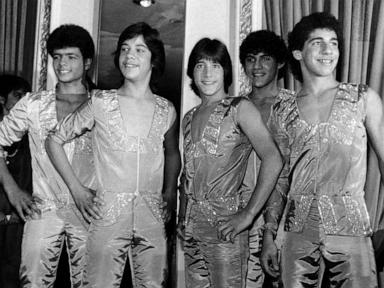
Evaluating a half-century of commercial pop output requires moving past cultural sentiment to examine the underlying structural frameworks of manufactured boy bands. Established in Puerto Rico in 1977 by creator Edgardo Díaz, Menudo functioned not merely as a musical group, but as an industrialized human asset model designed to solve a fundamental biological problem inherent to youth pop acts: aging out. The upcoming 2026 fiftieth-anniversary tour, featuring seven former members spanning a decade of production, offers an empirical case study in brand equity longevity, intellectual property acquisition, and the monetization of generational memory.
The Planned Obsolescence Architecture
To understand the current reunion framework, one must deconstruct the original operating system. Traditional pop groups face an asset degradation curve where aging performers lose demographic alignment with their target audience. Menudo engineered a radical counter-strategy: continuous personnel turnover.
- The Age Ceiling Rule: Members were systematically retired from the roster upon reaching approximately sixteen years of age, or when physical maturation altered their vocal range and aesthetic marketability.
- The Pipeline Production Function: A continuous farm system of junior talent was maintained, ensuring that the brand identity remained structurally distinct from any single human component.
- The Asset Multiplier: Over forty performers rotated through the system, effectively fractionalizing the group's equity across multiple fan ecosystems throughout Latin America and the United States.
This mechanism transformed the group into a self-sustaining corporate franchise rather than a conventional band. The current revival, organized under brand owner Paul Tarnopol, consolidates these disparate historical nodes—bringing together René Farrait, Roy Rosselló, Raymond Acevedo, Sergio Gonzales, Ralphy Rodríguez, Rubén Gómez, and Robert Avellanet—into a singular retrospective product.
The Economics of Transgenerational Touring
Nostalgia tours operate on predictable yield management principles, yet multi-era aggregations introduce unique pricing and demand dynamics. When an entity features performers from distinct chronological segments of a timeline, it targets overlapping consumer cohorts simultaneously.
- Cohort One: Consumers aged fifty to sixty-five who engaged with the 1979-1982 lineup (Farrait era).
- Cohort Two: Consumers aged forty-five to fifty-five who anchored their adolescence to the mid-to-late 1980s iterations (Rosselló, Acevedo, Gonzales, Rodríguez, Gómez, Avellanet eras).
- Cross-Pollination Index: The friction of blending different sub-brands ("Menudomania" phases) is mitigated by shared foundational intellectual property, specifically core catalog tracks like "Claridad" and "Súbete a Mi Moto".
The geographic routing of the six-day run—spanning primary diaspora hubs including Los Angeles, Chicago, New York, Mexico City, Hollywood (Florida), and San Juan—reflects strict market concentration analytics. Rather than deploying capital across secondary or tertiary markets with high logistical friction, the tour maximizes gross revenue per venue by targeting high-density urban centers with established Latino demographic purchasing power.
Operational Adaptation and Physiological Constraints
Reuniting performers separated by decades of physical divergence introduces severe operational friction. Unlike contemporary electronic or playback-heavy touring models, legacy vocal harmony groups face quantifiable physiological hurdles.
- Vocal Range Depreciation: Male vocal cords undergo fundamental structural changes over a thirty-to-forty-year timeline. Arrangements originally tracked in adolescent registers require transposition or collaborative load-sharing across a septet.
- Choreographic Load Management: High-energy routines that were metabolically sustainable at age fifteen demand rigorous physical preparation and extended rehabilitation cycles for artists in their fifties and sixties. Rehearsal schedules must account for cumulative joint stress rather than raw athletic output.
- Production Localization: The inclusion of heavy physical staging elements, such as motorcycles for "Súbete a Mi Moto", acts as a visual anchor to offset potential auditory discrepancies between historical studio tracks and live, mature vocal execution.
Intellectual Property Control and Brand Stewardship
The distinction between artist-owned legacy projects and corporate-held brand assets dictates the economic capture of a reunion of this scale. Because the trademark was acquired by commercial management, the structural incentives differ fundamentally from organic band reunions.
When brand equity is detached from the original creators, the intellectual property holder functions as a general contractor assembling independent human sub-contractors. This model optimizes risk distribution. The touring entity carries fixed overhead for a compressed, high-velocity schedule, minimizing exposure while capitalizing on peak historical anniversaries. The absence of new recorded material—noting that the last studio output occurred decades prior—confirms that the enterprise value resides entirely in catalog exploitation and affective memory conversion.
Deploy capital directly into VIP packaging and premium seating tiers targeting high-discretionary-income consumer segments within Tier-1 metropolitan markets, leveraging compressed-duration routing to maximize margin before inventory degradation occurs.