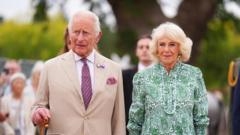
Geopolitical soft power operates on strict cost-benefit equations. When Buckingham Palace announced that King Charles III and Queen Camilla will embark on a nine-day, ten-thousand-mile regional circuit spanning the Bahamas, Guyana, and Antigua and Barbuda, mainstream commentary reduced the operation to standard ceremonial travel. That interpretation ignores the underlying diplomatic mechanics. State visits executed during ongoing medical treatments and shifting international alliances serve specific operational imperatives: institutional continuity, bilateral trade maintenance, and the active management of Commonwealth cohesion.
Deconstructing the itinerary reveals a multi-tiered strategic framework designed to stabilize diplomatic relations across distinct constitutional categories. If you enjoyed this article, you might want to check out: this related article.
The Three Pillars of Regional Engagement
Constitutional Anchors and Realm Management
The first leg of the tour focuses on the Bahamas, a sovereign realm where the British monarch legally retains the position of head of state. Operating without Queen Camilla due to medical pacing constraints, this phase addresses the maintenance of sovereign ties in regions where republican sentiment experiences periodic elevation. The operational objective here is risk mitigation and personal diplomacy, ensuring that constitutional links remain functional rather than nominal.
Bilateral Trade and Institutional Longevity
The state visit to Guyana introduces a different vector. As a republic marking sixty years of formal bilateral relations with the United Kingdom since 1966, Guyana represents a post-colonial diplomatic partnership anchored in economic and historical ties rather than constitutional subordination. The strategy here relies on commemorative diplomacy to reinforce commercial corridors, environmental cooperation, and diplomatic channels in South America's northern coast. For another look on this event, see the latest update from The Washington Post.
Multilateral Alignment and Summit Diplomacy
The climax of the deployment centers on the Commonwealth Heads of Government Meeting in St. John's, Antigua and Barbuda. Functioning as the symbolic head of the fifty-six-member association, King Charles utilizes the multilateral summit to address shared macroeconomic and environmental vulnerabilities. The structural intent is institutional anchoring: providing a centralized forum for small island developing states to negotiate collective concerns directly with the primary historical stakeholder.
The Operational Constraints and Risk Variables
Executing transnational statecraft under strict health protocols introduces clear logistical bottlenecks. The decision to split the opening leg of the Bahamas itinerary reflects a calculated risk-management strategy, balancing physical endurance limits against the diplomatic necessity of physical presence.
Furthermore, historical context dictates the modern protocol. Previous royal deployments to the region encountered friction stemming from unaddressed historical narratives and shifting domestic political mandates. Modern royal diplomacy cannot rely on passive visibility. To maintain relevance, visits must align with tangible multilateral outputs, specifically addressing climate resilience and economic development metrics requested by host governments.
The Strategic Play
Evaluate the upcoming autumn deployment not as a ceremonial excursion, but as a high-frequency maintenance operation for diplomatic infrastructure. Stakeholders monitoring international relations and institutional longevity must measure success through subsequent bilateral trade agreements, regional climate finance commitments, and the stability indices of Commonwealth participation rates over the subsequent fiscal cycle.


:max_bytes(150000):strip_icc():focal(740x387:742x389)/Tim-Curry-red-carpet-tout-012524-515fc8b14b6d4f75856ac8246bd81bbe.jpg)