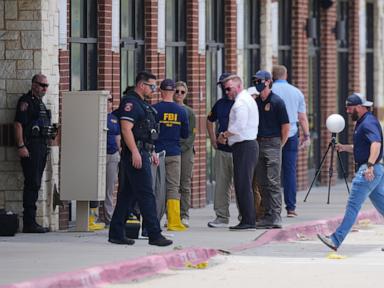
The shooting incident near a Dallas shopping center, resulting in two fatalities and three injuries, serves as a grim case study in the intersection of high-traffic commercial zones and urban volatility. To analyze this event beyond the surface-level reporting of casualties requires a deconstruction of three specific variables: spatial vulnerability, the escalation logic of the confrontation, and the failure of immediate deterrence mechanisms. While media narratives focus on the emotional weight of the loss, a strategic analysis identifies the specific environmental and social frictions that allow a public space to transform into a high-consequence kinetic environment.
Spatial Vulnerability and the Retail Nexus
The geographic placement of the incident—proximate to a shopping mall—introduces a specific set of risk factors inherent to high-density commercial corridors. Retail environments are designed for accessibility and flow, which unintentionally minimizes the friction required to deter or detect potential threats. In this context, the Dallas incident highlights a critical vulnerability in urban planning: the "buffer zone" between private commercial property and public access roads.
When a conflict migrates from a private interior space to an exterior public space, the security infrastructure usually collapses. Private security personnel are often restricted by jurisdictional limits or liability concerns from intervening once a dispute crosses a property line. This creates a tactical vacuum where the response time of municipal law enforcement becomes the only remaining variable. In the Dallas case, the transition from a localized dispute to a multi-casualty event occurred in this vacuum. The layout of the shopping center, characterized by expansive parking lots and multiple egress points, facilitates rapid escalation while complicating the visual tracking of suspects by bystanders or low-resolution surveillance systems.
The Escalation Logic of Kinetic Confrontations
Gun violence in urban centers rarely occurs in a vacuum; it is the terminal point of an escalation sequence. To understand why this specific Dallas event resulted in five total casualties, we must examine the "Escalation Delta"—the speed at which a verbal or physical altercation transitions into lethal force.
Most public shootings categorized as "non-random" follow a predictable trajectory:
- Initial Friction: A dispute involving known or unknown parties, often centered on perceived slights or transactional disagreements.
- The Proximity Breach: One party closes the physical gap, escalating the psychological stakes.
- Weapon Introduction: The transition from threat to intent.
- The Kinetic Event: The discharge of firearms.
The Dallas incident confirms that the presence of multiple injured parties often indicates a breakdown in target discrimination. When a shooter engages in a high-traffic area, the risk of "secondary casualty patterns" increases exponentially. This is not necessarily due to a desire for mass casualties, but rather the physics of high-stress discharge. Rounds that miss the primary target travel until they find a backstop, which, in a retail environment, is frequently a bystander or a vehicle. The categorization of the three injured individuals as "survivors" masks the long-term economic and psychological externalities that these events impose on the municipal infrastructure.
Operational Failures in Deterrence and Response
The recurrence of these events suggests that the current model of "Visible Presence Deterrence" is failing. This model relies on the theory that the sight of police cruisers or security guards will suppress the impulse toward violence. However, this theory assumes a rational-actor model that is frequently absent in heat-of-the-moment escalations.
The Dallas incident reveals a bottleneck in the "Detection-to-Suppression" cycle. By the time law enforcement arrives, the kinetic phase is usually over. The utility of the police in these scenarios is almost entirely investigative rather than preventive. This creates a persistent deficit in public safety. To narrow this gap, the focus must shift from traditional patrolling to "Target Hardening" through environmental design.
Structural Deterrents vs. Active Security
- Acoustic Triangulation: The deployment of shot-detection sensors can reduce response times by bypassing the lag of 911 reporting, though they do nothing to prevent the initial discharge.
- Dynamic Lighting: High-intensity, motion-activated lighting in transition zones (parking lot edges) has been shown to disrupt the sense of anonymity required for aggressive posturing.
- Physical Channeling: Using landscaping and bollards to prevent rapid vehicle egress can psychologically deter individuals who realize they may be trapped at the scene.
The absence of these elements in older or mid-tier shopping infrastructures creates "soft spots" within a city’s security grid. The Dallas shooting occurred in one such soft spot, where the density of people outweighed the density of protective measures.
The Cost Function of Urban Instability
Quantifying the impact of this event extends beyond the immediate loss of life. Each incident of this nature triggers a cascade of economic contractions within the local micro-economy.
Direct and Indirect Economic Erosion
- Consumer Flight: A 15% to 20% drop in foot traffic is common in the immediate 90-day window following a publicized shooting at a commercial hub.
- Insurance Premium Spikes: Commercial liability insurance for properties in the Dallas-Fort Worth metroplex is increasingly tied to "violent crime riders," which increase the overhead for small business tenants.
- Public Resource Drain: A single multi-casualty event can consume thousands of man-hours in investigative work, forensic processing, and legal proceedings, diverting resources from broader community policing initiatives.
This "violence tax" is paid by the residents and business owners of the area, further degrading the social fabric that serves as the ultimate deterrent against crime. When a community perceives that its commercial centers are no longer safe, the flight of capital accelerates, leading to a feedback loop of disinvestment and further security degradation.
Resource Allocation and Municipal Accountability
The Dallas Police Department faces the challenge of managing a sprawling urban footprint with a finite headcount. The strategic error often made by municipal leadership is "reactive surging"—flooding an area with officers after a tragedy occurs. This is a PR-driven tactic that yields diminishing returns. A data-driven approach would instead prioritize the analysis of "Violent Hotspots" through predictive modeling.
If the area near the Dallas mall was already identified as a high-risk zone based on previous police calls or demographic stressors, the failure lies in the lack of proactive environmental intervention. The city must move away from viewing these shootings as isolated "tragedies" and start viewing them as "systemic failures" of the urban ecosystem.
Strategic Recommendation for Urban Safety Management
The objective must be to increase the "Cost of Aggression" for potential offenders. This is achieved not through harsher sentencing—which occurs after the damage is done—but through immediate environmental friction.
Property owners and city planners must integrate "Defensible Space" theory into the renovation of commercial corridors. This includes the removal of visual obstructions that allow suspects to lurk, the implementation of high-resolution AI-integrated surveillance that can flag aggressive body language or weapon brandishing in real-time, and the mandated presence of armed, highly trained tactical responders in large-scale retail environments during peak hours.
The Dallas incident is a clear signal that the status quo of retail security is insufficient for the current volatility of urban social dynamics. Until the physical environment is engineered to detect and disrupt the escalation sequence before the first round is fired, these corridors will remain high-risk zones for both capital and human life. The focus must shift from mourning to the cold, calculated hardening of public spaces. All future developments should be audited for kinetic risk, treating public safety as a foundational utility rather than an optional amenity.