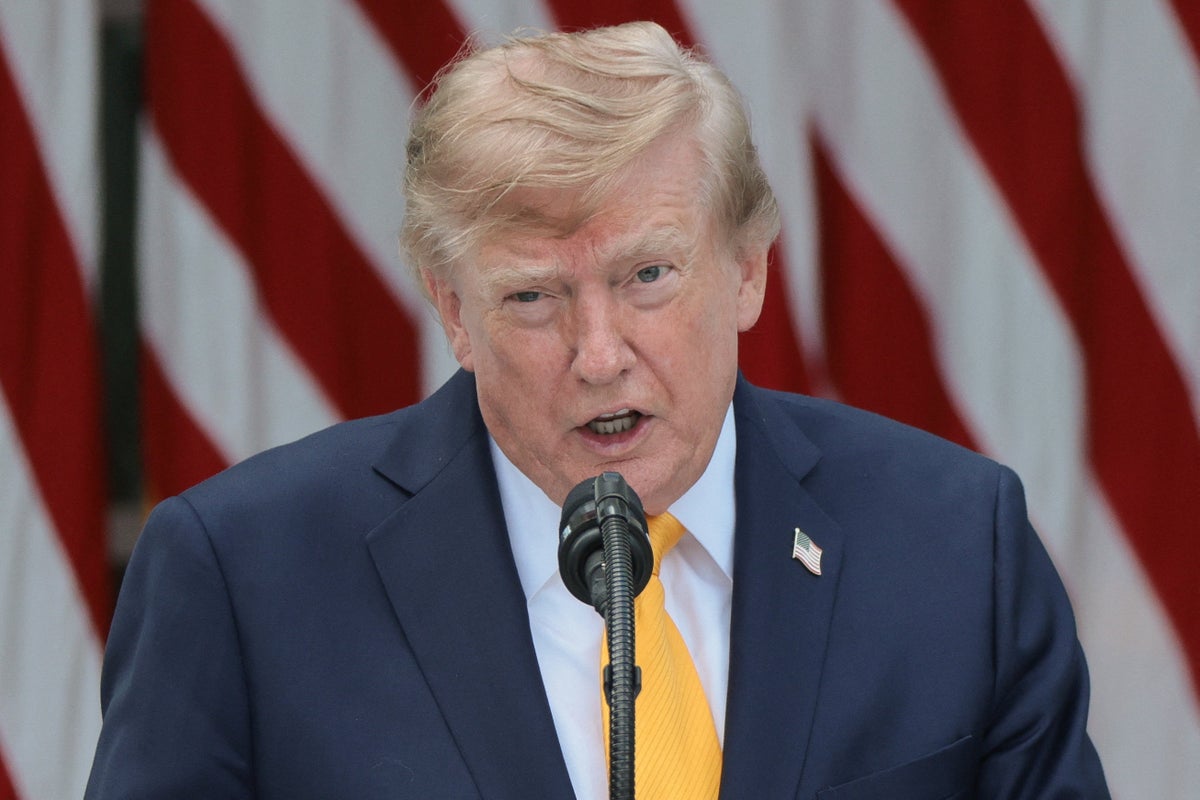
The administrative erasure of a forty-seven-year economic quarantine alters the operational parameters of the Middle Eastern political economy overnight. When the United States Department of State officially rescinded Syria's designation as a State Sponsor of Terrorism and simultaneously stripped Hay'at Tahrir al-Sham of its global terrorist classification, the move did more than grant political validation to the post-Assad administration under President Ahmad al-Sharaa. It dismantled the legal architecture that blocked international capital from entering a post-conflict sovereign market.
Understanding the weight of this development requires moving past diplomatic rhetoric and examining the mechanics of economic exclusion. For nearly half a century, the State Sponsor of Terrorism label acted as a master regulatory lock. It triggered secondary sanctions, prohibited foreign assistance, restricted defense exports, and forced global compliance officers to classify any transaction touching Syrian territory as an unacceptably high legal liability. International commercial banks, multinational energy conglomerates, and institutional logistics providers did not avoid Syria merely because of physical infrastructure destruction; they avoided it because the regulatory penalty for miscompliance under the Terrorism List Governments Sanctions Regulations was absolute.
Removing this designation changes the equation from a binary prohibition to a risk-weighted calculation. The operational mechanics of this transition rest on three distinct pillars: liquidity rehabilitation, supply chain restoration, and institutional re-engagement.
The Liquidity and Banking Rehabilitation Vector
The primary constraint on any recovering state is capital scarcity. Under the previous sanctions regime, the Office of Foreign Assets Control maintained a paralyzing grip on financial routing. Even when general licenses carved out humanitarian exceptions, the friction of compliance meant correspondent banking networks completely severed ties with domestic Syrian institutions.
Without access to the Society for Worldwide Interbank Financial Telecommunication network or clearing facilities in major Western currencies, trade finance was functionally impossible. Importers could not open letters of credit, and exporters could not repatriate revenues.
The revocation of the state sponsor designation and the simultaneous removal of the governing factions from the Specially Designated Nationals list create a legal pathway for the restoration of correspondent banking. Yet, legal authorization does not automatically equal institutional participation. Commercial banks operate on risk-reward margins. While the regulatory barrier has vanished, the operational risk remains high due to legacy asset tracking, anti-money laundering compliance backlogs, and the absence of a modern central banking supervisory framework.
The velocity of financial normalization will depend entirely on how quickly the central bank of Syria can implement international compliance standards that satisfy risk committees at major European and regional financial institutions. Until those compliance rails are certified, capital inflows will remain dependent on bilateral state-backed financing rather than private commercial lending.
The Infrastructure Cost Function and Reconstruction Capital
Physical destruction across urban centers following more than a decade of civil conflict represents an enormous capital expenditure requirement. Rebuilding power generation grids, transport corridors, telecommunications, and municipal water systems cannot be funded through domestic tax revenues alone. The state budget is severely constrained by depleted industrial output and fractured supply chains.
Foreign direct investment serves as the sole viable mechanism for rapid physical reconstruction. The lifting of export controls and the rescission of the blanket trade embargo open the door for regional and international firms specializing in heavy industry, energy extraction, and civil engineering. However, foreign capital requires predictable contract enforcement and asset protection guarantees.
The transition from an insurgency-born governance model to a recognized state apparatus involves a steep institutional learning curve. Investors will evaluate the administration on its ability to offer legal stability, property rights security, and transparent procurement processes. Without these structural guarantees, foreign investment will concentrate exclusively on high-margin, short-term extraction sectors—such as hydrocarbons—while ignoring long-term infrastructure projects that require multi-decade stability.
The Geopolitical Arbitrage and Regional Integration
The timing of the sanctions rollback is the product of intense diplomatic maneuvering across multiple capitals, including Ankara, Riyadh, Paris, and Washington. The new administration in Damascus has systematically pursued a strategy of geopolitical re-alignment, trading its historical isolation for conditional regional integration.
Turkey and the Gulf states view a stabilized, unified Syrian state as a vital security buffer and trade corridor linking the Levant to European and Asian markets. For Washington, the decision to lift sanctions is calculated to incentivize continued moderation, counter Iranian influence routes, and prevent the resurgence of decentralized extremist networks by substituting insurgent networks with state-sponsored governance.
This dynamic creates a complex game of regional leverage. Syria must balance the competing strategic interests of its immediate neighbors while establishing an independent foreign policy capable of attracting Western trade without alienating regional financial backers. The risk of policy capture by external actors remains a persistent vulnerability for an administration attempting to build domestic legitimacy while dependent on international rehabilitation.
Strategic Execution and Market Realities
The removal of terrorism sanctions removes the legal ceiling on Syria's economic recovery, but it does not guarantee economic prosperity. The structural impediments moving forward are operational rather than legal.
The immediate priority for the economic directorate in Damascus must be the wholesale modernization of commercial law, the establishment of transparent currency exchange mechanisms, and the depoliticization of trade licensing. Bureaucratic bottlenecks and arbitrary regulatory hurdles will deter institutional investors just as effectively as formal sanctions once did.
The post-sanctions era marks the end of the emergency phase of reconstruction politics and the beginning of the structural phase. Success will be determined not by the stroke of a pen in foreign capitals, but by the meticulous execution of institutional reform on the ground.