Geopolitical posturing over maritime chokepoints routinely obscures the underlying economic and operational mechanics governing global supply chains. When political leadership states a profound lack of trust in regional actors while pursuing alternative maritime corridors, the policy response is rarely just a diplomatic signal; it represents an attempt to re-engineer an asymmetric risk profile. The Strait of Hormuz handles roughly a fifth of global petroleum liquids consumption, turning any degradation of transit security into an immediate cost multiplier for international logistics, insurance syndicates, and energy markets.
Deconstructing the current security maneuver requires analyzing the structural variables at play: the baseline exposure of energy transit, the friction of alternative routing, and the deterrent economics of naval escort architectures.
The Exposure Matrix Of Maritime Chokepoints
Global energy distribution relies heavily on geographic bottlenecks where narrow passages concentrate high-value freight. The vulnerability of these corridors stems from spatial constraint rather than volume alone. When a single channel dictates the marginal pricing of global commodities, regional actors inherit outsized leverage over maritime trade.
Physical constraints force vessels into predictable transit lanes, which lowers the operational threshold for disruption. Interdiction does not require total blockades; it requires only a sufficient elevation of perceived risk to alter the behavioral calculus of commercial operators.
The Cost Transmission Mechanism
- Insurance Premiums: Underwriters respond to elevated conflict probabilities by repricing hull and machinery war risk insurance. These adjustments scale exponentially rather than linearly with threat severity.
- Vessel Speed and Fuel Consumption: Rerouting or defensive maneuvering burns excess bunker fuel, altering the operational expenditure per ton-mile.
- Asset Utilization Rates: Extended transit loops lock up tanker capacity, reducing the floating supply of available tonnage and driving up charter rates.
Commercial entities absorb these friction costs immediately. When political actors attempt to establish protected shipping corridors, they are essentially trying to absorb or bypass these operational risk premiums through state-backed security guarantees.
The Deterrent Economics Of Naval Escorts
Establishing a safe shipping lane in a contested zone is a resource-intensive optimization problem. Naval forces cannot provide a localized bubble of absolute security without saturating the transit corridor with defensive assets. This creates a classic deployment efficiency trade-off.
[Threat Environment]
       │
       ▼
[Naval Resource Allocation] ──(Forces Spread Thin)──► [Vulnerability Gap]
       │
       └──(Concentrated Escorts)──► [Throughput Bottleneck]
Escort architectures operate on a convoy model or a point-defense model. Convoys maximize defensive concentration but reduce port throughput efficiency by forcing ships to wait for assembly windows. Point-defense models allow continuous flow but demand higher asset density to respond dynamically to distributed threats.
Limitations of State-Led Protection
State intervention in commercial shipping lanes introduces moral hazard and fiscal sustainability questions.
- Resource Constraints: Continuous naval presence strains fleet maintenance cycles and personnel readiness.
- Escalation Dynamics: Active defense postures can inadvertently lower the threshold for kinetic engagement, transforming commercial protection missions into protracted regional conflicts.
- Substitution Effects: Insurers may still price in tail risks regardless of naval presence if the underlying political hostility remains unresolved.
The Logistics of Alternative Corridors
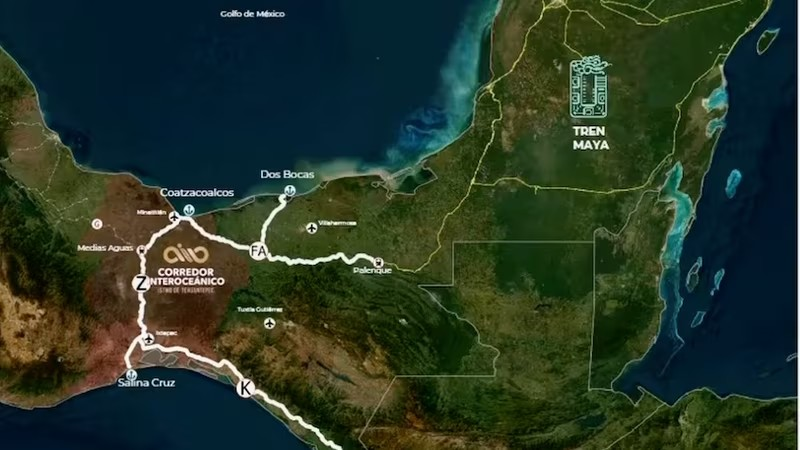
Bypassing a contested maritime route necessitates shifting volume to overland pipelines or alternative coastal export terminals. However, physical infrastructure is path-dependent. Pipelines require massive upfront capital expenditure, decades of amortization, and stable territorial jurisdictions.
Pipelines linking Persian Gulf production directly to open-ocean terminals outside the chokepoint mitigate maritime vulnerability, but they introduce fixed-point physical security risks. A pipeline is a stationary target exposed to sabotage, whereas a tanker fleet distributes risk across a vast maritime expanse.
Strategic Trade-off:
Maritime Route: Distributed mobile assets, high chokepoint concentration, variable insurance risk.
Overland Pipeline: Fixed physical assets, zero chokepoint exposure, high territorial sabotage risk.
When decision-makers weigh these alternatives against naval escorts, they are calculating the least inefficient path to market stability. Trust deficits between states accelerate the timeline for these structural pivots, transforming long-term strategic diversification into immediate operational necessity.
Strategic Execution Framework for Energy Transit Security
To navigate structural volatility in regional shipping lanes without relying on unverified diplomatic assurances, maritime logistics operators and energy conglomerates must decouple physical transport security from single-point geographic dependencies.
Diversify export terminal optionality by maximizing utilization of non-chokepoint connected infrastructure. Implement dynamic risk-pricing models that account for real-time naval deployment densities rather than lagging historical insurance indices. Finally, restructure charter contracts to share the cost of security friction dynamically between producers, carriers, and end-users, preventing sudden margin compression during periods of acute regional friction.

/cdn.vox-cdn.com/uploads/chorus_asset/file/22155007/doc_ock.jpg)