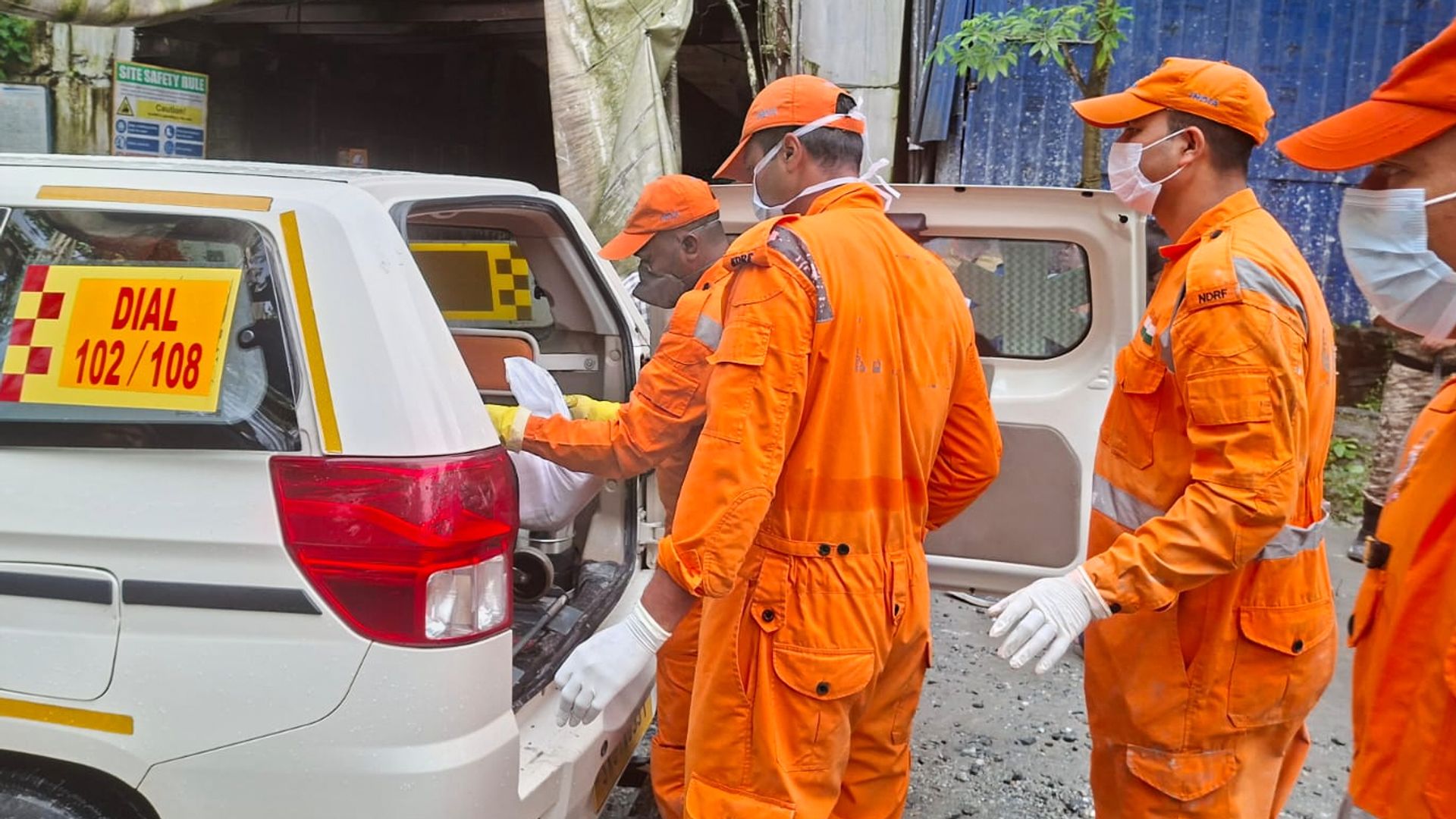
Himalayan tunneling infrastructure projects fail not because of unpreventable natural events, but due to systematic gaps between geological risk models and subterranean excavation protocols. The Teesta Stage-VI Hydropower Project tunnel incident in Sikkim—resulting in 25 fatalities—exposes critical vulnerabilities in underground hazard detection, structural ventilation, and risk mitigation frameworks across high-seismic, gas-bearing rock formations.
Geological Mechanics and Gas Intrusion Dynamics
Subterranean excavation within the Lesser and Greater Himalaya encounters young, highly fractured rock strata subject to tectonic compression. These rock masses contain pocket reservoirs of ancient organic matter that have undergone anaerobic degradation, creating pressurized subterranean deposits of volatile gases, primarily methane ($CH_4$).
[ Unmapped Methane Pocket ]
          │
          ▼
[ Mechanical Drilling / Blasting ]
          │
          ▼
[ Gas Release & Rapid Dispersion ]
          │
          ▼
[ Igntion Event: Spark / Heat ] ───► Explosive Pressure Wave ───► Structural Collapse & Toxic Fumes
When excavation face operations breach these confined geological pockets, compressed gas discharges into the tunnel atmosphere. The danger curve is governed by three primary variables:
- Volumetric Gas Concentration: Methane exhibits an explosive range between 5% and 15% concentration in standard air. Below 5%, the gas burns locally; above 15%, the lack of oxygen prevents immediate ignition until fresh ventilation mixes into the pocket.
- Enclosed Space Friction and Ignition Pressure: In a restricted subterranean drive, gas ignition rapidly converts thermal energy into a high-velocity pressure wave. This wave destabilizes unreinforced or partially cured shotcrete, triggering localized structural collapse.
- Atmospheric Displacement and Toxicity: The post-explosion atmosphere experiences immediate depletion of breathable oxygen ($O_2$), replaced by high concentrations of carbon monoxide ($CO$), carbon dioxide ($CO_2$), and residual volatile hydrocarbons.
The primary cause of immediate mortality in these events is rarely structural crushing alone; rather, it is a compound sequence of explosive trauma, sudden oxygen deprivation, and thermal airway destruction.
Structural Vulnerabilities in Subterranean Infrastructure
The breakdown of infrastructure integrity in Himalayan hydro projects stems from three structural failures in standard operating environments:
Flawed Probe-Hole and Gas Detection Protocols
Standard tunneling procedures require advance probe drilling (typically 15 to 30 meters ahead of the excavation face) to detect water ingress and gas pockets. When drilling cycles prioritize lineal advancement meters over directional probe sampling, isolated pressurized gas pockets remain undetected until the main cutter head or blasting charge penetrates the barrier wall.
Inadequate Forced Ventilation and Scavenging Systems
Tunnel ventilation designs frequently rely on positive-pressure auxiliary fans delivering fresh air to the working face. However, in the event of heavy hydrocarbon or gas releases, these systems fail to scrub or exhaust volatile gases effectively if scavenging ductwork is not kept within tight proximity to the excavation face. The absence of continuous, explosion-proof gas monitoring linked directly to automatic ventilation overrides creates a dead zone where toxic accumulation proceeds undetected.
Geotechnical Instability under Blast Stress
In fractured schists and gneisses, explosive shockwaves from gas ignition destabilize the surrounding rock mass. Where primary support systems—such as friction bolts, lattice girders, and fiber-reinforced shotcrete—are incomplete or applied to unwashed rock faces, structural collapse follows the initial explosion. The resulting debris blocks drainage channels, flooding lower invert sections and severely limiting access for rescue units.
Operational Breakdown in Multi-Agency Disaster Response
When a subsurface disaster occurs, emergency mitigation depends entirely on the speed with which the underground environment can be stabilized for entry teams. The 72-to-96-hour recovery window in the Teesta project highlights severe operational bottlenecks:
- Atmospheric Clearing Delays: Rescue personnel cannot advance without self-contained breathing apparatus (SCBA) or continuous forced fresh-air supply when toxic gas levels remain high. Clearing thousands of cubic meters of contaminated air through a damaged duct system consumes critical operational hours.
- Debris Inundation and Slurry Handling: Explosions destabilize internal drainage, mixing crushed rock, mud, and groundwater. Heavy machinery cannot operate effectively in deep, un-pumped mud within restricted tunnel cross-sections, forcing manual excavation or specialized mining rescue interventions.
- Interagency Coordination Gaps: Standard disaster response units (such as general civil defense forces) lack specialized underground mining capabilities. Deploying specialized mine rescue teams from external coalfields or mining districts introduces multi-day logistical lag times, converting potential rescue operations into body recovery missions.
Institutional Safeguards for High-Risk Subterranean Projects
Preventing recurring fatalities in Himalayan infrastructure requires replacing static compliance checklists with dynamic, sensor-driven operational controls.
Mandatory Real-Time Gas telemetry: Every underground heading must feature redundant, intrinsically safe hydrocarbon and toxic gas sensors integrated into an automated power-kill circuit. If methane levels reach 1.0% by volume, all non-explosion-proof electrical equipment at the heading must instantly de-energize.
Directional Long-Hole Probe Drilling: Mandate systematic horizontal directional drilling ahead of the face (minimum 50 meters) with real-time pressure and gas monitoring on all exploratory boreholes prior to core excavation.
Autonomous SCBA Refuge Chambers: Install self-contained, positive-pressure emergency refuge bays equipped with independent oxygen generation and communications systems every 500 meters along active tunnel drives. These units must be capable of sustaining life for a minimum of 96 hours independent of main tunnel utilities.
Dedicated Subsurface Rescue Capabilities: Infrastructure developers operating in high-risk mountain terrains must maintain permanently stationed, mine-rescue-certified personnel and specialized clearing equipment on-site rather than relying on regional emergency agencies after an event occurs.
💡 You might also like: The Truth About Treasury Secretary Bessent and the Cost of War
Project developers, civil contractors, and regulatory agencies must immediately halt excavation operations across all active Himalayan tunneling drives until comprehensive geo-hazard and gas-risk audits are completed and real-time telemetry systems are fully operational across all working faces.