The United Nations loves a round number. Seventy percent. It is clean, it is terrifying, and it is almost certainly a gross oversimplification of the economic reality on the ground in Sudan. While international bodies wring their hands over the "unprecedented" rise in poverty, they are missing the forest for the trees. By focusing exclusively on the collapse of formal structures, they ignore the resilient, shadow economies that actually keep people alive while the state burns.
The tragedy in Sudan isn't just that people are poor; it’s that the global aid apparatus is fundamentally incapable of understanding how a war-torn economy actually functions. We are looking at a country through the lens of a spreadsheet, and the spreadsheet is broken.
The Myth of the 70 Percent
When the UN claims 70% of the Sudanese population lives in poverty, they are using metrics designed for stable, Westphalian states. They track GDP, formal employment, and official exchange rates. In a civil war, those metrics are fiction.
I have spent decades watching humanitarian organizations deploy these statistics to trigger fundraising cycles. It’s a cynical loop: publish a staggering percentage, secure the grant, and then wonder why the aid doesn't move the needle. The "poverty" being described is a lack of access to a formal financial system that has been weaponized or destroyed.
The reality is far more complex. Sudan is not just a "poor" country; it is a country in the midst of a violent economic reorganization. Wealth hasn't vanished; it has shifted. It has moved from the central banks and Khartoum’s merchant class into the hands of paramilitary logistics networks and localized mutual aid committees. To call this "poverty" without qualifying the massive growth of the informal sector is a failure of intelligence.
The Aid-Industrial Complex is the Problem
Traditional aid logic suggests that because 70% of the people are poor, we must flood the zone with external resources. This is wrong. In fact, it's worse than wrong—it's destabilizing.
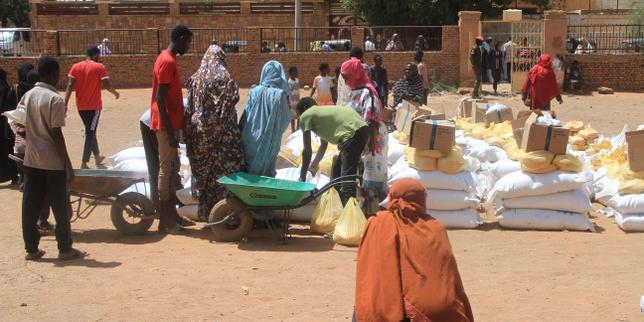
External aid in Sudan often acts as a subsidy for the very forces driving the conflict. When the World Food Programme or other agencies bring in massive shipments, they rely on "logistics partners" who are frequently front companies for the RSF or the SAF. By operating on the assumption that the population is a helpless, monolithic block of "the poor," aid agencies become the primary financiers of the war's supply chains.
- The Incentive Gap: Aid creates a floor for the economy that allows combatants to continue fighting without worrying about the total starvation of their labor pool.
- The Crowding Out Effect: Formal aid ignores the "Emergency Response Rooms" (ERRs)—the grassroots, hyper-local networks that have done more to feed Khartoum than any UN convoy.
If you want to understand the economy of Sudan, stop looking at poverty stats and start looking at the price of fuel in the black market. That is the only honest data point left.
Why We Get the "People Also Ask" Questions Wrong
People ask: "How can Sudan's economy be saved?"
The premise is flawed. You cannot "save" an economy that is currently being liquidated to pay for bullets.
People ask: "Is the poverty in Sudan reversible?"
Brutally honest answer: Not within the current framework of the Sudanese state. We are witnessing the permanent dissolution of the 1956 borders as an economic unit. The wealth of the country—gold, livestock, and gum arabic—is being exported through illicit channels that do not report to a central treasury.
The Gold Standard of Conflict
Let’s talk about the math the UN won’t touch. Sudan is one of Africa's largest gold producers. Most of that gold is being flown out of the country through private strips, bypassing the "70% poverty" statistics entirely.
While the "formal" citizen has lost their savings in the Bank of Khartoum, a new class of "war-entrepreneur" is thriving. This isn't just about generals. It’s about the truck drivers, the middle-men, and the gold-panners in the north and west who are operating in a pure, unregulated market.
To help the Sudanese people, we have to stop treating them as victims of a natural disaster and start treating them as participants in a high-stakes, decentralized economy.
The Actionable Pivot: Fund the Networks, Not the Agencies
If the goal is truly to mitigate the suffering of the "70%," the current strategy is a dead end. We need to burn the playbook.
- Direct Cash Transfers to Local Committees: Stop buying grain in Europe and shipping it to Port Sudan. Use encrypted digital transfers to send liquidity directly to the ERRs on the ground. Let them buy food from the local farmers who are currently being crushed by a lack of demand.
- Weaponize the Financial System: Instead of broad sanctions that hurt the "70%," we need surgical strikes on the gold refining hubs in the UAE and elsewhere that facilitate the liquidation of Sudan’s national assets.
- Acknowledge the Shadow State: We must stop waiting for a "transition to civilian rule" before engaging with economic reality. The war is the economy now.
The Risk of Being Right
The downside to this contrarian view is grim. Acknowledging that the formal economy is dead means admitting that the Sudanese state, as we knew it, is over. It means recognizing that the "poverty" we see is a symptom of a permanent structural shift toward warlordism.
But clinging to the UN’s "70%" narrative is a form of intellectual laziness that costs lives. It allows the international community to feel like they are doing something by sending bags of grain, while the actual wealth of the nation is stripped and sold for parts.
Stop looking at the poverty line. Start looking at the power lines. The people of Sudan aren't just waiting for a handout; they are navigating a collapse that the West is too blinkered to even describe accurately.
The UN’s statistics are a shroud, not a solution. Until we stop measuring "poverty" and start measuring the flow of illicit capital, we are just spectators at a funeral.