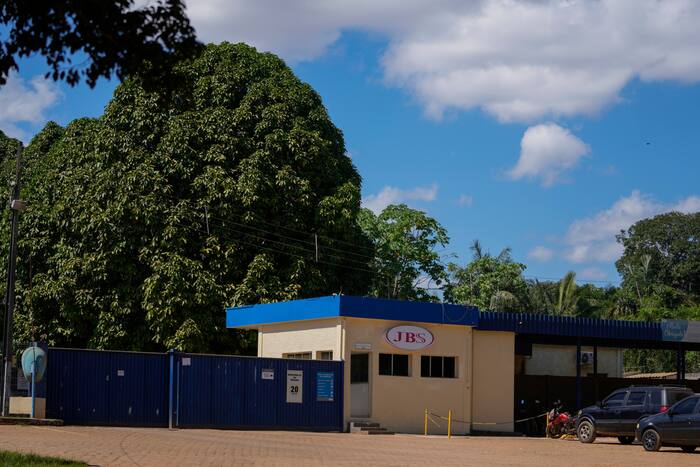
European regulators and activist groups think they found the silver bullet to stop Amazon deforestation. Drag JBS, the world’s largest meat-packer, into European courts and watchdogs over supply chain transparency, slap them with compliance mandates, and declare victory over rainforest destruction.
It is pure theater. Worse, it is counterproductive.
The mainstream press treats every new European complaint against JBS like a watershed moment for corporate accountability. Journalists dutifully repeat the standard narrative: big bad meat-packer buys cattle from deforested land, obscures its indirect suppliers, and gets caught by clever European watchdogs wielding shiny new due diligence laws. The lazy consensus assumes that enough legal pressure from Brussels, London, or Paris will force JBS to clean up its act and magically halt the bulldozers in Pará and Mato Grosso.
That theory fundamentally misunderstands global commodity economics, Brazilian ranching mechanics, and how supply chains actually work when pushed into a corner. Filing complaints in Europe over JBS’s links to illegal deforestation doesn't stop trees from falling. It just reroutes the beef to buyers who couldn't care less about European ESG scorecards.
The Laundering Machine Nobody Wants to Understand
To see why European legal strikes miss the mark, you have to understand how cattle actually move through the Amazon. Most coverage treats the beef supply chain like a straight line: cow eats grass on illegal pasture, cow goes to JBS slaughterhouse, beef lands on a European supermarket shelf.
Real life is messier. It operates on a multi-tier system split between direct suppliers (the ranches that sell fattened cattle straight to the slaughterhouse) and indirect suppliers (the breeding and raising farms that sell calves to those fattening ranches).
JBS, along with competitors like Marfrig and Minerva, actually monitors its direct suppliers with satellite imagery and strict geofencing. They signed the G4 Agreement and the Conduct Adjustment Terms (TAC) with Brazilian prosecutors years ago. If a direct ranch shows illegal clearing on Brazil’s Rural Environmental Registry (CAR), JBS blocks it.
The loophole—and the entire basis for these European complaints—is cattle laundering (known locally as esquentamento).
Here is how it works:
- A rancher illegally clears forest on Farm A to raise calves.
- Before the animals are ready for slaughter, the rancher moves them to Farm B, which has a completely clean environmental record.
- Farm B holds the cattle briefly and sells them to JBS as "clean" beef.
Because Brazil’s national cattle transit permits—the Guia de Trânsito Animal (GTA)—are treated as sanitary documents rather than public environmental records, slaughterhouses claim they lack legal access to trace the animal's full life history.
European complainants point at this opacity and cry foul, arguing JBS is complicit in greenwashing and violating human rights and environmental standards. They are right about the opacity. They are dead wrong about the cure.
The China Safety Valve
Imagine a scenario where European regulators win every single complaint currently filed against JBS. Imagine the European Union enforces the strictest possible interpretation of the EU Deforestation Regulation (EUDR), completely freezing JBS out of European ports until every single calf in Brazil wears an encrypted, tamper-proof blockchain ear tag from birth to slaughter.
What happens the next morning in São Paulo?
JBS doesn't go bankrupt. The illegal ranchers in the Amazon don't suddenly convert to regenerative agroforestry. Instead, JBS simply segments its supply chain—a practice commodity traders have used for decades.
Meat-packers maintain dedicated, fully traceable "clean" herds for strict export markets like the EU and high-end US retailers. Meanwhile, the untraceable, higher-risk cattle get processed at separate facilities and shipped straight to China, the Middle East, and Brazil’s massive domestic market.
Look at the actual trade numbers from the Brazilian Beef Exporters Association (ABIEC) and USDA agricultural reports. Europe accounts for a tiny fraction of Brazil’s total beef exports—typically hovering around 3% to 5% by volume. China, by contrast, routinely swallows over 50% of Brazilian beef exports, and domestic Brazilian consumers eat roughly 70% to 80% of all the beef the country produces.
When European activists celebrate a legal victory that pushes JBS out of European supply chains, they aren't starving the deforestation engine of capital. They are voluntarily surrendering their seat at the negotiating table. Once Europe stops buying, Europe loses all commercial influence over the meat-packer. You cannot boycott a company that has a line of buyers waiting out the door in Shanghai and Beijing who don't ask for satellite coordinates.
I’ve Seen Compliance Theatrics Burn Millions
I’ve spent years watching multinational corporations and commodity traders burn tens of millions of dollars on Western compliance frameworks that look immaculate in a boardroom and fail miserably on the ground.
When a company faces cross-border litigation—whether under the French Duty of Vigilance law, OECD guidelines, or EU anti-deforestation rules—its legal department takes over from its sustainability and procurement teams. That shift is fatal to actual environmental progress.
Lawyers do not solve ecological problems; they minimize corporate liability. The moment JBS gets hit with a formal complaint in Europe, the corporate reflex is to circle the wagons, tighten public disclosures, scrub language from sustainability reports so it can't be used as ammunition in court, and build bureaucratic walls between subsidiaries.
Instead of collaborating with NGOs, researchers at institutions like Imazon, and local governments to fix the broken GTA database, the meat-packer spends millions on white-shoe law firms in London and Brussels to argue jurisdiction and corporate veil protections. Every euro spent fighting a European administrative complaint is a euro not spent subsidizing ear-tagging programs for cash-strapped smallholder ranchers in Pará.
Answering the Questions You Should Actually Be Asking
If you read standard financial and environmental news, you are fed a steady diet of predictable questions. Most of them start from a broken premise.
"Why doesn't JBS just cut off all indirect suppliers immediately?"
Because doing so overnight would collapse the rural economy of northern Brazil and drive ranchers straight into the arms of smaller, completely unregulated slaughterhouses. JBS controls roughly a quarter of Brazil’s cattle slaughtering capacity. The other 75% is fragmented among regional players—many of which haven't signed the TAC agreements and don't use satellite monitoring at all. If JBS drops a supplier without offering a path to compliance, that rancher simply sells his cows to a local abattoir down the road with zero oversight. Leakage is the dirty secret of supply chain purism: purifying one company’s supply chain while leaving the rest of the market dirty achieves a net environmental benefit of zero.
"Won't EU laws force Brazil to change its national cattle tracking laws?"
No. Sovereign nations rarely rewrite domestic agricultural property laws because a foreign trade bloc threatens fines on a private company. In fact, European regulatory pressure routinely triggers fierce political backlash in Brasilia. Powerful agribusiness lobbies—the bancada ruralista in Brazil’s Congress—weaponize European complaints as "green imperialism" and protectionism disguised as environmentalism. They use foreign lawsuits as political cover to weaken domestic forest codes and block mandatory national traceability bills.
"Can't satellite technology already track every cow?"
Satellites see trees; they don't see ear tags. Remote sensing from organizations like MapBiomas can detect forest clearing down to a few square meters within days. What satellites cannot tell you is whether the 400 head of cattle grazing on a legal pasture today were born on an illegal pasture six months ago. That requires individual animal identification—RFID tags, bolus transponders, and unified government databases—which costs money that neither the rancher nor the consumer wants to pay.
The Uncomfortable Trade-Offs of the Alternative
Attacking the European litigation strategy comes with an obvious vulnerability, and pretending otherwise would be dishonest. If you take away the threat of Western legal sanctions and public shaming, you have to rely heavily on corporate self-interest and Brazilian state enforcement—two forces with a notoriously spotty track record in the Amazon.
JBS has missed its own self-imposed deforestation deadlines before. Years ago, the company promised zero illegal deforestation across its entire supply chain, pushed the target back to 2025, and later adjusted definitions and timelines again as the technical and political realities of indirect supplier tracking proved harder than their PR team admitted. Without external pressure, big agribusiness drags its feet.
The flaw isn't applying pressure. The flaw is applying pressure to the wrong choke point.
How to Actually Stop Deforestation Beef
If European regulators, institutional investors, and activist groups actually want to save trees rather than win headlines in Brussels, they need to abandon the punitive courtroom model and target the economic plumbing of cattle ranching.
- Finance the transition, don't just fine the result. Small and medium ranchers clear forest because extensive grazing on degraded land is cheap, and intensifying production (rotational grazing, soil restoration, genetics) requires upfront capital they can't borrow at reasonable rates. European development banks and institutional investors should tie green bonds and low-interest credit lines directly to verified farm-level regularization. Make keeping trees standing more profitable than burning them.
- Buy the data, unlock the GTA. Instead of suing JBS for not publishing private government transit permits, international coalitions should fund the technical infrastructure and legal frameworks with Brazilian state governments (following the lead of Pará’s recent mandatory cattle traceability pilot) to link the sanitary GTA system with environmental CAR registries. Solve the data bottleneck at the state level so no slaughterhouse can claim ignorance.
- Shift pressure from European grocers to Asian buyers and sovereign wealth funds. If activists want to hit JBS where it hurts, stop protesting outside supermarkets in Paris. Target the state-backed buyers in China and the massive sovereign wealth funds and global asset managers holding JBS debt and equity. When bond yields spike, boards listen faster than when a European watchdog opens a non-binding inquiry.
- Stop demanding instant perfection and reward verifiable progress. Zero-tolerance policies force companies to lie, hide data, or divest from high-risk regions entirely—abandoning the Amazon to rogue operators. Regulators should create safe-harbor rules for meat-packers that actively bring non-compliant indirect suppliers into legal compliance programs, rather than punishing them for having those suppliers in their orbit during the transition.
JBS is not a charity, and its executives are not environmental saints. They are ruthless capital allocators responding to market incentives. Right now, European complainants are handing JBS a clear incentive: scrub the tiny fraction of beef headed to Europe, hire better lawyers, and send the rest of the herd somewhere else.
Until critics stop confusing a European court filing with an actual conservation strategy, the chainsaws in the Amazon won't even slow down.