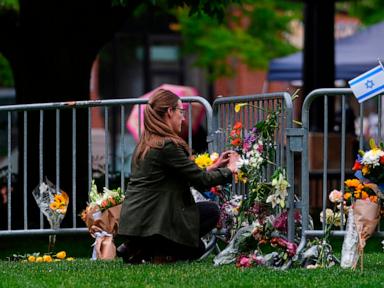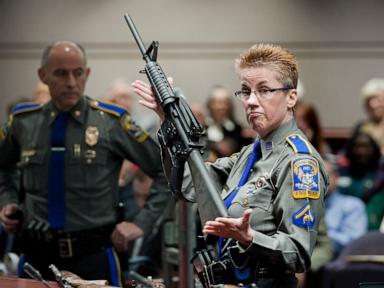
The prevailing narrative surrounding the Supreme Court’s consideration of state and local assault weapon bans relies on a comforting, predictable script. Grieving families from Sandy Hook submit an amicus brief. Media outlets frame the upcoming term as a binary moral showdown between public safety and constitutional absolutism. Pundits treat the survival of bans in states like Illinois, Maryland, and New York as a coin flip dependent entirely on the ideological whims of six conservative justices.
This framing misses the actual legal mechanics at play. It ignores the cold, hard structural realities of post-Bruen constitutional jurisprudence.
Having spent years tracking federal appellate litigation and watching state attorneys general burn through millions in taxpayer funds defending poorly drafted statutes, the pattern is unmistakable. Gun control advocates are walking straight into a procedural and doctrinal buzzsaw. By begging the Supreme Court to uphold sweeping bans on AR-15-style rifles based on modern public safety metrics and emotional appeals, petitioners are asking the Court to violate its own freshly minted precedent. Worse, they are setting up a ruling that will not just strike down state-level assault weapon bans, but permanently strip states of regulatory tools they might otherwise have kept.
The Bruen Framework Does Not Care About Modern Crime Statistics
To understand why the current strategy is failing, look at the legal test governing the Second Amendment today. In New York State Rifle & Pistol Association v. Bruen (2022), Justice Clarence Thomas dismantled the two-step balancing test that federal circuit courts had used for over a decade to uphold gun restrictions.
Under the old regime, a state could admit that a law burdened the Second Amendment, then save the law by proving it served a "compelling government interest" like reducing mass shooting fatalities. Bruen killed interest-balancing dead. Today, the government bears the sole burden of proving that a modern firearm regulation is consistent with the nation’s historical tradition of firearm regulation—specifically looking at the Founding era (1791) and, to a lesser extent, the Reconstruction era (1868).
When briefs filed on behalf of Sandy Hook families urge the justices to consider the uniquely devastating lethality of modern semi-automatic rifles, they are arguing a standard of review that no longer exists in federal law. You cannot win a game of chess by citing the rules of checkers.
Courts do not evaluate whether an AR-15 is "too dangerous" in a vacuum. They evaluate whether the firearm is "in common use" for lawful purposes, a standard established by the late Justice Antonin Scalia in District of Columbia v. Heller (2008).
The "Common Use" Trap
Here is the mathematical reality that state legislatures refuse to confront. According to industry data from the National Shooting Sports Foundation (NSSF) and federal ATF manufacturing reports, there are well over 24 million modern sporting rifles—predominantly AR-15-style platforms—in civilian circulation across the United States. They account for roughly one in five firearms purchased in recent years.
Under Heller and Caetano v. Massachusetts (2016), the Supreme Court held that the Second Amendment protects weapons "in common use at the time" and only permits bans on arms that are both "dangerous and unusual." Notice the conjunctive and. A weapon cannot be banned merely for being dangerous; all firearms are dangerous by design. To survive constitutional scrutiny, the state must prove the weapon is unusual.
In Caetano, Justice Samuel Alito pointed out in a concurrence that roughly 200,000 civilian-owned stun guns were enough to satisfy the "common use" threshold. Attempting to argue before this specific Supreme Court that a rifle platform owned by tens of millions of law-abiding citizens is "unusual" requires a level of linguistic gymnastics that no conservative jurist will entertain.
The lazy consensus among gun control strategists is that if they emphasize the military origins of the ArmaLite Rifle design—specifically the M16 and M4 variants used by the U.S. military—the justices will classify the civilian AR-15 as a "weapon of war" outside Second Amendment protection.
This argument collapses upon basic mechanical inspection. The civilian AR-15 is a semi-automatic firearm: one pull of the trigger fires one round. It lacks the select-fire capability (burst or full-auto) that defines military service rifles. Mechanically, an AR-15 functions identically to a traditional wood-stocked Ruger Mini-14 or a standard semi-automatic hunting rifle. Banning a firearm based on cosmetic features—pistol grips, adjustable stocks, barrel shrouds, and flash suppressors—while leaving mechanically identical rifles legal exposes the statutes as arbitrary aesthetic regulations rather than coherent safety measures.
Dismantling the Core Misconceptions
Are AR-15s the primary driver of gun violence in America?
No. Federal Bureau of Investigation (FBI) Uniform Crime Reporting data consistently demonstrates that handguns account for the overwhelming majority of firearm homicides in the United States—typically outnumbering homicides committed with all types of rifles (including bolt-action, lever-action, and semi-automatic) by a margin of more than ten to one. Handguns, however, were explicitly declared protected under the Second Amendment in Heller. By targeting rifles, states are regulating the statistically least common murder weapon while leaving the most common one untouched, creating an insurmountable logical contradiction for appellate judges.
Didn't the 1994 Federal Assault Weapons Ban prove these laws work?
The empirical record is far messier than advocates admit. A comprehensive, federally funded study conducted by the University of Pennsylvania’s Jerry Lee Center of Criminology (led by Christopher Koper) concluded that the 1994–2004 federal ban had no discernible impact on overall gun crime rates, largely because criminals easily substituted other firearms and because pre-ban rifles and magazines remained legal and widely available. Citing mixed or inconclusive public health studies in front of an originalist court does nothing to establish a 1791 historical analogue.
Can states bypass Bruen by analogizing AR-15s to historical bans on Bowie knives or trap guns?
States like Illinois and Maryland have tried this exact tactic in cases like Barnett v. Raoul and Bianchi v. Brown. They point to 19th-century laws restricting concealed carry of Bowie knives, slungshots, or percussion-cap pistols. The fatal flaw in these historical analogues is that 19th-century laws almost exclusively regulated the manner of carry (prohibiting concealed carry while permitting open carry) or imposed taxes, rather than enacting flat bans on possession inside the home. Under Bruen, the "how" and the "why" of a historical restriction must match the modern law. A historical tax on Bowie knives does not justify a modern felony conviction for keeping a rifle in a bedroom safe.
The High Cost of Pushing a Losing Case to the Top
There is an unspoken rule among seasoned appellate litigators: never force a hostile Supreme Court to write an opinion on your weakest issue.
When state governments and advocacy groups aggressively defend sweeping bans on semi-automatic rifles and standard-capacity magazines, they invite a nationwide precedent that locks in constitutional protections for those items permanently. Right now, the circuit courts are split, or at least stalling. While the Fourth Circuit upheld Maryland's ban in Bianchi, dissenters wrote sweeping roadmaps for Supreme Court reversal. Meanwhile, the Seventh Circuit’s preliminary ruling upholding Illinois’s Protect Illinois Communities Act drew sharp criticism from legal scholars across the spectrum for essentially ignoring Bruen's plain-text methodology.
If the Supreme Court grants certiorari and strikes down these bans—which is the overwhelming probability given the current 6–3 composition—the resulting opinion will not be narrow. Justice Thomas, Justice Alito, or Justice Gorsuch will likely write a categorical opinion cementing the "common use" test as an absolute shield for all semi-automatic firearms.
Once that precedent is inked in the United States Reports, every state-level assault weapon ban from California to Massachusetts becomes unenforceable overnight. Furthermore, the ruling will immediately invalidate bans on magazines holding more than ten rounds, as standard 30-round AR-15 magazines are even more ubiquitous than the rifles themselves.
The Downside of the Contrarian Legal Reality
Admitting that categorical bans are constitutionally doomed comes with a brutal political reality: it leaves communities facing mass shootings with fewer immediate legislative levers. The grief of the Sandy Hook families is entirely real, and their desire to prevent another Newtown is beyond reproach.
The tragedy is that the legal architecture built by the political allies of these families is fundamentally flawed. Telling grieving parents that a total ban on AR-15s can survive a 6–3 originalist Supreme Court is a disservice to their cause. It diverts hundreds of millions of dollars in philanthropic and state legal resources into a constitutional dead end.
Imagine a scenario where gun control organizations had spent the last decade instead fortifying laws that do survive Bruen scrutiny—such as strengthening background check infrastructure, funding targeted community violence intervention programs, enforcing existing straw-purchasing statutes, and refining extreme risk protection orders (red flag laws) with ironclad due process protections. In United States v. Rahimi (2024), an 8–1 Supreme Court upheld the federal ban on firearm possession by individuals subject to domestic violence restraining orders, proving that targeted, conduct-based disarmaments of dangerous individuals can pass constitutional muster.
What Actually Survives Constitutional Scrutiny
If state lawmakers and advocacy groups want policies that hold up in federal court rather than generating headlines before being struck down, the strategic pivot must happen immediately:
- Abandon Feature-Based Hardware Bans: Stop passing laws that outlaw firearms based on barrel shrouds, telescoping stocks, and pistol grips. The Supreme Court has signaled repeatedly that hardware bans on commonly owned semi-automatics are dead on arrival.
- Focus on Individual Conduct, Not Hardware: Rahimi confirmed that the government has historical authority to disarm specific individuals who pose a credible, adjudicated threat of physical violence to others. Legislation focused on rigorous due-process red flag procedures, domestic abuser disarmament, and violent felony prohibitions stands on solid historical ground.
- Fix NICS Reporting Failures: A staggering number of high-profile mass shooters—including the perpetrators in Sutherland Springs, Texas, and Charleston, South Carolina—passed federal background checks solely because local law enforcement or military branches failed to upload disqualifying criminal or mental health records into the National Instant Criminal Background Check System (NICS). Auditing and enforcing compliance with existing prohibitors saves lives without triggering Second Amendment litigation.
- Target Straw Purchasers and Illegal Trafficking: Federal prosecution of straw purchasers—individuals who buy guns legally on behalf of prohibited felons—has historically been abysmally low. Aggressive enforcement against illicit supply chains addresses the primary source of crime guns without infringing on the rights of compliant owners.
The Supreme Court is not a legislature, and amicus briefs cannot rewrite the text of Heller or Bruen. Continuing to push blanket AR-15 bans toward One First Street will not result in safer schools. It will only hand gun rights advocates the exact landmark Supreme Court victory they have been waiting twenty years to win.