Everyone is reading the headlines backward.
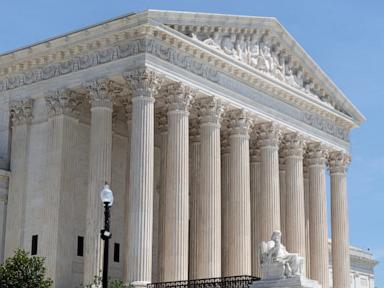
When news broke that the Supreme Court rebuffed the Trump administration's appeal over Diversity, Equity, and Inclusion (DEI) funding cuts, both political camps immediately retreated to their predictable corners. Critics of the administration celebrated a decisive victory for institutional equity, claiming the federal funding pipeline for DEI programs was safe. Meanwhile, supporters of the cuts treated the order as a frustrating judicial roadblock, assuming the executive branch had just lost its sharpest weapon against ideological mandates in federally funded institutions.
Both takes rely on a fundamental misreading of how Supreme Court procedural orders and federal administrative law actually operate.
By focusing on the surface-level political scoreboard, mainstream coverage misses the structural reality of what happens when the Supreme Court declines to intervene on an emergency or preliminary appeal. A denial of certiorari or an administrative stay is not an endorsement of the lower court’s ideology, nor is it a permanent shield for the programs in question. In reality, this procedural pause exposes the deep legal vulnerabilities of federal grant conditions while handing executive agencies a blueprint on how to execute funding pullbacks without triggering immediate judicial injunctions.
The Procedural Illusion Behind the Headlines
To understand why the popular consensus is wrong, you have to separate a final merits ruling from a procedural rebuff.
In legal journalism, any refusal by the Supreme Court to grant an administration's request gets flattened into a binary win-or-loss narrative. Legal scholars, including constitutional analysts at SCOTUSblog and administrative law practitioners across Washington, repeatedly warn against treating procedural denials as substantive precedent. When the Court turns away an appeal at an interlocutory stage—before a lower court has issued a final judgment on the core legal issues—the justices are often signaling reluctance to bypass the standard appellate process, not agreement with the plaintiffs.
The core dispute surrounding executive cuts to DEI-related grants hinges on the Administrative Procedure Act (APA) and the Spending Clause of the Constitution. Lower courts frequently block sudden agency funding cuts not because the executive branch lacks the authority to set policy priorities, but because agencies fail to follow the tedious, step-by-step procedural requirements mandated by the APA.
When an administration abruptly cancels existing grants or alters funding criteria without a formal notice-and-comment period or a reasoned explanation grounded in the administrative record, federal judges routinely step in to freeze the action. When the Supreme Court declines to lift those freezes immediately, it is usually enforcing procedural discipline on the executive branch.
Why Grant Recipients Are Celebrating Too Early
If you run a university research office, a nonprofit consultancy, or a corporate compliance division reliant on federal contracts, treating this Supreme Court order as permanent job security is a catastrophic miscalculation.
I have watched organizations burn through millions of dollars in legal fees and compliance restructuring because their leadership mistook a temporary court injunction for a permanent safe harbor. When a lower court halts a funding cut, the clock does not stop on executive authority; it simply resets the timeline.
Here is what actually happens behind closed doors at federal agencies following a procedural loss at the high court:
- The Paperwork Pivot: Agency general counsels rewrite the justification for the funding cuts. Instead of issuing broad, sweeping directives that look like arbitrary political retaliation under the APA, agencies build granular administrative records tying funding reallocations to statutory text and fiscal efficiency.
- Grant Cycle Attrition: Existing multi-year grants might survive the current fiscal year due to court orders, but the pipeline for new awards quietly dries up. Agencies do not need to cancel a program unlawfully if they can simply alter the scoring rubrics for the next grant cycle.
- Heightened Audit Scrutiny: Organizations that sue the federal government to keep their funding often find themselves facing strict, by-the-book compliance audits. Every dollar spent under a disputed grant gets scrutinized against federal procurement standards, turning a legal victory into an operational nightmare.
The legal framework governing federal spending gives the executive branch immense latitude—provided the paperwork is clean. In South Dakota v. Dole and subsequent Spending Clause jurisprudence, the Supreme Court established that Congress sets the broad conditions on federal funds, while executive agencies manage the mechanics of distribution within those statutory bounds. When DEI initiatives are funded through discretionary agency grants rather than explicit congressional mandates, those funds remain permanently vulnerable to shifts in executive administration.
The Strategic Error of the Executive Appeal
On the flip side, supporters of the funding cuts need to look closely at why the administration’s legal strategy stumbled at the Supreme Court in the first place.
For years, conservative legal movements, spearheaded by organizations like the Federalist Society and administrative law critics, have argued against rapid, unilateral executive policymaking—the exact phenomenon they critiqued during previous Democratic administrations. Yet, when new administrations take office, the temptation to govern through immediate, sweeping funding freezes often overrides the patience required to survive judicial review.
By rushing to the Supreme Court on an emergency posture to overturn lower court injunctions, the administration forced the justices to evaluate a messy, incomplete record. Conservative justices, particularly Chief Justice John Roberts and Justice Amy Coney Barrett, have consistently demonstrated skepticism toward emergency docket requests that ask the Court to resolve complex administrative disputes before appellate courts have finished their work.
Furthermore, sweeping funding cuts that catch already-awarded contracts in the crossfire run straight into constitutional guardrails regarding reliance interests. Under Supreme Court precedent—most notably the 2020 DACA decision (Department of Homeland Security v. Regents of the University of California)—an agency cannot simply reverse a policy without accounting for the serious reliance interests of the parties who structured their operations around the existing rules. Failing to clear that low procedural bar gives lower courts an easy excuse to halt the policy, regardless of how conservative the appellate bench might be.
What People Get Wrong About Federal DEI Funding
Public debate around this ruling suffers from three persistent myths that distort both business strategy and public policy.
1. Does the Supreme Court ruling mean DEI mandates are constitutional?
No. The Court did not rule on the constitutionality of DEI programs under the Equal Protection Clause or Title VI of the Civil Rights Act. Following the Court's landmark 2023 decision in Students for Fair Admissions v. Harvard, race-conscious institutional policies face severe legal jeopardy across the board. This procedural order merely addressed the mechanics of how the executive branch attempted to cut off funding streams, leaving the underlying constitutional questions wide open for future litigation.
2. Are federal contractors and universities safe from funding clawbacks?
Not remotely. Even if an executive agency cannot arbitrarily yank funds mid-grant without surviving an APA challenge, institutions still face the threat of civil rights investigations, False Claims Act litigation, and congressional appropriations riders. Several legal advocacy groups have already shifted their focus from executive branch lobbying to filing targeted administrative complaints alleging that specific DEI programs violate Title VI and Title VII non-discrimination statutes.
3. Does cutting federal DEI grants actually save taxpayers money?
Often, it simply shifts the line item. In large federal bureaucracies and research universities, compliance personnel rarely disappear when a specific grant category is eliminated. Instead, institutions rebrand the roles under "organizational effectiveness," "community engagement," or "talent retention," folding the overhead costs into general administrative budgets. Without structural changes to how federal grant overhead is calculated, cutting a specific program title frequently results in cosmetic relabeling rather than genuine fiscal reduction.
The Hidden Downside of Relying on Judicial Shields
To be clear, taking a skeptical view of this Supreme Court order carries its own analytical risks. Legal observers who downplay procedural denials can sometimes underestimate how effectively lower court injunctions stall an administration's momentum. A four-year presidential term moves fast; if litigation ties up a funding overhaul in district and appellate courts for twenty-four months, a procedural delay functions almost identically to a permanent defeat for that specific policy cycle.
Moreover, the sheer cost of defending complex administrative litigation forces agencies to triage their priorities. The Department of Justice has finite appellate resources. Every hour spent defending an aggressively worded funding freeze is an hour not spent advancing regulatory reforms that could permanently reshape federal procurement rules.
How Organizations Should Actually Respond
Whether you are a university general counsel, a corporate compliance officer, or a policy strategist watching this unfold, reacting to the Supreme Court headline is a waste of energy. The real battle is happening in the fine print of federal grant compliance and statutory interpretation.
- Audit Programs Against Title VI and Title VII, Not Political Headlines. Do not rely on temporary funding injunctions to protect programs that use explicit demographic preferences, race-based scholarships, or segregated affinity groups. If a program cannot survive scrutiny under Students for Fair Admissions, an administrative stay will not save it when a private plaintiff sues.
- Separate Statutory Mandates from Discretionary Grants. Map every dollar of federal funding your organization receives back to its authorizing statute. Funds explicitly appropriated by Congress with clear statutory guardrails are heavily insulated from executive cuts. Funds distributed through vague, discretionary agency initiatives are living on borrowed time.
- Document Operational Reliance Interests. For institutions fighting to preserve existing federal contracts, the strongest legal shield is not ideological—it is financial and operational. Detailed records showing capital expenditures, staffing commitments, and third-party obligations incurred in reliance on federal awards create the exact evidentiary record courts look for when blocking abrupt agency reversals.
The Supreme Court did not settle the war over DEI funding this week. It simply refused to let the executive branch skip the paperwork required to fight it. Anyone mistaking a procedural speed bump for a final destination is about to get run over by the next round of regulatory rulemaking.