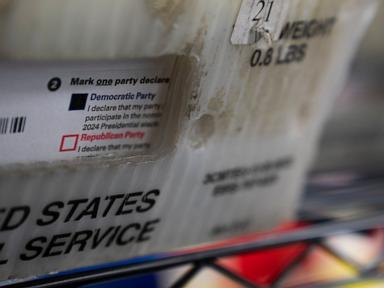
Celebration is premature. Mainstream headlines cheered when the U.S. Supreme Court rejected the Trump administration's attempt to impose eleventh-hour U.S. Postal Service restrictions on mail-in ballots. The consensus narrative claims the justices "lifted a cloud" over the midterm elections and restored peace to American voting.
That reading is dangerously naive.
The Court did not solve the underlying crisis in American election administration. It merely hit the pause button on a logistical trainwreck while leaving the tracks buckled. By framing the September ruling in United States Postal Service v. California as a tidy victory for status-quo voting, commentators missed the brutal operational reality. Mail voting in the United States is held together by duct tape, decentralized municipal budgets, and an aging postal network never designed to function as an election security agency.
The Myth of "Normal" Mail Voting
When election officials and pundits talk about mail ballots flowing "as normal," they rely on a comforting fiction. There is no national normal.
I have spent years watching county clerks and state election directors burn through emergency budgets trying to reconcile fifty different statutory frameworks with a single federal postal monopoly. In eight states—California, Colorado, Hawaii, Nevada, Oregon, Utah, Vermont, and Washington—nearly every ballot moves through the mail. In dozens of others, mail voting operates as a patchwork of varying absentee rules, drop-box mandates, and signature-verification standards.
The March executive order and subsequent USPS rule sought to force a standardized envelope format, trackable barcodes, and centralized voter-list uploads onto states just months before Election Day. Any election administrator who has ever ordered paper stock knows that timeline was fantasy. Envelope manufacturing, postal sorting calibration, and logic-and-accuracy testing require eighteen to twenty-four months of runway, not eighteen weeks.
The Supreme Court stepped in because of the Purcell principle—the judicial doctrine warning courts and officials against altering election rules on the eve of voting when doing so breeds administrative chaos and voter confusion. Leaving the preliminary injunction in place through November was basic triage, not an endorsement of how states currently run mail elections.
What Everyone Gets Wrong About the USPS Mandate
If you ask voters or cable news panels what the USPS dispute was really about, you will hear two tired talking points:
- The partisan suppression frame: The executive branch tried to weaponize the mail to disenfranchise millions of voters in blue states.
- The security theater frame: Uniform envelopes and federal portal uploads would instantly stop fraud and modernize a vulnerable system.
Both arguments ignore the plumbing.
First, the USPS already uses the Intelligent Mail barcode (IMb) system, developed in partnership with election officials over a decade ago, to track ballot mail pieces through sorting facilities. The administration's demand for a brand-new, rigid envelope specification backed by a threat to refuse ballot delivery was not an engineering upgrade. It was an administrative veto disguised as a technical standard.
Second, opponents of the rule act as if existing mail-ballot logistics are frictionless. They are not. Every election cycle, tens of thousands of legitimate ballots are rejected due to mismatched signatures, missing secrecy sleeves, torn return envelopes, or late postmarks caused by regional postal consolidation. Calling that system "normal" ignores the silent disenfranchisement already baked into paper-and-postage workflows.
The Legal Time Bomb Still Ticking in Lower Courts
Notre Dame Law School professor Derek Muller warned early in the litigation that the fight over executive authority and mail voting was only the first inning of a nine-inning game. He was right.
Blocking a rule from taking effect in September because ballots are already printing does not answer the constitutional question at the heart of the dispute. Under the Elections Clause of the U.S. Constitution, state legislatures set the "Times, Places and Manner" of holding elections, subject to Congress altering those regulations. Notice who is absent from that sentence: the President and the Postmaster General.
Yet the Supreme Court's emergency docket order did not issue a final, binding ruling on the merits that permanently strips executive agencies of leverage over ballot-mail standards. Instead, the litigation bounced back to federal district and appellate courts—including ongoing battles in Massachusetts and separate emergency clashes over segregating disputed ballots in California.
Here is the uncomfortable truth that legal cheerleaders gloss over: if a future administration introduces similar postal packaging mandates two years before a presidential cycle rather than six months out, the Purcell defense evaporates. Without a definitive constitutional firewall from the Supreme Court, state election budgets remain perpetually hostage to federal regulatory whiplash.
Why Voters Are Asking the Wrong Question
Search trends around this ruling reveal a public obsessed with one question: Is my mail ballot safe to cast?
That question misses the real operational vulnerability. Physical tampering with mail ballots is vanishingly rare because the chain-of-custody paper trail makes large-scale fraud detectable and prosecutable. The real threat to mail voting is administrative fragility.
Consider what happens when a county clerk has to manage three competing pressures at once:
- Supply chain bottlenecks: Specialized election printers must source exact paper weights and tear-off stubs that jam high-speed optical scanners if tolerances slip by a millimeter.
- Postal routing delays: Regional processing consolidations mean a ballot mailed across town can travel two hundred miles to a sorting hub and back before hitting a postmark stamp.
- Post-election litigation: Every delayed batch of mail ballots extends the counting window, creating an information vacuum that partisan operatives immediately fill with conspiracy theories.
UCLA law professor Rick Hasen has spent years documenting how protracted ballot-counting timelines erode public confidence even when every single vote is tabulated accurately. When mail ballots arrive on or after Election Day and require multi-day signature curing, the delay itself becomes a political weapon.
What Election Officials and Voters Must Do Instead
Stop treating Supreme Court emergency stays like permanent structural reforms. If states and voters want mail voting to survive the next decade without recurring constitutional crises, three immediate shifts are non-negotiable.
1. Decouple Mail Ballots from First-Class Postal Timelines
Voters who request a mail ballot should treat the postal service as a one-way delivery mechanism—from the county clerk to their mailbox—and use official, staffed drop boxes or early-voting hand-delivery counters for the return trip. Returning a ballot directly to an election office eliminates postmark ambiguity, bypasses regional sorting bottlenecks, and puts the ballot into the scanner queue before Election Night.
2. Mandate Pre-Processing Before Election Day
States that prohibit election workers from opening outer envelopes, verifying signatures, and flattening ballots until Election morning are manufacturing their own crises. Florida and Colorado process mail ballots continuously as they arrive, allowing them to report massive vote totals minutes after polls close. States that refuse pre-processing guarantee days of agonizing uncertainty.
3. Build Statutory Firewall Budgets at the State Level
State legislatures cannot rely on federal courts to rescue local clerks every two years. States committed to mail voting must codify envelope specifications, barcode standards, and ballot-curing timelines directly into state statute—and fund multi-year paper procurement contracts so counties are never caught flat-footed by sudden federal rule changes.
The Honest Downside of Abandoning the Status Quo
Pushing for aggressive state-level standardization and pre-processing is not painless. Centralizing envelope specs and forcing counties onto unified ballot-tracking software will crush smaller rural election offices that lack dedicated IT staff and municipal print contracts. Pre-processing ballots weeks early also requires hiring and training bipartisan adjudication teams for longer stretches, driving up local payroll costs in counties already struggling to recruit poll workers.
Those costs are real. They are also unavoidable.
A voting system that survives only because nine justices intervened weeks before ballots dropped is not a triumph of democratic resilience. It is a warning shot. Either states harden their election infrastructure now, or the next postal rule change will not be stopped at the buzzer.