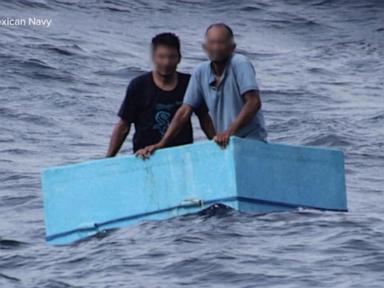
The media wants you to gawk at the photographs. Two men, rescued by the Mexican Navy after their shrimp boat went down, grinning through exhaustion while perched inside a blue plastic fish cooler 150 miles out in the Pacific. Headlines are branding it an inspiring tale of human endurance. Five days adrift without food or water, saved by a floating ice chest.
It is a terrible narrative.
Treating this incident as a heartwarming survival story misses the structural rot of modern commercial small-scale fishing safety. What happened off the coast of Chiapas is not a testament to the indomitable human spirit. It is an indictment of systemic unpreparedness, institutional failure, and a romanticized media culture that glosses over lethal incompetence with feel-good imagery.
The Fatal Flaw Of The Floating Plastic Myth
Let us look at the mechanics. A wave smashes a vessel at three in the morning. Five minutes later, the boat is gone. The crew abandons ship with zero emergency supplies, no radio, no GPS beacon, and no personal flotation devices worth mentioning. Their entire contingency plan amounted to emptying a bait cooler and jumping inside.
That is not survival skill. That is a lottery ticket.
When mainstream outlets fawn over how these men managed to live for five days under a brutal sun with zero hydration, they mask a terrifying baseline reality. The human body under acute dehydration in a tropical marine environment experiences rapid cognitive decline, hypernatremia, and renal failure within seventy-two hours. These men survived because of a statistical outlier: an aggressive, well-funded naval search operation utilizing aircraft and surface vessels that actually looked for them.
If you rely on a plastic cooler to save your life at sea, you are already dead. You just haven't stopped breathing yet.
The Lazy Consensus Of Maritime Romance
The lazy consensus in every report covering this event is that commercial fishers are rugged folk heroes who regularly triumph over the cruel sea through grit alone. This archetype is dangerous. It shifts the burden of safety entirely onto individual resilience and away from regulatory enforcement, safety equipment mandates, and operational oversight.
Imagine a scenario where every commercial vessel, regardless of size, was legally required to carry a functioning, low-cost EPIRB (Emergency Position Indicating Radio Beacon) and rigid life rafts instead of relying on improvised containers. The five-day drift would have been a five-hour rescue.
Instead, cooperatives send crews out on aging hulls like the Camaronera with bare-minimum gear, knowing that if things go sideways, the state will eventually spend millions deploying a multi-asset naval trinimio—ships, interceptors, and aircraft—to sweep thousands of square miles of ocean.
We are subsidizing structural negligence with heroic rescue choreography.
Dismantling The Survival Narrative
People look at these stories and ask how to replicate such survival tactics. How do you pick the right cooler? How do you manage thirst under a equatorial sun?
The questions are completely backwards. The correct question is why professional mariners are operating in the twenty-first century without basic survival architecture that costs less than a high-end electronics package.
- Stop praising improvisation over engineering. Improvised flotation is what you do when you have already failed at everything else. A cooler keeps fish cold; it is not a lifeboat.
- Ditch the fatalism. Accepting that small-scale fishers must risk death by dehydration every time a wave hits is a lazy cultural cop-out.
- Enforce baseline telemetry. If smartphones can maintain satellite communication, no commercial boat has any excuse to be untrackable past the horizon.
The Navy did its job. The families got their relatives back. But the next time a boat goes down in five minutes and the crew is left staring at the open horizon from inside a plastic box, luck will not answer the phone.
Stop calling it a miracle. Start calling it what it is: a system begging for a catastrophe.