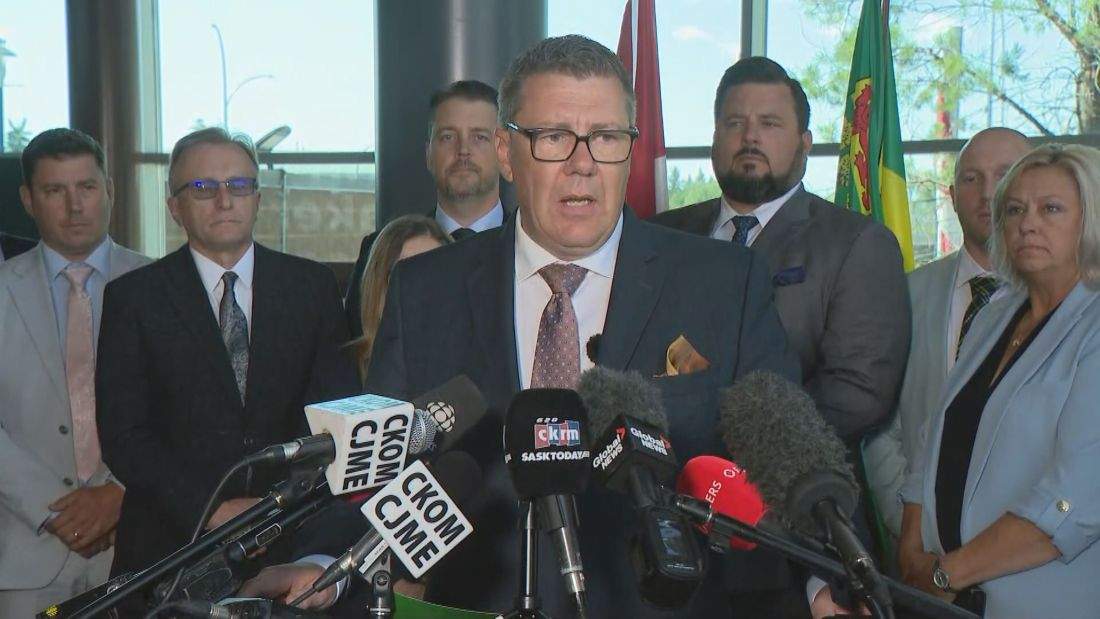
Premier Scott Moe wants to punish American liquor imports to signal displeasure with trade friction, yet he draws a hard line keeping potash and oil completely off the table. It sounds like tough talk for the local press. It is actually economic theater designed to appease domestic factions while completely misunderstanding how modern trade leverage actually operates.
Every time a politician threatens retaliatory tariffs on consumer goods while shielding the heavy extraction sector that actually drives the provincial balance sheet, they reveal a fundamental weakness. They are swinging foam bats at the periphery while the core vulnerabilities remain heavily fortified and unbothered.
I have watched regional trade posturing fail for decades. Governments love picking targets that generate headlines without causing real economic disruption to the industries holding actual power. Let us dismantle why this liquor tariff strategy is a hollow gesture and why sparing potash is a massive strategic miscalculation.
The Illusion of Consumer Retaliation
Thelazy consensus in provincial politics holds that consumer boycotts or targeted sin taxes inflict meaningful pain on a foreign adversary. Slap a heavy levy on Kentucky bourbon or California wine, the logic goes, and Washington feels the sting in its agricultural heartland.
This is pure fantasy.
Imagine a scenario where a boutique distillery in Bardstown notices a dip in Saskatchewan liquor board sales. Do you know who does not notice? The United States Trade Representative. Do you know who else does not care? The multinational conglomerates controlling global supply chains. Consumer goods represent an infinitesimal fraction of cross-border leverage between Canada and the United States.
When you target booze, you punish the local consumer through higher prices at the markup counter while achieving zero behavioral modification from policymakers in Washington. It is a tax on your own citizens disguised as foreign policy.
Why Potash is the Only True Lever
Saskatchewan holds a geological monopoly that the rest of the world ignores at its peril. The province produces roughly one-third of the global potash supply. American agriculture depends heavily on these shipments to sustain crop yields across the Midwest.
When Moe announces that potash is off the table, he is voluntarily disarming. He is handing over all negotiating capital before the poker game even begins.
Real trade leverage requires asymmetrical pain. If you want to grab the attention of American lawmakers, you do not mess with craft beer imports. You target critical inputs where substitutes do not exist locally. American farmers cannot spin up alternative fertilizer mega-mines overnight. The lead time requires billions of capital and a decade of environmental approvals.
By declaring potash sacred, the government signals that it values short-term corporate comfort over genuine geopolitical strength.
The Myth of the Neutral Resource Economy
Politicians love to pretend that commodities like oil and potash operate outside the realm of politics, existing purely as economic engines that must never be politicized. This is a comforting lie.
Resources are the ultimate geopolitical currency. When global trade rules fracture, treating extraction as neutral ground while consumer goods bear the brunt of political posturing is backwards. You protect the weak consumer goods market and weaponize the structural dependencies.
Admitting this truth comes with a heavy downside. Weaponizing potash risks destabilizing long-term buyer relationships and inviting accelerated investments in alternative deposits elsewhere in the world, such as Brazil or Belarus. There are no risk-free moves in trade warfare. My contrarian approach does not pretend you can punch an opponent without bruising your own knuckles. It simply demands that if you are going to throw a punch, you aim for the jaw instead of the belt buckle.
Stop Playing Checkers in a Chess Match
Saskatchewan needs to drop the performative protectionism. Slapping tariffs on American spirits while shielding the extraction giants is a strategy built for morning television clips rather than economic survival.
If you want to protect regional interests in a volatile trade environment, you must leverage your actual monopoly power or accept that you are just a spectator in someone else's game.
Stop taxing the martini. Start guarding the harvest.