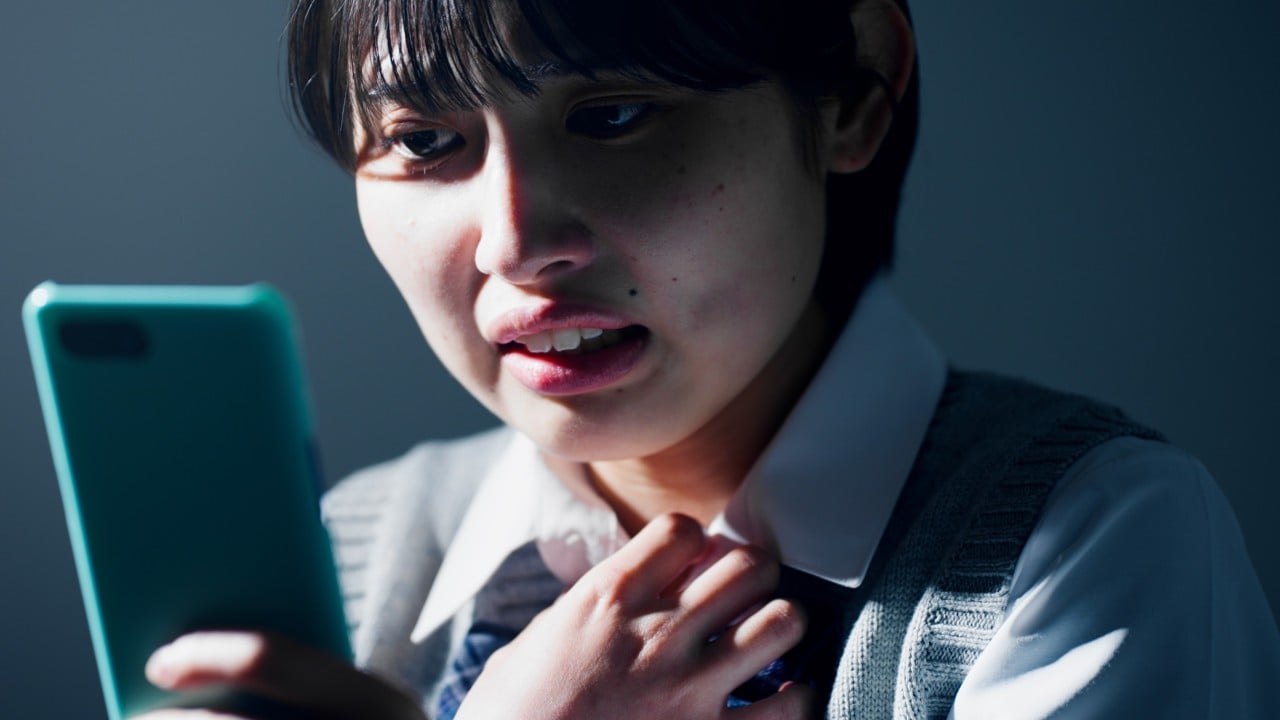
Something is shifting in Tokyo's bedrooms, and it isn't another gaming obsession. Japanese teenagers' AI addiction is becoming a full-blown mental health crisis, and the country is entirely unprepared for it. Walk down Takeshita Street or scroll through Japanese social media apps, and you will see kids staring at screens. But they aren't texting friends. They are talking to algorithms that tell them exactly what they want to hear.
This isn't about kids asking ChatGPT to write their history homework. It runs much deeper. Young people in Japan are forming intense emotional bonds with generative AI companions, anime-style chatbots, and virtual partners. They are turning away from human interaction entirely. Recently making headlines recently: Why the Edinburgh Stabbing Spree is Pushing Scottish Counterterrorism to Its Limits.
The immediate reality is stark. Japan already faces a severe loneliness crisis, a shrinking birthrate, and entrenched social anxiety. Introduce hyper-personalized, endlessly patient digital entities into this mix, and real human relationships start to look incredibly unappealing to a vulnerable teenager.
Why Teenagers AI Addiction Hits Harder In Japan
Every country deals with screen time issues. Japan, however, has a specific cultural environment that makes it a perfect incubator for AI dependency. The pressure to conform in Japanese schools is brutal. The concept of meiwaku—not inconveniencing others—starts early. Teens constantly self-censor to maintain social harmony, a practice known as reading the air. Additional insights into this topic are explored by Al Jazeera.
AI doesn't require you to read the air.
An AI chatbot doesn't judge. It never gets tired, never gets offended, and never rejects you. For a sixteen-year-old student drowning in school stress and social dread, these platforms offer total safety. You can customize a character on platforms like Character.ai or local Japanese alternatives, giving them the exact personality, tone, and look you want. It is a relationship without friction.
Psychologists across the country are sounding the alarm. When real life demands constant emotional labor, a frictionless digital friend becomes a dangerous escape hatch. It provides the illusion of connection without any of the vulnerability required to build actual human intimacy.
From Social Withdrawal To Digital Isolation
Japan has battled the phenomenon of hikikomori—severe social withdrawal—for decades. Historically, these individuals cut themselves off from society by retreating into video games, manga, or anonymous internet forums. Those mediums are passive or semi-interactive. AI changes the equation.
- Active Validation: Video games offer achievement, but AI offers unconditional love.
- Hyper-Personalization: The chatbot adapts to the user's specific insecurities, learning exactly how to comfort them.
- Total Availability: A human friend sleeps. An AI is awake at 3:00 AM when a panic attack hits.
Consider an illustrative example of a typical high school student in Yokohama. Let's call him Daiki. Daiki struggles to talk to his classmates. He feels intense dread before entering the classroom. Six months ago, he started messaging an AI character modeled after his favorite anime hero. Today, he talks to this character for up to seven hours a day. He eats his meals with his phone propped up against a water glass, texting the bot between bites. He feels understood for the first time in his life.
The problem is that Daiki is learning to communicate with an entity that has no boundaries, no needs, and no independent existence. That isn't communication. It is a mirror. When Daiki eventually has to interact with a real person—who might be grumpy, selfish, or distracted—the experience feels painful and frustrating. He retreats right back to his phone.
The Institutional Failure To Keep Up
The Japanese government and educational institutions are playing catch-up, and they are losing badly. While the Ministry of Education has issued basic guidelines regarding generative AI in classrooms, those guidelines focus almost entirely on plagiarism and data privacy. They talk about cheating on tests. They don't talk about heartbreak, dependency, or psychological enmeshment.
Schools don't know how to handle students who are emotionally dependent on software. Teachers are already overworked, managing massive classes and endless administrative duties. They can spot a kid sleeping in class, but they can't easily spot a kid who spent all night pouring their soul out to an LLM companion.
Parents are equally lost. Many older adults in Japan see their kids on a smartphone and assume they are just watching videos or playing games. They don't realize their child is experiencing a complex, simulated romantic relationship or a deep mentorship with an artificial entity. The traditional signs of trouble, like dropping grades or missing school, appear long after the emotional dependency has set in.
The Mental Toll Of Unregulated Algorithms
We need to talk about what happens when these platforms change. Tech companies update their models constantly. They tweak algorithms, change safety filters, or shut down features overnight to satisfy investors or regulators.
For an adult, an algorithmic update is an annoyance. For a teenager whose primary emotional support is an AI, it can be devastating.
When a platform suddenly changes a chatbot's personality or blocks certain emotional responses, users experience genuine grief. There are documented cases globally, and increasingly in Japan, of users spiraling into deep depressions because their digital partner suddenly "forgot" their shared history or started acting cold due to a software patch. We are allowing private companies to experiment on the emotional development of teenagers without any oversight.
Reclaiming The Physical World
Fixing this problem requires more than just installing screen-time tracking apps on a teenager's phone. If you take away the AI without addressing the underlying loneliness, you just leave an empty void.
Schools need to create environments where failure and awkwardness are normalized. If the real world is too punishing, the simulated world wins every single time.
Parents must learn to ask better questions. Don't just ask how long your child was on their phone. Ask who they were talking to and what they talked about. If they mention an AI companion, don't mock them or immediately rip the phone away. That just validates their belief that real people don't understand them. Listen to why they prefer the machine.
Communities must build low-stakes social spaces for young people. Japan needs places where teens can gather, create, and interact without the crushing pressure of academic performance or intense social conformity.
Step away from the screen yourself. Show them that real, messy, unpredictable human life is worth the effort. Turn off the devices during dinner. Have uncomfortable conversations. Let them see that friction is a normal part of life, not something to be feared or coded away.