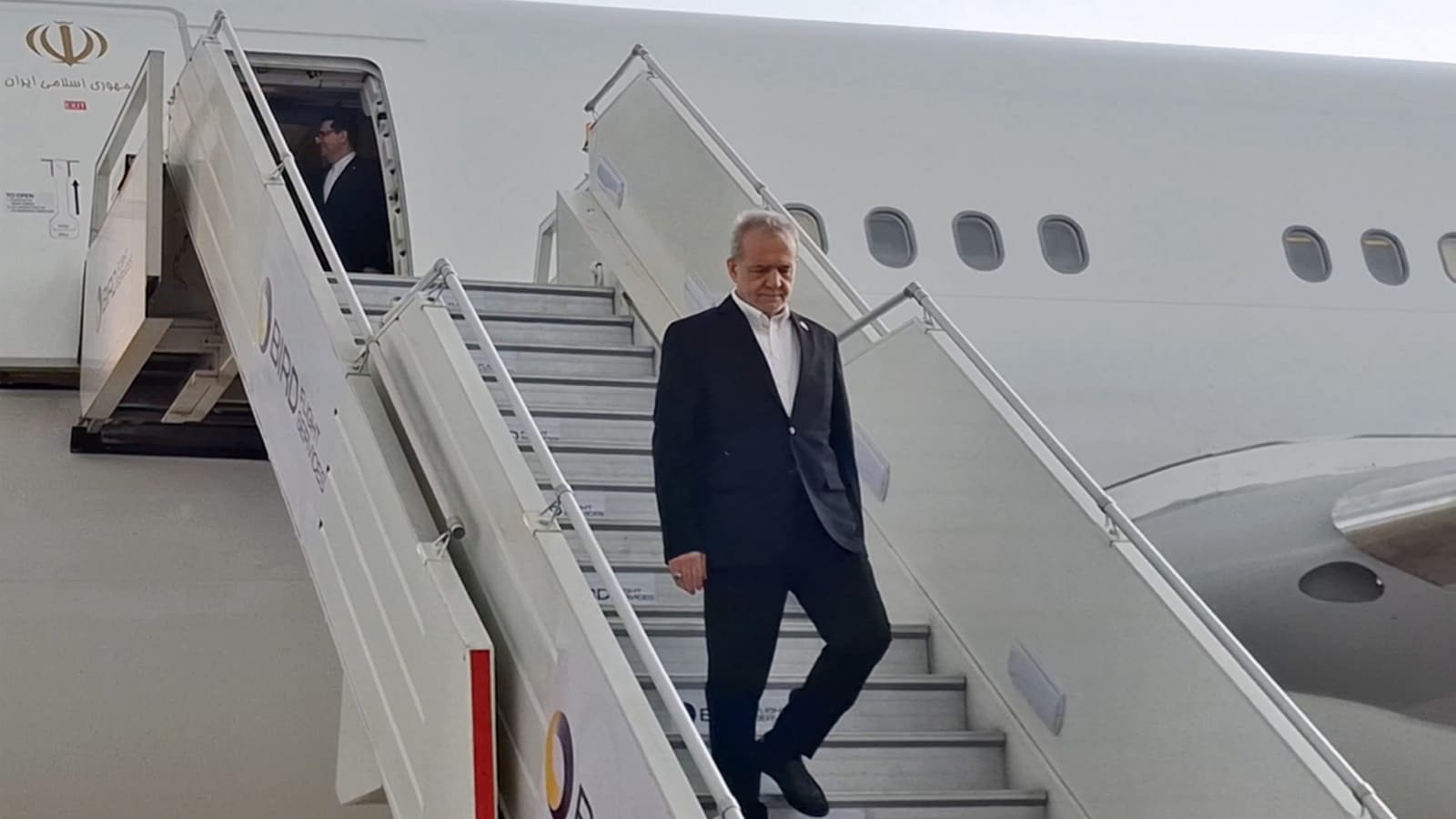
Geopolitical alignments in the Middle East rarely shift because of sudden epiphanies or diplomatic conversions. They shift because the cost of hostility finally outweighs the utility of friction. When Iranian President Masoud Pezeshkian and senior Emirati delegations signal an intent to move past historical grievances, foreign policy observers immediately search for a hidden trapdoor. They look for the secret weapon deal, the sudden intelligence sharing pact, or the third-party mediator who forced closed doors open.
Yet the reality on the ground in the Persian Gulf is far more transactional and far more pragmatic. Both Tehran and Abu Dhabi are confronting economic realities that render prolonged confrontation an expensive luxury.
For decades, the United Arab Emirates served as a primary financial valve for a sanctions-constrained Iranian economy. Emirati ports handled billions in re-exports, financial remittances, and trade that kept commercial arteries pulsing despite Western pressure. At the same time, regional security concerns—specifically regarding proxy conflicts, maritime security in the Strait of Hormuz, and diverging visions for post-war stability in Yemen and Syria—created sharp strategic anxieties in Abu Dhabi. The resulting friction was not merely diplomatic; it manifested as heightened naval surveillance, active cyber posturing, and a constant, low-level diplomatic cold war.
Then came a quiet recalibration.
The UAE, pursuing an aggressive national branding campaign centered on commercial primacy, technological hubs, and post-oil economic diversification, recognized a fundamental truth. Regional instability is bad for business. Attracting global venture capital, elite talent, and massive infrastructure investments requires a predictable security environment. Continuing to treat Iran as an unmitigated threat without diplomatic off-ramps ran counter to Abu Dhabi's core economic thesis.
Simultaneously, the administration in Tehran faced mounting domestic pressures, severe currency depreciation, and the acute limitations of its traditional pivot-to-the-East strategy. Rhetoric about resistance economies struggles to feed populations or stabilize a plummeting rial. Engaging economically proximate neighbors with deep capital reserves offers an immediate, functional lifeline. Diplomatic normalization is not an ideological embrace; it is a balance sheet calculation.
The Limits of Pragmatism
Diplomatic breakthroughs of this nature carry strict expiration dates if they rely solely on optimistic rhetoric. Historic rivalries do not vanish because leaders exchange pleasantries at multilateral summits or dispatch special envoys to exchange memoranda of understanding. The fundamental security dilemmas that pitted Persian Gulf monarchies against the Islamic Republic remain active tripwires.
Consider the maritime domain. The Strait of Hormuz remains one of the most critical energy chokepoints on the planet. A significant percentage of the world's petroleum supply traverses waters where the Islamic Revolutionary Guard Corps Navy operates with aggressive autonomy. Commercial shipping lanes do not care about diplomatic communiqués when small-boat harassment or tanker seizures disrupt cargo insurance rates overnight.
Furthermore, the regional network of aligned armed groups—often described as the Axis of Resistance—continues to operate according to strategic calculi that Tehran does not always completely control, let alone direct by remote control. When regional conflict escalates involving non-state actors, capitals like Abu Dhabi are forced to reassess their exposure. A warm handshake in a ministerial suite cannot insulate a financial capital from ballistic missile trajectories or drone incursions.
Economic Interdependence as a Deterrent
Despite these structural hazards, the bet that economic connectivity can act as a stabilizing constraint is not entirely baseless. When commercial ties deepen, the threshold for direct military escalation rises.
Trade statistics tell a compelling story of quiet resilience. Even during periods of acute diplomatic frost, private commercial networks across the southern Gulf coast maintained functional conduits with Iranian merchants. Formalizing these channels and reducing bureaucratic impediments allows both states to monitor and manage capital flows more effectively while extracting mutual tax and tariff revenues.
Property investments, logistics agreements, and aviation links create tangible stakes for business elites in both countries. When commercial stakeholders have capital deployed across the water, they exert quiet lobbying pressure against reckless escalation. This is not peace through love; it is peace through commercial entanglement.
Navigating the Regional Chessboard
The broader international community watches these bilateral developments with cautious skepticism, particularly Washington and Tel Aviv. For the United States, traditional alliance architectures in the Middle East have relied on a unified front isolating Tehran. When key American security partners like the UAE independently chart a pragmatic, de-escalatory course with Iran, it complicates Washington's containment strategies.
Yet Abu Dhabi's foreign policy has matured into a textbook model of strategic autonomy. Emirati leadership no longer waits for permission or direction from Western capitals when evaluating regional threats and opportunities. They understand that if a major regional war breaks out, the physical infrastructure of the UAE absorbs the initial shockwaves. Consequently, Emirati diplomats view active engagement with Tehran not as a betrayal of old alliances, but as an indispensable risk-mitigation strategy.
For Iran, this diplomatic opening represents a vital diplomatic escape hatch from complete international isolation. By normalizing relations with the wealthy monarchies on its southern maritime border, Tehran fractures the narrative that it is a pariah state with no interlocutors willing to engage in normal statecraft.
The Unspoken Realities Ahead
Do not expect a sudden fraternity between the two regional powers. Ideological divergences run too deep, historical suspicions are too entrenched, and competing geopolitical ambitions across the wider Middle East ensure persistent friction points.
What is actually happening is far more durable than a fleeting friendship. It is the establishment of a working boundary—a set of pragmatic guardrails designed to prevent trade disputes and diplomatic misunderstandings from boiling over into active kinetic conflict.
As Pezeshkian's administration pushes for wider regional economic integration, the test will not be found in the optimistic communiqués issued after bilateral meetings. The test will occur during the next regional crisis, the next maritime detention, or the next proxy flare-up. When pressure mounts, leaders will reveal whether their new commitment to looking forward is built on concrete strategic architecture or merely temporary political theater.
The cement is still wet, and the foundation remains cracked. But in the contemporary Middle East, even a temporary pause in hostility is treated as a strategic victory.