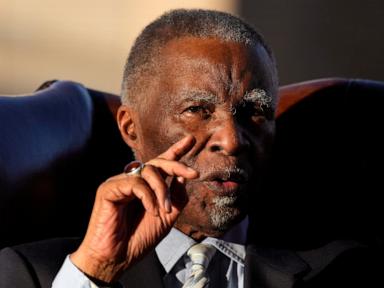
Former South African President Thabo Mbeki has flatly denied ordering prosecutors to halt apartheid-era cases or cutting secret deals to shield former security officers from justice. Testifying in October 2026 before the judicial inquiry chaired by retired Constitutional Court Justice Sisi Khampepe in Johannesburg, Mbeki pushed back against decades of accusations that executive interference stalled prosecutions. Instead, he pointed the finger right back at the National Prosecuting Authority over roughly 300 referrals from the Truth and Reconciliation Commission that sat unprosecuted for years.
Let's be honest about what this means for families still waiting for answers after more than three decades. A headline saying a former president denies wrongdoing only scratches the surface. The real fight isn't just about one man's memory of the 1990s or early 2000s. It's about whether South Africa's justice system failed victims on its own, got leaned on behind closed doors, or both.
What Thabo Mbeki Actually Told the Inquiry
When Mbeki took the stand in Newtown, Johannesburg, on October 19, 2026, he didn't hedge. He called claims of secret amnesty meetings with former apartheid-era military and police generals a complete fabrication. According to Mbeki, when apartheid-era generals reached out in 1996, they weren't angling for a quiet backroom pass out of courtrooms. He testified that they wanted help getting former National Party political leaders to take responsibility before lower-ranking security operatives faced the TRC amnesty process.
Mbeki also drew a sharp line between presidential pardons and prosecutorial decisions. In his account, the executive branch didn't set a policy telling prosecutors to shelve TRC referrals. If around 300 cases recommended by the TRC didn't go forward, he argued, the NPA needs to explain why rather than blaming politicians.
That argument is sharp, and it's politically convenient. Yet it runs straight into a wall of skepticism from families of victims, human rights groups, and critics who watched promising leads go cold while suspects aged or died.
Why Around 300 TRC Cases Stalled for Years
To understand why people get so heated over these denials, you have to look at how South Africa handled post-apartheid accountability after the Truth and Reconciliation Commission wrapped up its main work. The TRC wasn't meant to replace criminal courts for everyone. People who refused to apply for amnesty, or whose applications were denied because they didn't make full disclosure or commit politically motivated acts as defined by law, were supposed to face the possibility of prosecution.
Instead, momentum evaporated. Witnesses passed away. Key documents went missing or became harder to verify as decades slipped by. For families like those of slain activists—including the Cradock Four, Matthew Goniwe and Fort Calata among them—waiting for justice started feeling like a second betrayal.
Accountability delayed by twenty or thirty years doesn't look like careful legal strategy to a grieving family; it looks like surrender.
✨ Don't miss: The Myth of the Gilgit Baltistan Information Vacuum
Critics have long pointed to changes in prosecutorial policy during the mid-2000s and questioned whether political calculations over national stability and transition agreements chilled aggressive prosecutions. Even Mbeki noted in his testimony that a Johannesburg High Court ruling years earlier made a crucial point: even if there had been interference, that wouldn't excuse prosecutors from doing their constitutional job. That line cuts two ways. It gives Mbeki breathing room on institutional responsibility, while reminding prosecutors they can't hide behind past politics forever.
How the Khampepe Inquiry Got Here
This wasn't a spontaneous reckoning. In May 2025, President Cyril Ramaphosa established the Commission of Inquiry into delays in investigating and prosecuting TRC cases, appointing retired Constitutional Court Justice Sisi Khampepe as chairperson alongside retired Judge President Frans Diale Kgomo and Advocate Andrea Gabriel SC. The inquiry grew out of sustained legal pressure and lawsuits from victims' families and human rights advocates demanding answers over alleged suppression of cases.
Getting to public hearings took real legal grit. Former presidents Mbeki and Jacob Zuma sought to have Justice Khampepe recuse herself, pushing the dispute all the way to the Constitutional Court, which dismissed the recusal bid and cleared the way for the inquiry to move ahead. With Mbeki concluding his evidence-in-chief and further proceedings and cross-examination on the calendar—alongside complications around missing evidence and postponed appearances—the inquiry has become the clearest public mirror South Africa has held up to its unfinished TRC business.
What Critics and Families Get Wrong, and What They Get Right
When you follow transitional justice debates closely, two traps show up again and again.
First, some commentators treat every delay as proof of a tidy, top-down conspiracy. Kinda neat, right? One villain, one secret order, case closed. Real institutional failure is usually messier. Understaffing, shifting priorities, lost files, legal challenges, and bureaucratic inertia can stall complex historical cases even without a smoking-gun memo from the Union Buildings.
Second, some defenders of past administrations act as if pointing out NPA shortcomings ends the conversation. It doesn't. Even if no secret pact with apartheid generals existed, political leaders set the tone in a young democracy. When prominent figures push broad reconciliation narratives or debate transition understandings while hundreds of referrals sit idle, the signal sent through state institutions matters.
You can track official filings, hearing schedules, and submissions directly through the TRC Cases Inquiry, and review broader background on the commission's mandate via The Presidency of South Africa.
Practical Steps to Follow This Story Clearly
If you're following the inquiry or researching South Africa's post-apartheid legal history, don't rely on hot takes or ten-second clips. Read primary records and testimony summaries from the TRC Cases Inquiry so you can separate sworn claims from proven facts. Compare how former officials define transition agreements against what legal scholars and families say the Constitution requires of prosecuting authorities. Finally, watch how commissioners weigh institutional delays against individual decisions—because the final report's findings on those 300 referrals will shape South Africa's reckoning with apartheid crimes for years to come.